AMC Cut 'The Audacity' Into 21 TikTok Clips to Rent a Microdrama Audience
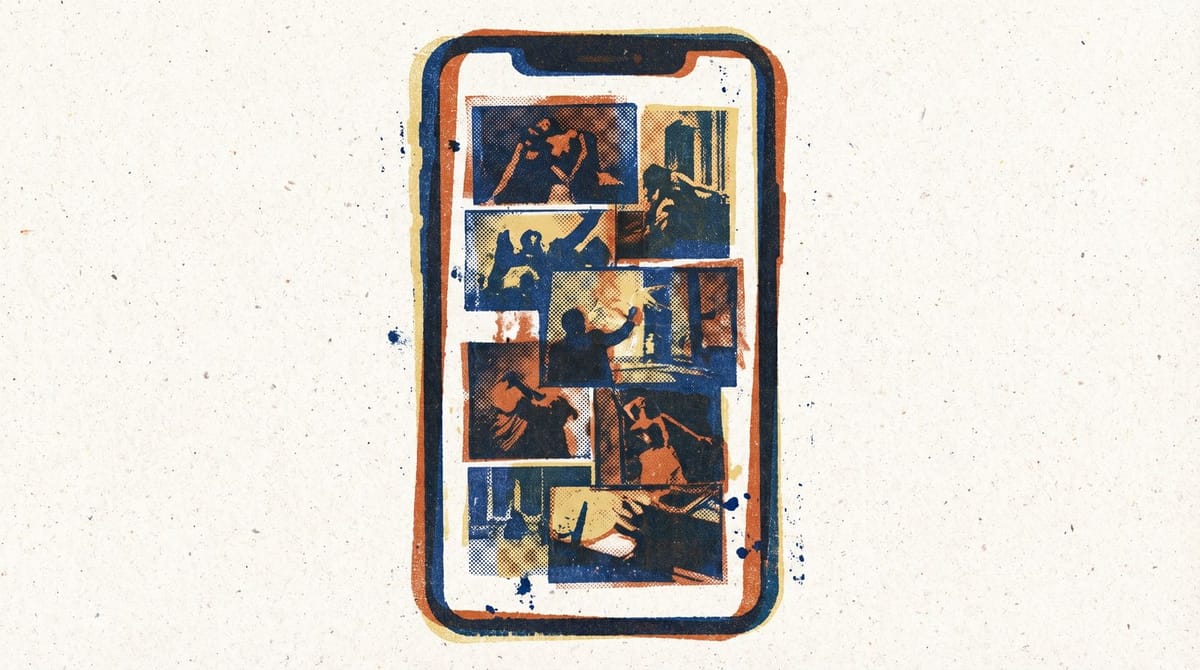
AMC is putting the entire pilot of its new Jonathan Glatzer drama on TikTok this Sunday, sliced into 21 vertical segments, each about three minutes long. The clips stay up for six weeks. The show is the kind of darkly satirical prestige swing AMC has built its brand on, with Billy Magnussen, Sarah Goldberg, Zach Galifianakis, and a Succession alum running the room. And every outlet covering it, from TechCrunch to The A.V. Club, reached for the same comparison: Quibi.
That comparison is the wrong one. AMC isn't trying to rebuild Quibi. They're admitting, in the most expensive way available to a cable network, that their audience discovery funnel is broken. The 21 clips are rent on someone else's attention, not an attempt to own the format.
The six-week availability window is the actual move
Most of the coverage stopped at the 21-clip headline. The buried detail, per Deadline, is that the segments stay live for six weeks. Six weeks spans most of the show's first-season airing, which means AMC is running discovery inventory for the entire window, not a launch burst.
If AMC were treating this like a classic premiere push, they'd drop the clips on Saturday, ride Sunday, and let them age into the feed graveyard. Six weeks is a different bet. It suggests the marketing team is scoring this on sustained reach (new viewers discovering segment 1 in week four and working toward AMC+ sign-ups), not week-one burst views.
That changes how the KPIs should work. If the AMC team is measuring this correctly, they care about carry-through rate (how many people who start segment 1 reach segment 21), AMC+ attribution from TikTok bios and pinned comments, and search volume for "the audacity amc" through week six. Plays are vanity on TikTok, and AMC's internal dashboards almost certainly know that already.
Microdrama is a market you probably underestimated
Microdrama is quietly one of the biggest media categories nobody in marketing seems to talk about. Global microdrama revenue hit roughly $11 billion in 2025 and is projected to reach $14 billion in 2026, per Variety. ReelShort alone generated about $400 million in 2024 and had 70 million monthly active users by late 2025, with 90% of its viewership coming from the U.S., according to Sensor Tower.
That scale sits right next to AMC's entire prestige cable business, and it's growing while linear cable shrinks. The finance team at AMC is almost certainly staring at that chart every morning.
AMC didn't commission a microdrama. They chopped up a prestige drama to stage on the same real estate where microdramas live. The narrative shape is wrong for that real estate: three minutes of prestige storytelling is nothing like three minutes of microdrama, which is built to reset a hook every 45 seconds. That mismatch isn't the point though. The point is where your audience currently sits, and AMC's audience is aging out of linear cable at roughly the same rate TikTok is absorbing everyone under 35.
Why this isn't Quibi 2.0, and why the difference matters
Quibi built its own app, paid to produce original shorts, and asked viewers to come sit on a couch nobody had built yet. It died because the distribution and the funnel pointed outward from a standing start. The product was the question.
AMC did the opposite. They used content they'd already produced for linear and repackaged the front door onto a platform with around 150 million U.S. monthly actives. The funnel points inward: from TikTok toward AMC+ subscription. Per Variety's reporting, the pilot simultaneously airs on linear AMC, streams on AMC+, and runs on Samsung TV Plus. TikTok is the free trial. AMC+ is the conversion event. Nobody has to download a new app. Nobody has to learn a new platform.
At heart, this reads as a distribution-as-acquisition bet with a format wrapper. The format itself is along for the ride, which explains why AMC didn't bother commissioning anything actually built for vertical. For cable networks whose upfronts are collapsing, the economics start to look reasonable fast. A 30-second TikTok ad to promote a show costs roughly what a single linear cable spot costs, and the targeting is better. A 21-part free upload, with watch-through data, is closer to a three-minute trailer that viewers opted into voluntarily for twenty more laps.
From what I've seen in paid social over the last 18 months, "free content that doubles as acquisition creative" has been the quiet trend among bigger brands. AMC is just the largest one to publicly commit to it with premium entertainment rather than product demos.
What your team should steal from this
If you run content marketing or paid social, the AMC play is worth copying at smaller scale, with two caveats.
First caveat: don't write long and chop. Script for vertical from the start. The "cut existing long-form into shorts" move is the weakest part of AMC's bet. Vertical short retention depends on a reset every 30 to 60 seconds. A hook, a beat, a payoff, then repeat. Prestige pacing doesn't do that. If your team is planning a similar play, build the microcontent as microcontent. You can optionally reassemble it into long-form afterward.
Second: measure carry-through, not plays. On a multi-part series, the metric that matters is segment 1 to segment N retention. If fewer than roughly 40% of segment 1 viewers make it past segment 3, the rest of the clips end up as orphans nobody will find, and the whole series reads like a single failed upload attempt. That curve is the first thing I'd want to see in the week-one report.
Third: pick the window length deliberately. A six-week rolling window means running discovery, not launch promotion. Your creative ops have to keep feeding new eyeballs into segment 1 for the full window, which is a different cadence than a one-week launch burst and requires content scheduling most teams haven't built yet.
For anyone wondering if this works at smaller scale, the math doesn't require 21 parts. A pilot-length story split into five or six vertical segments, with a clear call-to-action pointing at a free resource or a newsletter, is the same template at a fraction of the cost. HubSpot embedded TikTok natively into its CRM partly because this kind of funnel is where SMB attention now lives. AMC is just proving it out at prestige-cable scale.
The prestige pilot quietly became an ad buy
I think the part most of the entertainment coverage is underplaying is what this implies for how AMC now conceives of its pilots internally. They're no longer treating the premiere as a TV event that marketing supports. They're treating it as creative for an acquisition campaign that happens to air on linear in parallel.
That flip is worth noticing. It means the budget for "the pilot" and the budget for "paid social promoting the pilot" are starting to merge, and the show itself becomes the ad unit. For anyone running content strategy in any industry, that's the direction of travel for premium brand marketing too. Your best case study, your best explainer, your best product demo: those stop being supporting assets and become the media you buy against.
I'm honestly not sure it'll work for AMC on this particular show. Prestige drama is the worst possible genre to chop into vertical clips, and the early chatter around the pilot has been uneven at best, which doesn't scream high carry-through. But AMC picked an imperfect vehicle to make the right argument. If The Audacity underperforms as a TikTok experiment, someone else will rerun the play with a format actually built for it: a true-crime episode, a cooking series, a creator profile. That version will work.
And honestly, AMC was going to have to try this eventually. The linear cable pilot funnel isn't coming back, and the microdrama audience isn't slowing down. Better to fail the experiment with a prestige show that already has a second-season renewal than wait until the experiment is the only option left.
Notice Me Senpai Editorial