Instacart Is Making Music Videos About Groceries (and It's Not a Vanity Project)
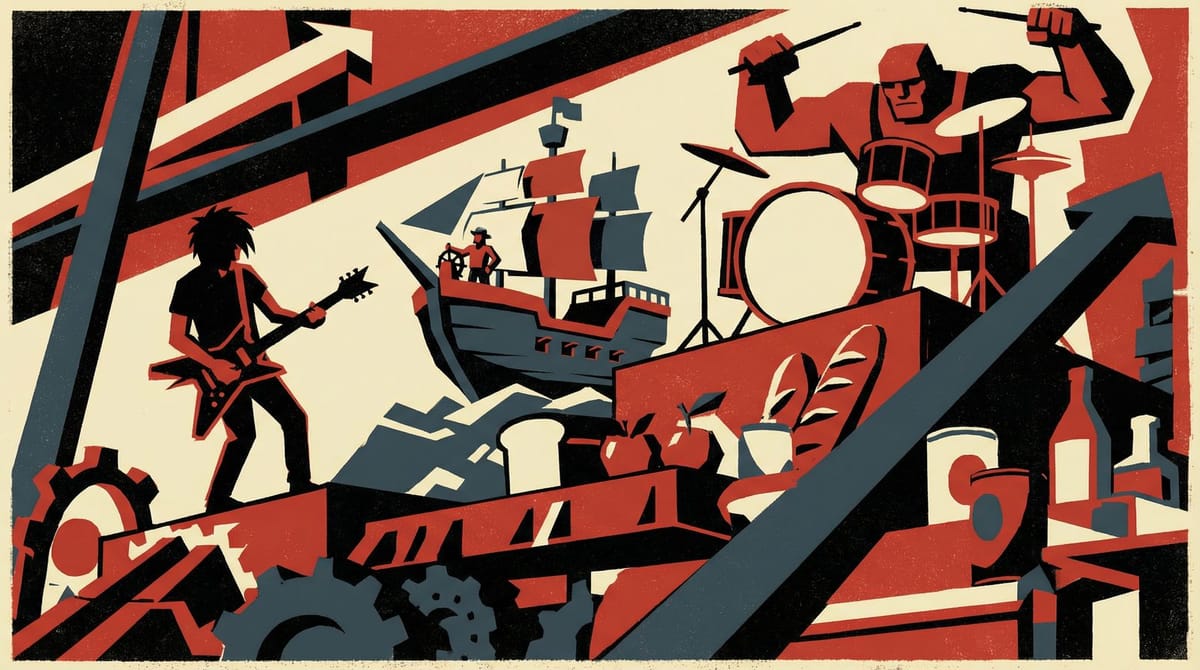
A grocery delivery app just released three music videos. One is emo-pop about a dad finding extra-thin ham for his kid's sandwich. Another is a sea shanty about a woman sailing on a ship called "Instacart" to find ready-to-cook fish. The third is a heavy metal anthem about a mom discovering groceries without markups.
If that sounds like an agency pitch that went too far, I get it. But Instacart is spending real money on this, and the financial context tells a different story than the creative surface.
The Campaign Is More Polished Than the Premise Suggests
BBDO Chicago produced the three videos with director Kate Hollowell of Epoch Films. Instacart's in-house team, Local Produce (yes, that's really the name), co-led the work. Will Wilson, VP and creative director at BBDO, framed the concept simply: "Grocery preferences are like musical taste. Very personal, and sometimes equally as surprising."
Each video spotlights Instacart's Preference Picker feature, the thing that lets you specify banana ripeness, avocado firmness, or deli meat thickness before your shopper heads to the store. It solves a real pain point that most people don't know exists. Instacart has delivered over 1.8 billion bananas and collected more than 32 million shopper notes about produce preferences. The Preference Picker turns all those free-text notes into structured choices. The music videos are the attention delivery mechanism for that product truth.
This follows Instacart's Super Bowl LX spot in February, which paired Ben Stiller and Benson Boone in a retro disco-pop showdown directed by Spike Jonze, also promoting Preference Picker. Same product feature, different entertainment format, sustained over months. That's not a one-off creative stunt. That's a campaign architecture.
The $294 Million Context Nobody Mentioned
Here's what makes this interesting beyond the surface. Instacart's advertising revenue hit $294 million in Q4 2025, up 10% year over year. Over 9,000 brands now advertise on the platform, compared to 7,000 a year ago. GTV grew 14% in Q4 to close the year at $37.2 billion. Adjusted EBITDA was $1.09 billion, up 23%.
So Instacart is not a startup burning through runway on flashy creative. They're a mature platform with a growing retail media business, and they're choosing to allocate budget toward brand entertainment. The question is why.
I think the answer is simpler than most marketing coverage wants to admit: performance channels have a natural ceiling for user acquisition, and Instacart is probably hitting it. When you've already onboarded the people who respond to direct response ads, the next batch of customers needs a different kind of persuasion. They need to think of you differently, not just click on you faster.
Brand entertainment does something performance ads fundamentally cannot. It creates the conditions for future consideration. Nobody sees an emo song about ham and immediately opens the Instacart app. But the next time that dad is ordering groceries and remembers he can pick his deli meat thickness, the association is already there. That gap between exposure and action is where brand marketing actually earns its budget.
Why Music Videos Specifically
The music video format isn't arbitrary. It's shareable in a way that a 30-second product demo isn't. Each video works as standalone entertainment, which means earned media impressions come on top of paid ones. And genre variety (emo, sea shanty, metal) creates three distinct shareable moments instead of one.
This connects to a broader shift. eMarketer's reporting on the "sound-on era" in 2026 advertising describes exactly this trend: formats designed to be consumed with audio on, not muted autoplay, where entertainment value does the persuasion work. Music videos are the purest version of that bet.
Compare this to what we covered with Fruit Love Island, where brands chased a trending format without any strategic anchor. Instacart's approach is the opposite. The entertainment format changes (disco-pop for the Super Bowl, three genre videos for the follow-up), but the product message stays the same: you can customize your grocery order down to the detail. That consistency is what separates a brand entertainment strategy from a creative director's demo reel.
The Takeaway If You're Not Instacart
If you work at a brand where performance budgets are growing but new customer acquisition is flattening, this is worth studying.
The pattern Instacart is running: take a real product differentiator, wrap it in an entertainment format that works without the brand attached, and sustain it across multiple executions. The Preference Picker campaign has now shown up as a Super Bowl spot, a director's cut, and three standalone music videos. Same message, different packages, spread over months.
Most brands do the opposite. They come up with a creative concept, attach a product to it loosely, run it once, and move on. The entertainment value is disposable and so is the brand association.
If I were thinking about this for my own budget, I'd start with one question: what's the one feature or capability my customers don't know about that would change how they use the product? That's the message. Then figure out the entertainment format second.
The specific benchmark to watch: Instacart guided 11-14% advertising revenue growth for Q1 2026. If that number accelerates in Q2 or Q3, after this campaign has run for a few months, you'll have evidence that brand entertainment actually moves commercial metrics for a platform this size. And if it doesn't, that's useful data too.
The Grocery Aisle as a Creative Palette
From what I've seen, the brands that get brand entertainment wrong are usually the ones that treat it as a creative flex. They want to prove they can make something "cool." The ones that get it right treat entertainment as distribution for a specific product truth. Instacart wants you to know your shopper will pick the exact ham thickness you want. Wrapping that in an emo ballad is weird, and that's sort of the point. Weird gets forwarded. Product demos get skipped.
Whether this campaign actually converts occasional Instacart users into weekly ones is a genuinely open question. The brand entertainment playbook works best for products where consideration takes time and trial has a cost. Grocery delivery fits both conditions. You have to trust that someone else will pick your produce as well as you would. That's a consideration problem, not a click-through problem.
An emo dad singing about thin-sliced ham is, honestly, a pretty good way to make that trust feel less abstract.