LinkedIn Is Killing Spontaneous Live Streams (and the Ad Product Is the Tell)
LinkedIn buried a help-center update on March 29 announcing that every Live broadcast on the platform will need advance scheduling from June 22, 2026. The framing is polite ("simpler, more discoverable, more impactful"). What is actually happening is that LinkedIn has decided spontaneous creators are in the way of a specific, monetizable product: event ads.
You can still "go live on short notice" by scheduling a stream minutes before it starts, according to the PPC Land writeup of the announcement. That is LinkedIn's workaround language. Functionally, a reactive AMA on a 10-minute delay is not the same thing as hitting go live when news breaks, and B2B teams that built their LinkedIn workflow around unplanned hot-takes now have a real deadline to rebuild around.
I think most social teams will shrug and assume this is a niche product update. That is probably the wrong read. It is a structural shift in what LinkedIn wants the Live surface to be for, and the ad product behind it is the tell.
What actually changes on June 22
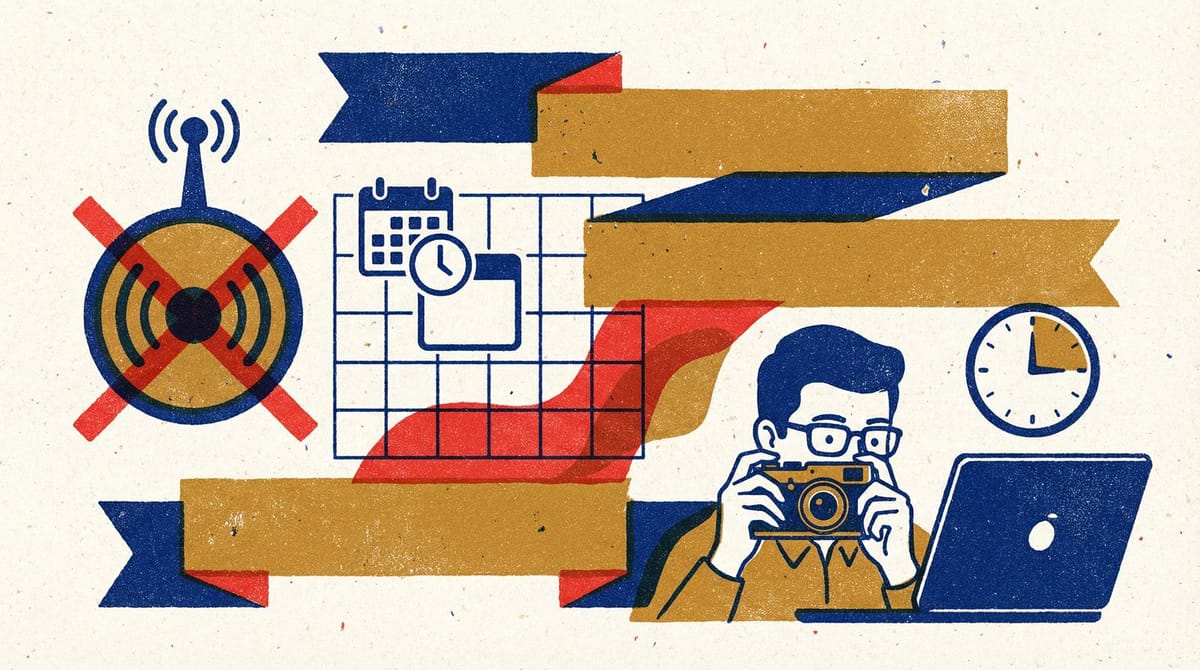
The mechanics are simple on paper. Starting June 22, 2026, the "Go Live Now" path disappears. Every broadcast, including one you want to start in the next five minutes, has to be created as a scheduled event first. LinkedIn says the scheduling window can be as short as "minutes," so technically nothing is impossible. But the friction moves up one step. You are now scheduling, promoting, and then hosting, not just reacting.
Everything else stays roughly the same. Third-party RTMP tools. Same eligibility gates. Public broadcasts, auto-recorded. As the LinkedIn help page on unifying audio events and Live documents, this continues a pattern of consolidating event surfaces into one scheduled shape that started in December 2024, when audio-only events were merged into the LinkedIn Live interface. The broader direction has been consistent for over a year now: one event object, one calendar, one set of hooks for the ad system.
The 31% number that explains all of this
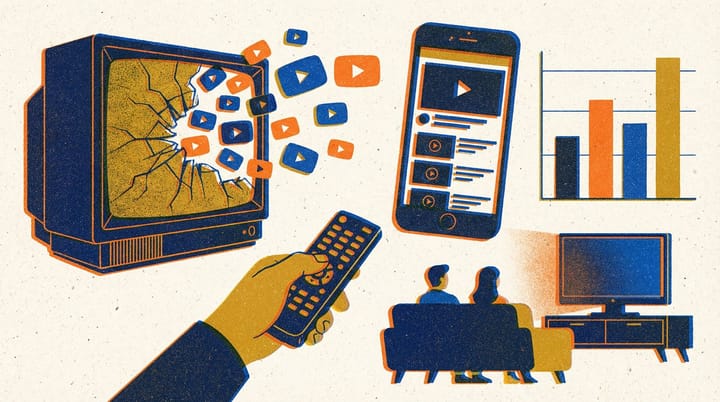
Here is the figure that actually reframes the decision. LinkedIn reported across its Q4 platform updates, as cited in Global Dating Insights, that event ads drove 31% more viewership on average than organic event posts, and event sharing grew 24% quarter over quarter in late 2025. LinkedIn also sells a three-stage event ad product that runs before, during, and after a LinkedIn Live, and that entire ad flight only works if the event exists in the calendar ahead of time.
Put those two facts next to each other and the spontaneous Live stream looks, from LinkedIn's perspective, like uninventory. It never shows up in feed promotion before it starts. No pre-event ad can attach to it. And the reporting structure that attribution-obsessed B2B buyers want to see does not render cleanly for a cold broadcast. The creator who goes live to react to news is technically using the product, but they are not feeding the ad stack, and that is what got reviewed out.
I do not think this is cynicism, exactly. From what I have seen, LinkedIn's events team has been telling a "scheduled events get bigger audiences" story for more than a year, and it is probably true that a stream with 48 hours of RSVP time beats a cold broadcast on average. But it looks like the product roadmap made this call, not creator feedback.
Who actually gets hurt
If you are a brand running scheduled webinars, your workflow is mostly unchanged. Schedule, promote, invite, go live. The change almost helps you, because every other team now gets forced onto the same rails and the tooling gets more attention.
The people who lose ground here are smaller and scrappier. Think about the independent B2B creator who built an audience by going live the morning a SEC filing drops. Or a founder who jumps on camera after a competitor's earnings call to reframe the narrative. Or a consultant who runs impromptu AMAs when inbound messages pile up. That mode is effectively dead after June 22, or at least degraded enough to stop being spontaneous. Ten minutes of scheduling friction between "something happened" and "I am on camera" is enough to lose the news window on most breaking stories, and anyone who has tried to coordinate a last-minute broadcast knows the real delay is never just the minutes LinkedIn is advertising.
A reasonable question is whether this matters at scale. LinkedIn Live was never the highest-volume broadcast platform to begin with, and reactive B2B commentary is a niche use case by audience size. Probably fair. But for creators who built authority there, losing the reactive mode closes the one format they had for real-time positioning on a platform where they already had distribution and a hiring-manager audience. That is a big swap for "simpler event discovery."
The 11-week rebuild window
Work backward from June 22 and you get roughly 11 weeks from today to rebuild the workflow. That is not a long runway for a team with a standing event operation. A pragmatic audit looks something like this.
First, pull every Live broadcast you ran in the last 90 days and mark which ones were scheduled more than an hour in advance. The ones that were not are the at-risk format. For each of those, decide whether it can become a scheduled mini-event with 15 minutes of warmup, or whether it needs to move off LinkedIn Live entirely.
Second, if you have been using LinkedIn Live for news-reactive content, pick a fallback and rehearse it now. Short embedded video in a native LinkedIn post still works for hot-take response. It is not as good as Live for authority building, but it beats the friction of a scheduled event when the clock is running. Consider this the B plan for anything that cannot survive a 15-minute delay.
Third, if your team is going to keep using Live, start running scheduled events with short warmup windows now, not on June 21. Get operations comfortable with a five-minute-notice scheduled event so the deadline day does not turn into a fumble. The goal is to have the new motion feel boring by early June, not interesting.
The part the announcement quietly admits
LinkedIn framed this as an upgrade to event discoverability. Fine. But the operative sentence in the help center post is the one about every broadcast being eligible for promotion and event ad treatment. The entire pre-event ad auction only runs against calendared events. Making every Live a calendared event is, in effect, expanding the ad auction surface overnight on June 22.
For context on how aggressive LinkedIn has gotten about monetizing and instrumenting its core surfaces lately, see our coverage of LinkedIn's browser extension scanning of visitor machines. Different product, same underlying instinct. The platform is leaning harder on its enterprise buyer value prop, and anything that does not feed that machine is getting trimmed or repackaged.
Signals worth watching between now and June
Keep an eye on whether LinkedIn eventually relaxes the "minutes before" language into a real-time-ish workaround, or whether the minimum scheduling window drifts upward over time. The help center page currently suggests almost zero friction in theory. In practice, platforms that launch with "just minutes" language tend to rewrite that language once the ad product is stable and the supply side stops complaining.
The other thing to watch is whether this kills Live engagement on the platform or just reshapes it. Based on what happened to LinkedIn audio events after the December 2024 consolidation, overall broadcast volume will probably drop for a month or two and then recover in a more ad-compatible shape. That is not a collapse. It is an inventory cleanup, and it is probably the outcome LinkedIn was optimizing for all along.
The creator profile LinkedIn is now selecting for
The deeper thing here is that LinkedIn is telling you exactly what kind of creator it values, and the answer is the one who plans ahead, promotes the event, and feeds the ad auction on the way in. If your B2B content strategy on this platform ever depended on reacting to the day's news inside of an hour, you just got quietly downgraded. That is worth a strategy meeting this month, not next.
The creators who adapt first will be the ones who stop treating LinkedIn Live as a chat tool and start treating it as a small, planned broadcast with a 15-minute setup cost. Not everyone will make that switch, and some will move to other surfaces. Most of the ones who stay will be the teams LinkedIn wanted in the first place.
Notice Me Senpai Editorial