Papa Johns' Free Pizza Is Really an SMS List Buy With a Photo Attached
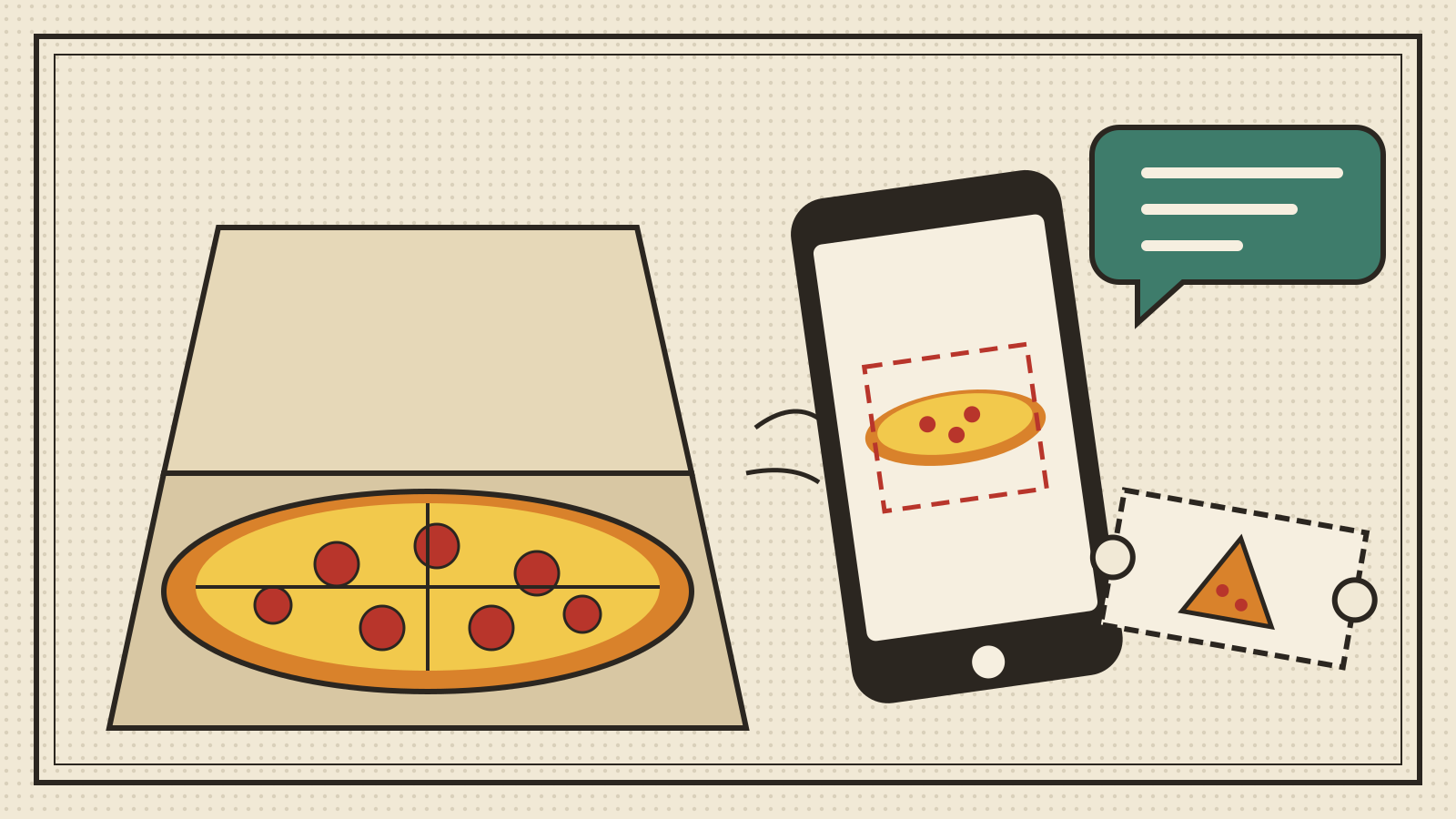
Papa Johns launched "Snap a Pizza, Get a Free Pizza" on November 9, 2026: Papa Rewards members who opt in to SMS, place a $15 app or web order, and upload an unedited photo of the pizza with a review get a free large one-topping on a later $5 order. The free pizza is really the price of a text subscriber, a first-party quality report, and a second order.
The offer is the first visible piece of "Unbox Better," the turnaround plan Papa Johns rolled out alongside a rough third quarter. The company's Q3 release shows North America comparable sales down 8.3% and North America system-wide sales down 8.8% to $802.3 million. Nation's Restaurant News counts it as the ninth negative quarter in the past 10. So nobody is giving away pizza here for fun.
What I find more interesting than the pizza is the order of the gates. Most "free item for joining" offers ask for one thing. This one stacks four: an account, an SMS opt-in, a paid order, and a piece of content. Then it pays out in a way that forces a fifth thing, a return visit.
Read the terms like a funnel diagram
According to PPC Land's breakdown of the announcement, the steps go like this. Sign in or create a Papa Rewards account. Opt in to texts (eligibility depends on it). Order at least $15 through the app or PapaJohns.com. Wait for a text. Take a "real, unedited photo" before eating and upload it with feedback on the bake and crust. The reward then lands in your offers and needs a $5 minimum purchase to redeem.
So the cheapest path to a "free" pizza is about $20 of spend across two orders. On paper that's a promo. In practice it reads more like a paid acquisition program where the CPA is denominated in dough and cheese instead of dollars.
A few things are not spelled out, and PPC Land flags them: no stated end date (it's described as a two-week run), no reward expiry, no word on whether you can earn more than one, and no mention of third-party delivery apps qualifying. That last gap is probably deliberate. You can't text a DoorDash customer whose phone number you never got.
The photo is the part the CMO actually wants
Restaurant Dive reported that the photos will be shared with restaurants and that an AI agent will analyze images and feedback to assess heat retention, cheese, sauce, and dough. CEO Todd Penegor told the outlet the company is "looking at heat retention for the pizzas as they're being delivered" and expects to bring the offer back several times in 2027.
That's a smart way to spend a discount. Papa Johns already leans on deals (Penegor called the category's discounting "a bit of a race to the bottom" in the same interview). This one at least buys something back: thousands of timestamped, store-level quality photos that would otherwise cost a mystery-shopper program real money. Global CMO Chris Lyn-Sue's line in the announcement, that "every photo and every review helps us better understand what customers love," is the press release version. The less polished version is that a franchise system with weak comps needs proof of which stores are sending out cold pizza.
Small aside, because it surprised me: the review is private feedback, not a public review on Google or Yelp. That distinction matters. The FTC's 2024 rule on fake reviews and Google's tightening stance on incentivized reviews both target paid-for public sentiment. Paying for honest internal feedback is a different animal, and I'd guess Papa Johns' lawyers kept it that way on purpose. If you copy this structure and route the photos to your public review profile, you're in a different risk bucket entirely.
Price the SMS subscriber before you copy the mechanic
This is where I'd push back on anyone in a meeting this week saying "we should do a Papa Johns." The math only works if you know three numbers your finance team may not hand you easily.
First, how many of the opt-ins are actually new. Papa Rewards members who already get texts will happily claim a free pizza too. Every one of them is a pure discount with no list growth attached. If 60% of redeemers were already subscribed, your effective cost per new subscriber is 2.5x the headline.
Second, what a subscriber is worth over 90 days. Klaviyo's 2026 SMS benchmarks, drawn from over 183,000 customers, say automated flows average a click rate near 10%, roughly double campaigns, and that flows make up 7.6% of sends but 45.2% of SMS revenue. Translation: a texting list earns most of its keep through triggered messages (order-ready, reorder nudges, "your reward expires Friday"), not blasts. If you don't have those flows built, the subscriber is worth a lot less than the vendor deck suggests.
Third, how much of the second order would have happened anyway. This is the one almost nobody measures. A Kantar study presented at the IPA in October found 75% of consumer goods leaders involved in promotions couldn't estimate what share of their promotions were profitable over the past year, and 76% said their companies repeat promotions even when profit was never assessed. Restaurant chains aren't CPG brands, sure. I'd still bet the pattern holds.
A bounceback offer is a coupon with a homework assignment attached.
The homework is what makes it worth more than a plain coupon. But only if somebody grades it.
A 20-minute version for brands without 6,000 stores
You don't need an AI pizza inspector to borrow the useful part. If you run SMS or email acquisition for an ecommerce or local business, this is roughly how I'd set it up:
- Gate the reward on two actions, not one. Opt-in plus a qualifying order. Anyone willing to do both is already a buyer.
- Pay out on the next order. The reward-on-return structure is what turns a one-time discount into a measurable repeat rate. Set a short expiry (Papa Johns didn't publish one, which I think is a mistake; 14 days is a reasonable starting point).
- Tag every redeemer as new vs. existing subscriber at the moment of opt-in. This is a single field in most SMS platforms. Without it, the program's cost per subscriber is unknowable.
- Hold out 10% of eligible customers. Show them nothing. Compare their 30-day repeat rate to the exposed group. That gap is your real lift.
- Track 30-day opt-out rate for the promo cohort separately. Bribed subscribers probably leave faster, though few brands publish the numbers. If the promo cohort unsubscribes at more than double your organic cohort's rate, the list growth was mostly rented.
One more practical note on consent. SMS opt-ins collected through a promo still need clean, documented consent language. The Fifth Circuit's February ruling on TCPA consent loosened one piece of the rules in one circuit, but statutory damages still run $500 per violation, and nobody wants to test that on a pizza promo. If you need a refresher on what data is actually worth collecting at signup, our guide on why most first-party data strategies collect 40 fields and use 4 covers the trimming.
Why owned channels keep showing up in turnaround plans
It's not just Papa Johns. Restaurants and retailers keep moving budget toward channels they control as paid and search get pricier and leakier. We wrote recently about how email grew 16% while organic search fell 13% in one dataset, and SMS is the same bet with a shorter attention span. The company also shifted its franchise ad money, cutting the national fund from 6% to 5% of sales and bringing back a 2% local contribution, per Restaurant Dive. More local money plus a bigger text list is a fairly coherent combo, if the stores can actually deliver a hot pizza.
And to be fair, that's the part none of this marketing fixes. A photo program that keeps documenting lukewarm cheese is useful data, but it's also a growing pile of evidence. I suspect the offer only sticks in 2027 if the photos start getting better.
My prediction: if Papa Johns runs this three or more times next year as Penegor suggested, it will quietly add a limit of one reward per account by the second run, because repeat claimers from the existing loyalty base will eat most of the budget. Whether the photos end up saving the comps is a separate question, and honestly a harder one.