State Farm Put Jake Inside a Netflix Show and Nobody Can Prove It Worked
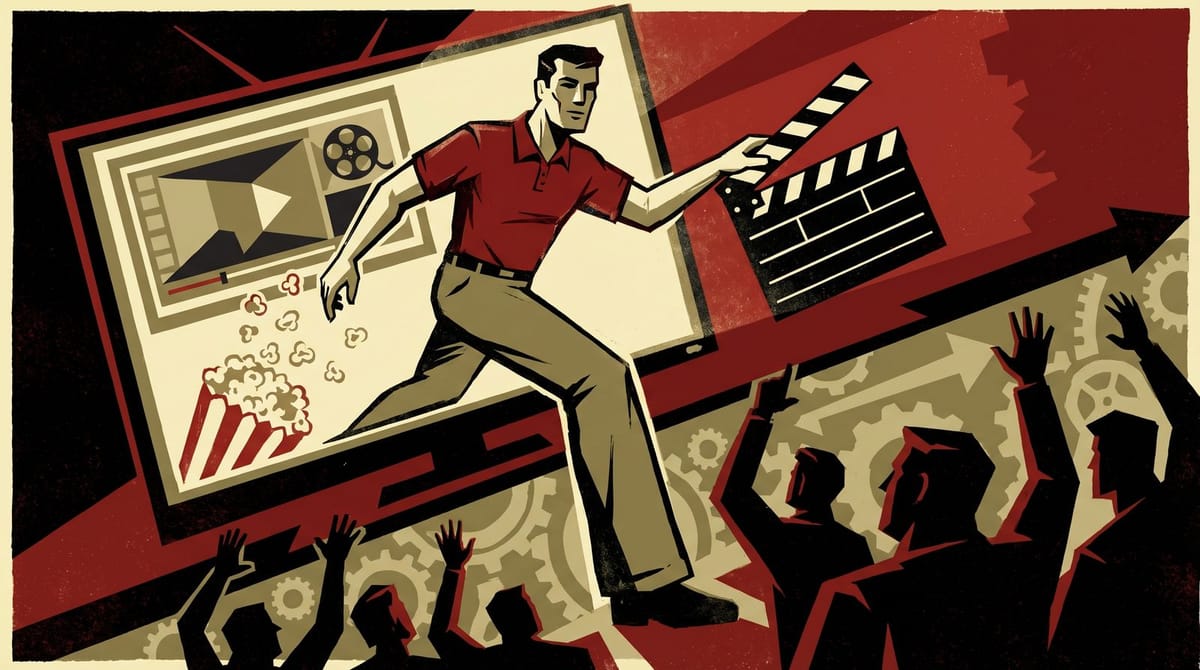
State Farm didn't buy a product placement in Netflix's Running Point. That would be simple, measurable, and boring. Instead, they licensed their mascot, Jake from State Farm, as a scripted character in a Kate Hudson basketball comedy. Jake shows up, in character, to help manage an unruly point guard. He doesn't pitch insurance. He doesn't wink at the camera. He just exists in the show's universe as though he belongs there.
This is a fundamentally different bet than slapping a logo on a backboard stanchion (which State Farm also does on the show, for what it's worth). And it's one that almost nobody in the industry can tell you how to measure.
The deal started as a commercial and turned into something weirder
The conversation began at Netflix's upfronts in May 2025. State Farm originally planned to shoot a standard commercial featuring the Running Point cast. Then Magno Herran, Netflix's VP of Global Brand Marketing, had a different idea. He told Adweek that they had this notion of pairing Travis with Jake, and then he thought, what if we snuck him into the show.
So instead of a commercial that references a show, they put the ad character into the show itself. Jake, played by Kevin Miles (who has been the character since 2020), appears in an episode alongside Chet Hanks, who plays Travis Bugg, the LA Waves' volatile point guard. The setup: Jake steps in to help manage the team's biggest liability.
State Farm's head of marketing, Alyson Griffin, framed it as organic. She told Adweek it adds to the texture of the show and the storytelling, that State Farm being there and Jake being there is real life. Which it is not. Jake from State Farm is a fictional insurance mascot. But that contradiction is sort of the whole point of the strategy.
Jake has been rehearsing for this in public for years
Before Netflix, State Farm put Jake inside the world of Apple TV's Severance in a 60-second spot directed by Ben Stiller with Adam Scott in character. That one was a traditional commercial, just set inside a show's world. The Netflix deal is the escalation: Jake as an actual scripted character, integrated into the narrative rather than running alongside it.
Miles has 1.5 million TikTok followers as Jake. He shows up courtside at NBA games, at the WNBA draft, at red carpets. As Brian Grubb noted on Substack, the whole situation is both depressing and outrageously funny because State Farm replaced the original real Jake (an actual employee named Jake Stone from the 2011 ad) with an actor, then spent years making audiences believe the actor version was the real one. The character has been so thoroughly built out that putting him in a scripted show almost makes sense.
Almost.
Brands are trying to become the entertainment, not sponsor it
State Farm isn't doing this alone. Digiday reported that Ford is producing a custom off-road golf show for Amazon Prime called Bronco Off Course, Nissan built a jiu-jitsu show inside a car to demonstrate cabin size, and Google is funding documentary series around English soccer fans for Google Pixel. The thesis is shared across all of them: traditional sponsorships are expensive and increasingly invisible, so brands should become the content instead.
The numbers support the direction, at least partially. A survey by Small World and Tracksuit of 16,000 US consumers found that 83% of brands considered most entertaining increased their revenue last year. Product placement globally is roughly a $33 billion industry, growing at double digits every year since 2020. And Netflix itself doubled its ad revenue last year and expects to do the same in 2026, with content spending hitting $20 billion.
AMC recently took a similar bet, slicing its new show The Audacity into 21 TikTok clips to rent a microdrama audience rather than buying one through traditional channels. The logic is the same: meet the audience inside the content they already want, not between it.
So there's real money moving in this direction. The uncomfortable part is whether anyone can tell you what it's actually buying.
The measurement gap is the real story here
The entire value proposition of branded entertainment depends on the brand not selling anything.
Branding expert Allen Adamson told Adweek that the moment audiences feel like they're being sold to, the spell breaks. Griffin herself emphasized that Jake doesn't sell anything in the show. He's supposed to embody the good neighbor positioning without mentioning insurance.
Which creates a genuinely awkward attribution conversation. If Jake can't sell, and the whole point is that he doesn't feel like an ad, then what are you tracking? Ford's team said they expect to measure success through social impressions and views. State Farm's pitch is that branded content reaches audiences paid ads cannot, specifically those higher-tier Netflix subscribers who pay more to skip ads entirely.
Both of those are directionally true and also pretty thin as a business case. Social impressions don't tell you whether someone became more likely to choose State Farm over Geico. Reaching ad-skip subscribers sounds nice in theory, but if the integration is subtle enough to not feel like an ad, it might also be subtle enough to not register at all.
Trying to measure this is a bit like trying to A/B test your brand's reputation. You can sense the difference between a brand that shows up in culture and one that doesn't, but good luck putting that in a spreadsheet that survives a quarterly budget review.
I think this is where most brand teams will trip up. The instinct is to measure branded entertainment the same way you measure a media campaign, and it simply doesn't map. There's no click. There's no conversion pixel. There's a character named Jake who helps a fictional basketball player manage his career, and somewhere in that interaction, brand affinity is supposed to increase by some amount that nobody has a reliable way to quantify.
The character equity test most brands will fail
If you don't have an established character that audiences already recognize on sight, this approach probably isn't for you yet. The reason Jake works in a scripted show is that he already exists as a cultural artifact. People have seen hundreds of Jake commercials. They know who he is before the episode starts. That pre-existing recognition is what turns the cameo into an easter egg rather than an intrusion.
For brands without that kind of character equity, the play is probably closer to what Ford and Nissan are doing: funding original content where the product is present but the brand is the producer, not the character. That requires different capabilities (someone who can greenlight content, not just buy media) and a different budget conversation entirely.
Three questions before you pitch branded entertainment to your CMO:
One: does your brand have a recognizable character or mascot that audiences have pre-existing feelings about? If not, start there before you start shopping for Netflix deals.
Two: can you invest with zero short-term attribution? This is a long-cycle play. If leadership needs to see quarterly impact from every dollar, branded entertainment will be a miserable internal sell.
Three: do you have creative partners who understand entertainment production? The Severance spot worked partly because Ben Stiller directed it. The quality bar is the show itself, not the ad break. Showing up with agency-level production inside a streaming drama is how you break the spell Adamson warned about.
The quiet gamble behind the whole strategy
Branded entertainment spending is going to keep growing because ad avoidance is going to keep growing. That's the structural tailwind. Netflix adding pause ads and interactive mid-rolls in 2026 will help fill some of the gap, but it also nudges more subscribers toward ad-free tiers, which circles right back to the problem branded content is supposed to solve.
My prediction: somewhere between 3 and 5 more insurance-mascot-as-character deals within the next 18 months. Progressive's Flo, the Geico Gecko, maybe Allstate's Mayhem guy. Insurance brands are unusually well positioned because their characters are already household names and their product is something people encounter during stressful moments, not something they browse for fun. Entertainment integration lets them stay present without the hard sell that makes insurance advertising grating.
The measurement infrastructure for branded entertainment is about three years behind the spending. That's the gap Jake is living in right now, somewhere between mascot and method actor, in a place no attribution model can reach. The brands making this bet are saying the vibes are worth more than the proof. Given what ad avoidance numbers look like, they might not be wrong.