Uncommon NY Put Live Roaches in a Puffer Jacket and Spent Nothing on Ads
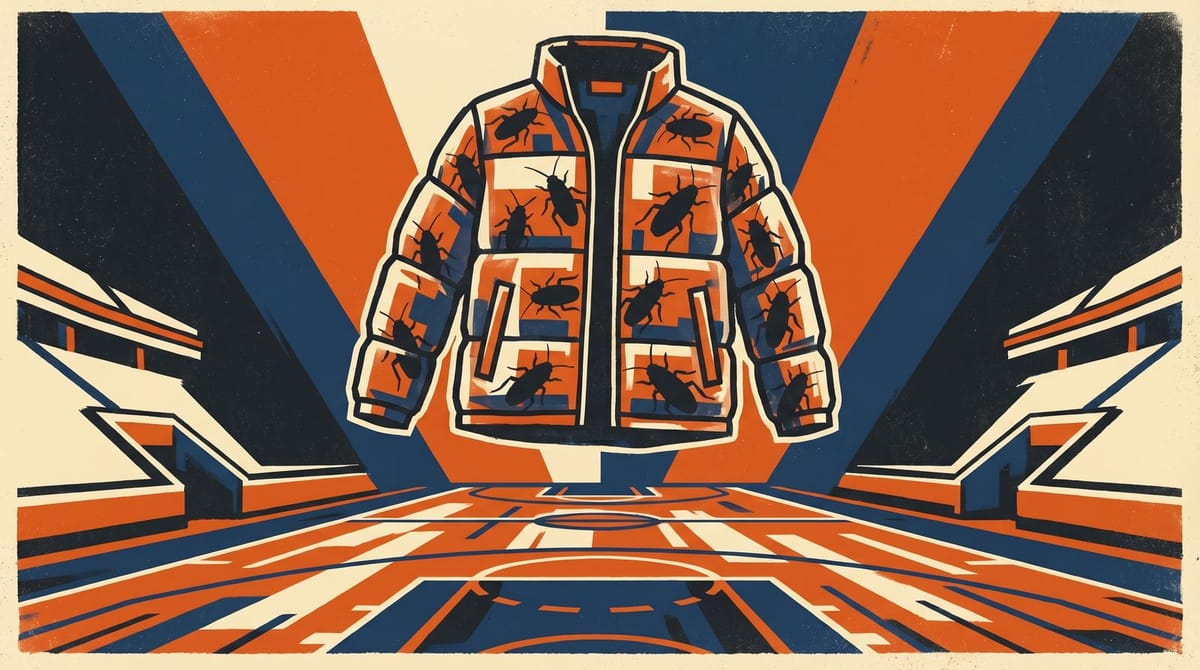
The most interesting marketing campaign of April didn't come with a media plan, a brief deck, or a campaign calendar. It came with live cockroaches.
Uncommon NY debuted a see-through puffer jacket filled with actual living cockroaches at Madison Square Garden on Thursday night, timed to the Knicks' 112-106 win over the Celtics. The label inside reads: "You can't kill what won't quit."
The whole thing traces back to a Celtics reporter calling the Knicks "cockroaches" in May 2025. Meant with grudging respect, apparently. But Uncommon heard a brand opportunity where most agencies would have heard a joke and moved on. Eleven months later, there's a jacket, a fabricated team identity called the "New York Cockroaches," a custom logo, a full merch line at roachcoat.com, and a 1990s New York streetwear aesthetic that looks like it was pulled from a Canal Street bootleg rack in the best possible way.
No paid media. No influencer deals. No programmatic spend. Someone wore the thing past MSG security, and that was the distribution strategy.
The sequel to a 97-million-view Instagram post
This isn't Uncommon's first time turning something gross into a marketing win. In February 2024, they debuted a pair of knee-high boots with taxidermied rats in caged platform soles at New York Fashion Week. The "Ratboot" was not a client project. It was Uncommon announcing that their New York office existed.
Model Jenny Assaf wore them to The Blonds' show. Content creator Janette Ok posted a video to her 173,000 Instagram followers. That video hit 97 million views, roughly the same audience as the Super Bowl that same weekend.
Sam Shepard, Uncommon's chief creative officer, described the original Ratboot sketch as "the dumbest sketch I've ever made in my life." The boots were auctioned for charity. The awareness was permanent.
The Roachcoat follows the same playbook: take something distinctly, grossly New York, turn it into a wearable provocation, and let the internet handle distribution. But this time Uncommon went further. The "New York Cockroaches" identity is a full project, not just a stunt. Custom logo, multiple SKUs, a dedicated website. The visual language borrows from 1990s New York bootleg sports merch, the kind of thing you'd find at a folding table outside Penn Station. It reads as authentic because it was designed to exist in that world, not just reference it from inside a Soho studio.
Why the $0 media spend is the real story
Most marketing teams would struggle to produce a single banner ad in eleven months. Uncommon built a cultural moment, a product line, and a merch infrastructure off a comment from a sports reporter.
This matters because the gap between "planned campaign" marketing and "reactive cultural moment" marketing keeps widening. Sportradar called real-time moments "the new marketing currency" in a January report, arguing that winning brands show up in the moments that matter to fans, not the moments convenient for the marketing calendar.
I think that framing is mostly right, though probably too clean. The reality is messier. Most reactive marketing fails because the brands doing it don't actually have anything interesting to say about the moment. They tweet a meme template, tack on a logo, and call it culture. What Uncommon has going for it is different. They don't just react. They build a physical artifact. Something you can hold, wear, photograph, argue about at a bar.
Think of it like the difference between retweeting a trending topic and printing a newspaper about it. One disappears in an hour. The other sits on someone's coffee table for a month.
What Uncommon gets right (that most agencies won't copy)
Here's the pattern that's easy to miss if you're just looking at the spectacle.
Every Uncommon stunt shares three traits. One, it's rooted in something culturally specific. Not "sports fans" generic. Specifically the Knicks, specifically the Celtics rivalry, specifically a comment from a specific reporter in a specific month. Two, there's always a physical product. Not just a social post. The Ratboot existed. The Roachcoat exists. You can buy merch at roachcoat.com. That physicality makes it feel real in a way a hashtag campaign never will. Three, they don't over-explain it. There's no manifesto. No 10-page LinkedIn post from the CCO about the power of cultural storytelling. They just... put roaches in a jacket.
The broader recognition backs this up. Ad Age named Uncommon their Design and Branding Agency of the Year for 2026, citing 85% year-over-year revenue growth in the New York office. Their work for The Ordinary drove a 10-15% sales increase during one campaign and a 26% awareness lift during another. Not vibes-only results.
If I had to pick the single thing that separates Uncommon from the wave of agencies claiming to "do culture," it's probably this: they don't ask permission. The Ratboot wasn't a client brief. The Roachcoat doesn't appear to be one either. They build the thing first, and the business case writes itself after the video crosses 50 million views.
The part that makes brand teams squirm
There's something in this story that conventional brand management actively rejects. A roach-filled jacket, created without client approval or media spend, generating more attention than campaigns with seven-figure budgets and months of planning.
From what I've seen, most in-house teams would never greenlight this. Not because it's bad work. Because the process doesn't exist to approve it. There's no brief template for "someone insulted our team, let's make a jacket out of it." There's no line item for live cockroaches in any production budget. And honestly, there shouldn't need to be.
The lesson isn't "put bugs in things." The lesson is that speed, specificity, and a physical artifact beat volume and spend more often than most CMOs want to acknowledge. The average campaign takes 4-6 months from brief to launch. Uncommon turned an insult into a product in eleven months. A faster team could probably do it in three.
This pattern keeps showing up. Dollar Shave Club recently used the pink razor aisle as a foil for an entire launch campaign with similar mechanics: find a cultural tension, build one artifact around it, let the internet do the expensive part. I think by the end of 2026, at least a third of the campaigns that win industry awards will have spent less than $50,000 on media. The expensive part of marketing is increasingly just having an opinion worth spreading.
Steal the mechanics, skip the cockroaches
You probably shouldn't fill anything with live insects. (Though I'd respect the commitment if you did.)
But the mechanics transfer. Pick one cultural moment relevant to your brand in the next 30 days. Not a hashtag holiday. Not something from the content calendar. Something specific to your industry, your competitors, or your city. The kind of thing that generates conversation in group chats, not calendar invites. Build one physical or tangible response. Even a limited run of 50 stickers counts. Ship it before anyone writes a brief.
If it generates more organic impressions than your last paid campaign, you've learned something the budget couldn't teach you.
The benchmark from Uncommon's playbook: one Instagram video posted by a creator with 173,000 followers generated 97 million views. Your last influencer campaign, with a substantially bigger budget and a more conventional plan, almost certainly didn't come close.
Notice Me Senpai Editorial