YouTube Is Automating the Influencer Agency. The Creator Compensation Model Hasn't Caught Up.
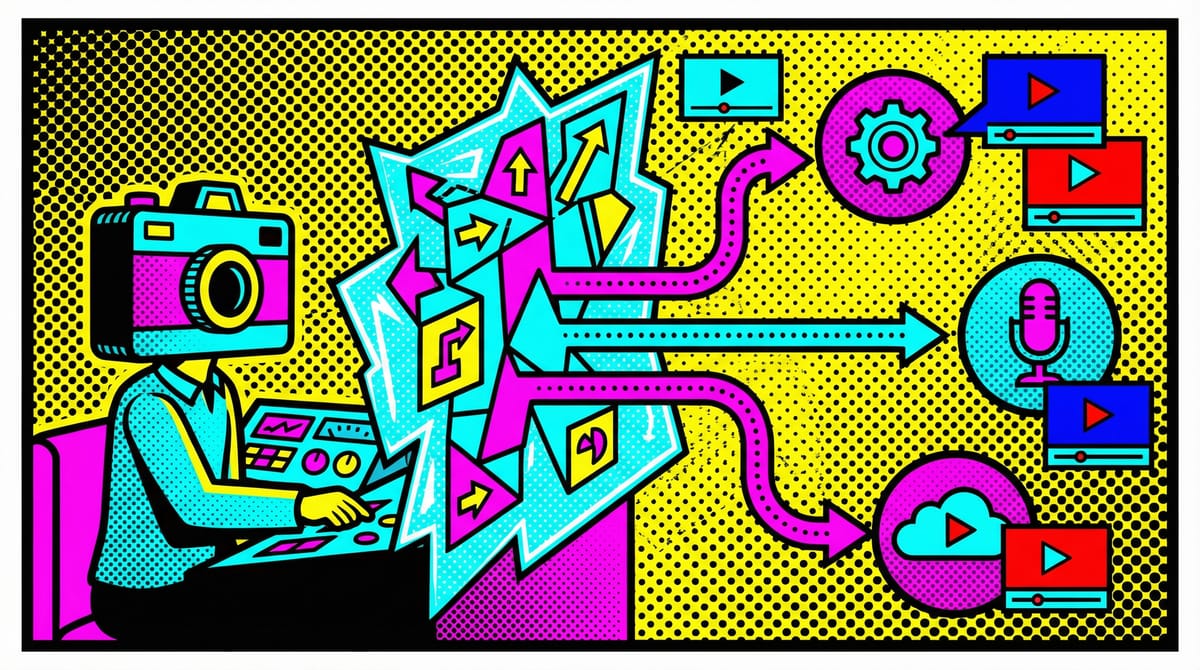
YouTube just replaced its BrandConnect creator marketplace with something significantly more ambitious, and the announcement buried the most interesting part. The new platform, called Creator Partnerships, uses Gemini AI to match brands with creators across 3 million YouTube Partner Program accounts in seven countries. That's the headline. The part that will actually change how campaigns work is Creator Partnerships Boost: a format that turns any organic creator video into paid ad inventory without the brand producing a single new asset.
This isn't a minor product update. YouTube is essentially building the infrastructure to automate the full influencer agency workflow, from discovery to amplification to measurement, inside the same Google Ads interface where you manage everything else. And they're doing it at zero commission, which is a direct shot at every third-party influencer platform charging 15 to 25 percent per transaction.
The AI matching solves a real bottleneck, but the harder problem is downstream
The Gemini-powered matching works by analyzing what YouTube describes as "billions of data points": audience similarity, organic brand mentions, subscriber growth, engagement rates, view duration, demographics. Advertisers type natural language queries into Google Ads or DV360, something like "find US tech creators reviewing sports gear with high Gen Z retention," and get matched results with channel insights and sample videos.
On paper, this is genuinely useful. The manual creator discovery process is one of the biggest time sinks in influencer marketing, and YouTube claims the platform reduces partnership setup from two weeks to under 48 hours for pre-vetted relationships. Creators who share deeper channel insights appear 60 percent more often in search results, based on October through December 2025 data.
But matching is the easy part. The harder questions start after the match is made.
Creator Partnerships Boost is the real story, and the compensation math is unresolved
Creator Partnerships Boost lets brands take an existing organic creator video and run it as a paid YouTube Shorts ad or in-stream ad. No separate creative production. No new asset needed. The organic video becomes the ad, and it runs through YouTube's AI-powered campaign types: Demand Gen, Video Reach, and Video View campaigns.
YouTube's data shows a 30 percent average conversion lift when promoting creator-led videos on Shorts, based on January 2025 through January 2026 data. And a Google/Circana meta-analysis found 86 percent higher incremental long-term ROAS from creator content compared to paid social. Those are strong numbers.
The part that hasn't been figured out yet is what "boosting" an organic video as paid media should actually cost the creator. Charlotte Stavrou from SevenSix flagged this directly in an interview with Digiday: "If brands can scale creator content as ads, compensation needs to reflect that... creators will feel undervalued quickly." She's not wrong. The current deal structure assumes a creator gets paid for the original content, but the amplification as paid ads extends that content's reach (and the brand's ROI) well beyond what the original fee anticipated.
There's no standard for this yet. YouTube's platform doesn't set pricing. And creators who are new to brand deals may not know to negotiate usage rights that cover paid amplification. This is the gap where agencies still add real value, at least for now.
The zero-commission model is a landmine for third-party platforms
YouTube taking zero commission from brand-creator transactions is a strategic choice, not a generosity play. It makes the platform immediately cheaper than every standalone influencer marketplace. Tubefilter reported that creator ad spend is projected to hit $37 billion in 2025 (up 26 percent year over year), more than doubling from $13.9 billion in 2021. YouTube wants to capture a larger share of that spend by making their platform the default infrastructure layer.
The threat to standalone platforms like AspireIQ, Grin, and others is obvious. If YouTube offers discovery, matching, outreach, deal management, and measurement natively inside Google Ads, at zero commission, the value proposition of paying a separate SaaS platform gets harder to justify. We wrote about how AI is reshaping influencer casting toward a portfolio approach recently, and this accelerates that trend significantly.
YouTube did expand the Creator Partnerships API to 24 third-party companies at NewFronts, including CreatorIQ, Sprout Social, Later, and Impact.com. So the play seems to be coexistence rather than full replacement. YouTube owns the data and infrastructure. Third-party tools get API access to build on top of it. Whether that's a sustainable arrangement or just a transition period before YouTube absorbs more of the workflow is something I genuinely don't know. But it's worth watching.
The measurement integration matters more than the AI matching
This is the part that doesn't get enough attention. Creator Partnerships brings unified measurement that combines organic and paid creator content performance through Brand Lift, Search Lift, and Conversion Lift studies. All inside the same Google Ads reporting you already use.
Tim Sovay from CreatorIQ put it well: the industry "has lacked the depth of measurement needed to scale with confidence." That's been the core objection from CFOs when influencer budgets come up for review. You can show engagement metrics and sentiment, but connecting creator spend to actual business outcomes has been consistently difficult. YouTube integrating creator campaigns into the same measurement framework as Search and Display ads removes a significant barrier to budget allocation.
This is probably worth more, long-term, than the AI matching feature. AI matching makes the process faster. Unified measurement makes the budget defensible.
The audience data tilts the math further toward YouTube
YouTube shared some audience stats at NewFronts that are worth factoring into your channel allocation decisions. 45 percent of YouTube Shorts users don't use TikTok. 65 percent of YouTube Shorts users don't use Instagram Reels. The audience overlap is much thinner than most teams assume, which means YouTube Shorts isn't reaching the same people as your TikTok and Reels campaigns.
Also interesting: 40 percent of YouTube video views happen 30 or more days after upload. That's a fundamentally different content lifecycle than TikTok's 48-hour spike-and-fade pattern. Creator content on YouTube has a longer shelf life, which changes the economics of what you're willing to pay per video and how you model return over time.
For anyone managing multi-platform creator budgets, these numbers suggest YouTube might be underweighted in the mix relative to where the incremental reach actually lives.
The practical test if you manage creator campaigns
If I were running influencer campaigns right now, here's what I'd do in the next two weeks. First, check whether Creator Partnerships is available in your market (it launched in the US, UK, India, Indonesia, Brazil, Australia, and Canada). Second, run a test using Creator Partnerships Boost on one creator video that already performed well organically. Compare the cost per conversion against your standard Video View campaign creative. The 30 percent conversion lift stat is YouTube's aggregate number. Your category might be higher or lower, and the only way to know is to test it.
Third, and this is the part most teams will skip: renegotiate your creator contracts to include paid amplification rights explicitly. If you're planning to boost organic creator content as paid ads, that usage should be in the agreement from day one. Retrofitting it after the content is live is more expensive and more awkward.
YouTube is handing brands a faster, cheaper, more measurable version of influencer marketing. The infrastructure is genuinely impressive. But the gap between what the platform enables and what the creator economy has agreed to in terms of fair compensation is real, and it's going to generate friction for at least the next year as the norms settle. The brands that build equitable creator relationships now, with usage rights that account for boosted distribution, will avoid the contract disputes that are almost certainly coming.
By Notice Me Senpai Editorial