April Fools Is the One Day Brands Can Be Weird. Most of Them Waste It.
Every April 1st, your LinkedIn feed fills up with "genius" brand pranks that are neither genius nor funny. A fake product that took longer to ideate than it took anyone to forget. A press release about a "revolutionary" food-tech mashup that exists only as a render. You have seen it. You have scrolled past it. So has everyone else.
And then, occasionally, one stops you. Not because it is funny (though it usually is), but because something about it makes you think: wait, would I actually buy that?
That is the line separating brand noise from brand building on April Fools. And this year, a handful of brands found it.
The Six That Actually Landed
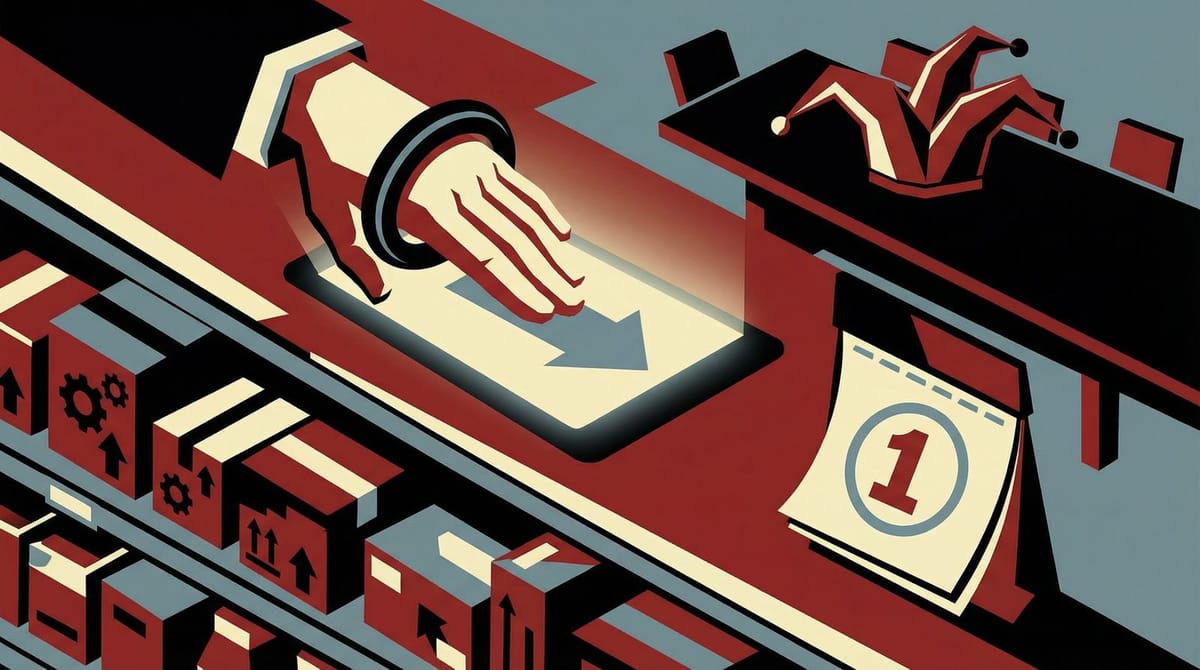
Yahoo's "Scrollppr" is a ring that physically prevents your thumb from scrolling. Sold for $4.99 on TikTok Shop for one day only, in a box that yodels when you open it. This is Yahoo's second consecutive year running real products on April Fools after last year's "Touch Grass Keyboard." The TikTok Shop distribution is the interesting part: they are not just making a joke, they are testing a sales channel with zero downside.
Olipop x Goodwipes created "Peaches and Cream Flushable Wipes." And here is the part that matters: they are actually selling them. Available at Walmart and Goodwipes.com starting today. The tagline ("Treat your butt as good as your gut") is absurd, but the co-branded distribution through Walmart is a real product launch wearing a jester hat.
Dude Wipes launched a "Butt Massk," a hydrogel facial mask engineered for your posterior, leaning hard into the skinification-of-everything trend. The Drum noted it claims to "whiten, tighten, cool, and wax in 15 minutes." Pure absurdity, but the brand voice is so consistent with Dude Wipes' actual marketing that the line between joke and product is intentionally blurry.
Subway announced "Sub-Gels," energy gels that taste like Subway sauces (Chipotle Southwest, Sweet Onion, Honey Mustard), timed to the London Marathon on April 26. The timing is strategic. It is a joke now, but it connects Subway to the running community in a way a traditional sponsorship ad never could.
Whiskers' "Cataire" is a line of luxury sweaters allegedly woven from adoptable shelter cat fur, listed on eBay with actual adoption profiles for each cat. Proceeds benefit Best Friends Animal Society. The stunt doubles as a donation mechanism and an adoption campaign. That is three objectives from one piece of creative.
GymNation's Protein Shisha Bar launched a full week before April Fools to build believability: tobacco-free vapor that supposedly delivers 25g of aroma-activated protein. They deliberately blurred the timeline to make people genuinely unsure whether it was real. The ambiguity is the engagement driver.
The Formula Hiding Inside the Absurdity
If you strip these back, the successful April Fools campaigns share three things that most brand stunts miss.
They extend the brand's existing identity instead of abandoning it. Dude Wipes making a butt mask is on-brand. Yahoo selling a phone-addiction product is on-brand. A luxury car brand announcing a line of scented candles would not be on-brand. The best stunts feel like a natural (if ridiculous) extension of what the company already does. When a stunt feels random, it generates confusion, not engagement.
They create real scarcity or real utility. Olipop's wipes are actually for sale. Yahoo's ring was on TikTok Shop for one day. Whiskers' campaign drives real shelter donations. The stunts that generate the most engagement are the ones where the audience is not entirely sure it is a joke. According to Sprout Social's 2024 research, humor-driven content sees 38% higher share rates than informative-only posts. But humor plus ambiguity? That is what makes people tag their coworkers.
They use the stunt as a distribution play, not just a creative play. Yahoo chose TikTok Shop specifically. Olipop chose Walmart. GymNation launched a week early to build credibility. These are channel decisions, not just creative ones. The stunt is the vehicle. The distribution strategy is the engine.
When Stunt Marketing Makes Sense (And When It Absolutely Does Not)
I will be direct: April Fools marketing is not for every brand. If your company is in healthcare, financial services, or anything where trust is the primary currency, a fake product announcement is more likely to damage credibility than build it. The 2019 Volkswagen "Voltswagen" situation (which was not even April Fools, just a poorly timed rebrand tease) drew SEC scrutiny and a stock price dip. Brand humor requires a certain amount of built-up goodwill to spend.
The brands where this works tend to share a few characteristics: they already have a playful brand voice, their audience expects irreverence, and the stunt costs are negligible compared to the earned media potential. Hootsuite's data suggests humor-driven content sees 23% higher engagement rates than standard brand messaging. That is a real number. But it only applies if the humor fits.
The Measurement Problem Nobody Talks About on April 2nd
The reason more brands do not invest in April Fools is measurement. You cannot easily attribute a fake product launch to pipeline or revenue. The ROI lives in earned media mentions, social shares, and brand sentiment shifts. Those are real, but they are hard to put in a deck for the CFO. On paper, earned media value sounds like a made-up metric. And honestly, sometimes it is.
The Liquid Death house giveaway we covered last week is a good example of the longer game: their stunts do not convert directly, but they have built a brand worth over $1.4 billion largely on the back of earned media from campaigns that look like jokes. The April Fools playbook is not about today's sales. It is about becoming the kind of brand people talk about voluntarily.
For practitioners wondering if they should pitch this for 2027, the budget test is simple. If you can produce the stunt for less than what you would spend on a single day of paid social, the earned media math almost always works. Yahoo's "Scrollppr" probably cost less to manufacture than a single TikTok ad buy targeting the same audience. The ring is the ad.
One Exercise to Run Before Q2 Planning Wraps
If your brand has even a slightly playful voice, here is a specific exercise worth running this month: brainstorm three fake products that extend your actual product line into absurdity. Do not judge them yet. Just list them. Then ask your social team a question: would any of these generate comments? Not likes. Comments. Comments are the signal that something triggers a response strong enough to type.
If one of the three generates genuine enthusiasm in the room, that is your April Fools 2027 candidate. Build it in Q4. Film it in January. The brands that win this day plan it 6-12 months in advance, not in a panicked creative meeting on March 28.
My honest take: a well-executed April Fools stunt probably generates more genuine brand awareness than most companies get from their entire Q2 social calendar. It is not for everyone. But for the brands it fits, it is probably the cheapest brand play nobody puts in the media plan.