Ashley Madison's Rebrand Runs on the Privacy Tools Hackers Forced It to Build
Most rebrands cover up a problem. Ashley Madison's new campaign, "Blessed Are the Discreet," does the opposite. It stops pretending the 2015 data breach never happened, and starts quietly selling the privacy features the company had to build after it. That's a more interesting story than the pivot from "Life is Short. Have an Affair" to "Where Desire Meets Discretion," which is what most of the coverage has focused on.
I think the real lesson here is that a reputational crisis that forces actual product changes can become a moat. It just has to outlive the news cycle long enough for the market to value the thing you were publicly shamed into building.
The numbers are small, but the ratio is the point
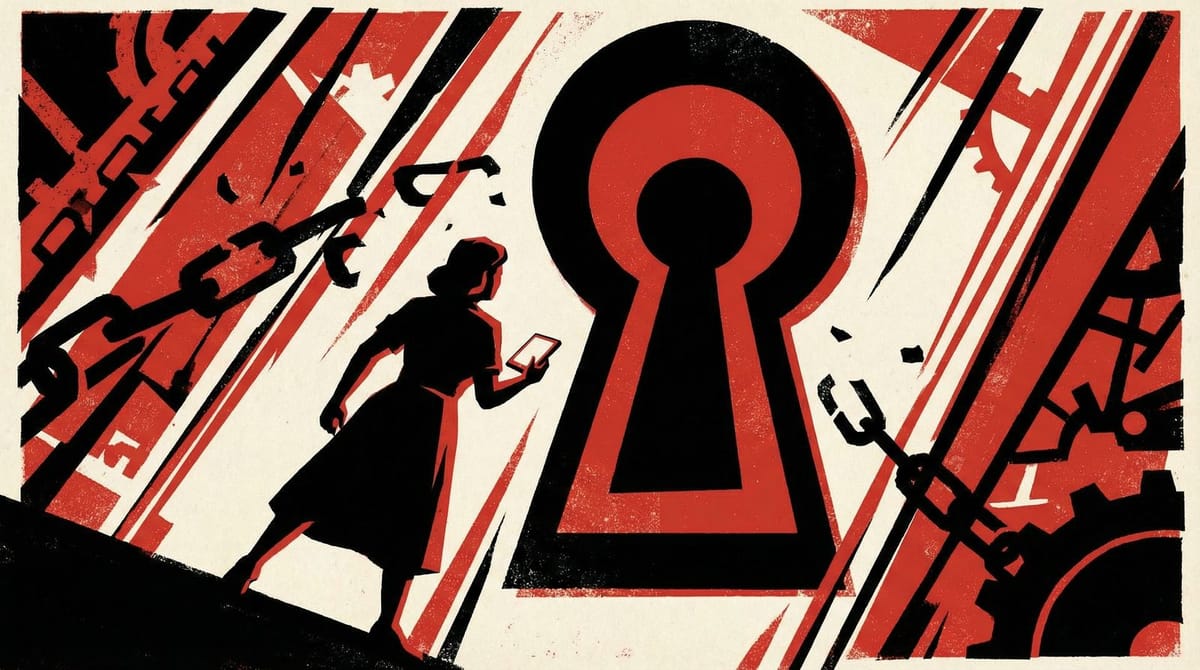
Per Adweek's reporting, the new campaign launched in late February 2026 through the creative agency Within. Thirty-second social spots, a refreshed logo built around a keyhole symbol, and a repositioning away from married-dating into what Ashley Madison is now calling "discreet dating."
Three weeks in, overall membership was up 5.3%. Female membership was up 29%. The gender split is the part that matters here. A 5% lift over three weeks on a twenty-year-old dating product is fine, not incredible. But female membership moving almost six times faster than the headline number tells you the campaign is attracting a specific person, not just the same profile under a new logo.
Chief Strategy Officer Paul Keable told Fox Business that 57% of new members last year were already single, before any rebrand. That's the quiet data point that should scare founders of every brand sitting on a positioning they're no longer serving. The audience changed. Nobody told the marketing.
What the 2015 hack actually built
Here's where the context most of the lifestyle coverage skipped gets interesting. In July and August 2015, a group calling itself the Impact Team dumped roughly 60 GB of Ashley Madison data, exposing around 36 million users' profile information, per the FTC. Parent company Avid Life Media, later renamed Ruby, agreed to an $11.2 million settlement and paid about $1.6 million to settle FTC and state actions. Toronto police at the time linked two suicides to the fallout.
In the aftermath, Ashley Madison had to actually become a privacy-first product. Not as marketing. As court-ordered, regulator-watched, reputation-salvaging infrastructure. Two-factor authentication. PCI compliance. Fully encrypted browsing. That isn't the stuff you put in a banner ad. That's the stuff you implement because the alternative is running a company that no longer exists.
Fast forward to 2026, and the company is selling a feature set that includes ID verification, a "private key" photo album where users control exactly who gets to see inside, and active screenshot blocking. From what I can tell, those features exist because the 2015 hack forced a decade of compliance and security spend that a normal dating app product roadmap would have deprioritized in favor of growth. The scar built the product.
Why the pivot works now, specifically
Timing is the part founders usually get wrong. Ashley Madison isn't running this campaign in 2026 because privacy suddenly matters. It's running it because the market finally caught up to a product attribute the company had for years.
A Pew Research survey from October 2023 found that 77% of Americans have little or no trust in the leaders of social media companies to publicly admit mistakes and take responsibility for misusing data. Roughly 67% said they understand little to nothing about what companies are doing with their personal information. That's the environment where "Where Desire Meets Discretion" stops sounding like a euphemism and starts sounding like a competitive feature against mainstream apps, where everything you swipe, message, or photograph gets backhauled through some ad stack.
And there's a separate pressure point that probably matters more. Match Group just spent a decade under FTC scrutiny for how OkCupid handled user photos, which we covered in OkCupid's 12-year cover-up ending with zero fines and a 20-year leash. Single women on the apps are paying attention to that kind of thing in a way they weren't a few years ago. The trust premium is finally real.
The uncomfortable part of this playbook
I'll be honest, this makes me a little uneasy as a marketing case study. The instinct is to say Ashley Madison is getting rewarded for surviving a breach it never should have had in the first place. And that's true. But the lesson for every other brand sitting on an old positioning is not "get hacked and wait." It's closer to this: if a crisis forces you to make real, expensive, structural changes to the product, don't unwind them the second the news cycle passes. Keep them. Wait. The market will eventually want them, and when it does, the brands that kept their compliance spend lit are the ones that can ship the campaign.
Most companies don't do this. Most companies strip out the compliance gains the minute the regulator turns around, because the CFO doesn't see the revenue in them. That's the quiet move Ashley Madison made that almost nobody is talking about: they kept the privacy stack alive for eleven years while the original legal motivation faded. Whether that was strategy or paranoia, it paid off.
The exercise worth running this week
If you run performance marketing for a brand that went through anything embarrassing in the last five years, pull your old incident reports. Look at what you built in response. Compliance features, verification flows, new moderation systems, GDPR tooling, whatever it was. Most of that is still sitting in production, paid for, and probably unmentioned in your current ad creative.
The Ashley Madison rebrand is built on features that already existed. The only new thing is the willingness to point at them. That's a cheaper and faster pivot than almost any other kind of brand work, and most teams are sleeping on it because the features feel like table stakes internally. They are not table stakes externally, not in 2026.
Here's a rough benchmark for testing this kind of repositioning. Aim for a 15 to 20% directional lift on your under-represented audience segment within the first month, before you commit real media budget. Ashley Madison's 29% female growth in three weeks is an outlier, but the shape of the movement is what you want to see. Headline lift that's modest, segment lift that's steep. If you run the test and see the reverse, the new angle isn't actually reaching anyone new. You're just repricing your existing base.
The part nobody in the trade press said out loud
What I find genuinely interesting about this story is that the brand reputation Ashley Madison is now running from, the infidelity shock-value brand, was never really the asset. The asset, it turns out, was the forced investment in privacy infrastructure. The thing the company got publicly humiliated for not having in 2015 is the exact thing they're now charging a premium for in 2026.
For a related brand strategy read, see our piece on Unilever giving up Hellmann's and Knorr, a different flavor of the same observation: the brand love stuff is rarely the moat, and the actual assets tend to be boring, operational, and hard to replicate.
What Ashley Madison did isn't really a repositioning. It's the long-delayed receipt for a line item the finance team has been writing checks for since 2016, and somebody on the brand team finally noticed they could sell it.
Notice Me Senpai Editorial