Unilever Gave Up Hellmann's and Knorr. Brand Love Was Never the Point.
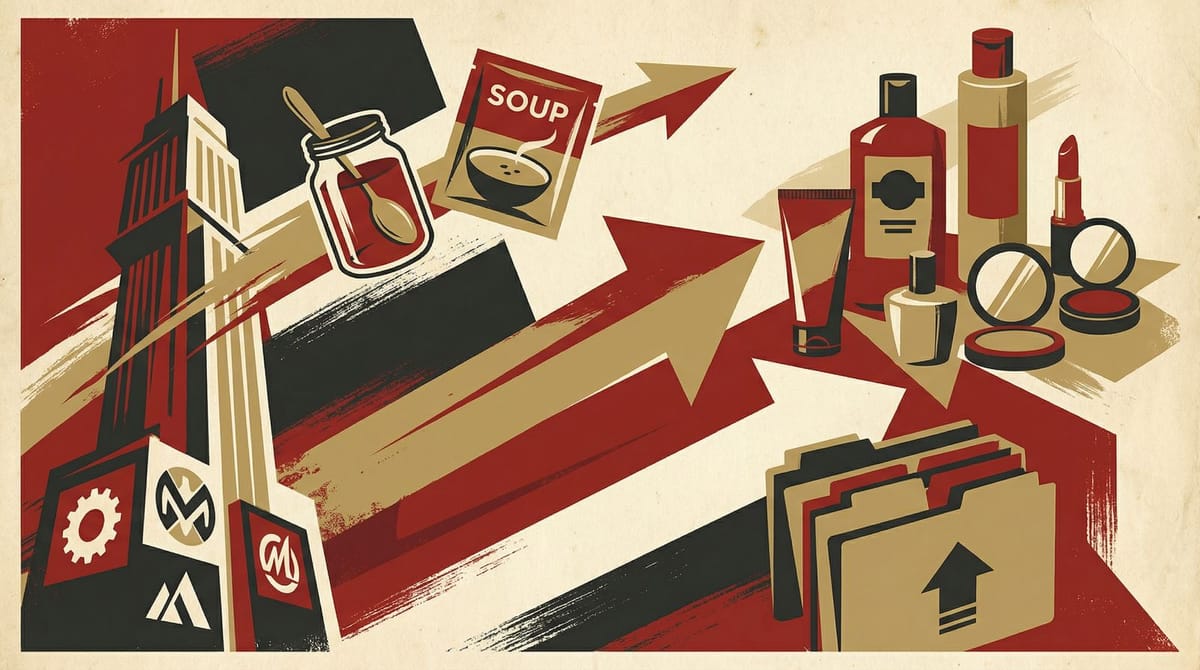
Unilever just agreed to combine its food business, including Hellmann's, Knorr, and roughly a dozen other brands most people grew up with, into a new entity with McCormick in a deal valued at approximately $45 billion. Unilever shareholders get 55 percent of the combined company plus $15.7 billion in cash. McCormick's CEO stays on. The deal is expected to close mid-2027.
The business press has mostly covered this as a financial story. Reverse Morris Trust structure, tax efficiency, combined revenue approaching $20 billion. That framing is accurate but it skips the question that matters to anyone in brand marketing: how do you let go of brands that people genuinely love?
The answer, it turns out, is that love was never the variable Unilever was optimizing for.
The brands leaving are the ones people actually recognize
Hellmann's and Knorr together make up roughly 70 percent of Unilever Foods' revenue. These are not struggling brands being offloaded because they stopped selling. Knorr is one of the largest food brands on the planet. Hellmann's is the category leader in mayonnaise in dozens of markets. People have emotional connections to these products in a way they do not have with, say, Dove body wash.
Which is exactly why this decision is interesting. Unilever is not shedding weak brands. They are shedding strong brands that happen to operate in a category with structural disadvantages.
Food is operationally demanding. The supply chains are complex, the margins are thinner than personal care, and the capital requirements for maintaining freshness infrastructure, cold chain logistics, and regulatory compliance across 100+ markets are substantial. Unilever's leadership looked at where they could deploy capital for the best returns and decided beauty and personal care wins that competition. Not because food is failing. Because the economics of personal care are simply better.
CEO Fernando Fernandez, who took over in March 2025, has been clear about the strategy: focus on 30 "Power Brands" that generate 75 percent of turnover, concentrate on beauty, personal care, and wellbeing. The food business generated revenue. It just did not generate the kind of returns that justify the complexity.
This is the second major divestiture in four months
Unilever already separated its ice cream business in December 2025. The Magnum Ice Cream Company (which includes Ben & Jerry's, Wall's, and Magnum) became an independent entity with roughly 21 percent global ice cream market share. Unilever kept a 19.9 percent stake and booked a 3.4 billion euro gain on the separation.
Now the food business follows. By mid-2027, Unilever will have exited virtually every consumer category that involves perishable goods, cold chain logistics, or commodity ingredient exposure. What remains is a company focused almost entirely on products with higher margins, simpler supply chains, and stronger pricing power.
The pattern is not unique to Unilever. But the speed and scale are. Two major divestitures in the span of a year, covering brands that collectively represented a significant chunk of the company's consumer identity. It is hard to think of another Fortune 100 company that has voluntarily separated from this much brand equity this quickly.
Brand love is a marketer metric. It is not a business metric.
This is where the marketing lesson gets uncomfortable. If you work in brand strategy, you have probably sat in a meeting where someone argued that a brand's emotional connection with consumers is its most valuable asset. Brand love scores, Net Promoter numbers, social sentiment tracking. There is an entire industry built around measuring how much people care about your brand.
Unilever just told you what that is worth in a board-level capital allocation decision: not enough.
Hellmann's has extraordinary brand recognition. Knorr has generational loyalty in markets across Europe, Asia, and Latin America. Consumers demonstrably love these brands. And Unilever decided that love, while real, does not compensate for the category's structural economics. The margins are thinner. The operational complexity is higher. The capital could generate better returns elsewhere.
I think there is a tendency in marketing to treat emotional connection as a ceiling metric, the highest thing a brand can achieve. But Unilever's decision suggests it is more like a floor. Brand love keeps you competitive within your category. It does not override the economics of the category itself. A beloved brand in a structurally disadvantaged category still loses the capital allocation fight against a less-loved brand in a better category.
That is a hard message for brand builders, but it is probably an honest one.
What McCormick gets and why it makes sense for them
McCormick's traditional business is spices and seasonings. Reliable. Recession-resistant. But with limited addressable market growth. By combining with Unilever's food brands, they become a roughly $20 billion revenue entity that the companies are calling a "flavor powerhouse." Knorr, Hellmann's, French's, Cholula, Frank's RedHot, all under one roof.
For McCormick, the operational complexity that made food unattractive for Unilever is the actual business they are already in. They know cold chain. They know commodity ingredient procurement. They know food retail relationships. The Unilever food brands are a natural extension of their existing infrastructure, not a new category requiring new capabilities.
This is the part of portfolio strategy that gets overlooked. The same asset can be a drag on one company and a growth engine for another. It depends entirely on what the rest of the portfolio looks like and what operational capabilities already exist. Hellmann's was not a bad brand inside Unilever. It was a good brand in the wrong portfolio.
The marketing department implications nobody is talking about
When a brand changes corporate parents, the marketing team is often the most disrupted function. Brand guidelines get rewritten. Agency relationships get reviewed. Budget allocation models change because the new parent has different priorities and different margin expectations.
For the marketing teams currently working on Hellmann's and Knorr at Unilever, this deal means their brands will move from a company that viewed food marketing as a cost center supporting a lower-margin business to a company where food marketing is the core business. That is a meaningful shift. McCormick is likely to invest more in food brand building, not less, because these brands will be central to their growth story rather than a secondary portfolio they are managing while focusing capital elsewhere.
If you are an agency that works on food brands, the consolidation under McCormick might actually be good news. More concentrated decision-making, a parent company that understands and prioritizes the category, and a strategic narrative that makes food brand investment easier to justify internally.
The broader lesson for brand marketers: the corporate context your brand sits inside matters as much as the brand itself. A great brand in a company that is strategically moving away from your category will get less investment, less attention, and eventually less support than the same brand in a company that considers your category core to its future. Context is not everything, but it is closer to everything than most brand managers want to admit.
Portfolio pruning as competitive strategy
There is a simpler way to read the Unilever story. They looked at where the world is going, decided that beauty, wellness, and personal care are growing faster with better economics, and made the hard call to shed everything that did not fit that thesis. The emotional difficulty of giving up beloved brands is real. But the financial logic is clean.
The Allbirds story from last week is almost the inverse. Allbirds held onto everything, expanded into adjacent categories, and diluted the brand until the economics collapsed. Unilever is doing the opposite: radical focus, even when it means letting go of brands that consumers (and probably many employees) feel deeply connected to.
Unilever's productivity program delivered 670 million euros in savings by the end of 2025. The ice cream separation booked a 3.4 billion euro gain. The McCormick deal will generate $15.7 billion in cash. These are not the moves of a company in crisis. They are the moves of a company that decided what it wants to be and is systematically divesting everything else.
For marketers, the uncomfortable question is whether your own company's portfolio has the same kind of structural tension. Are there brands or product lines that are well-loved but operate in categories with worse economics than the rest of the portfolio? If so, the Unilever playbook suggests that sentiment will not protect them forever. Eventually, someone with a spreadsheet and a mandate for focus will ask the question that Fernandez asked: "Is this brand in the right portfolio, or just a good brand in the wrong house?"
Answering honestly might be the most useful thing a marketing leader can do this quarter. Even if the answer is not comfortable.