Air Bought IRL Legitimacy Rights to Boy Throb's First Concert
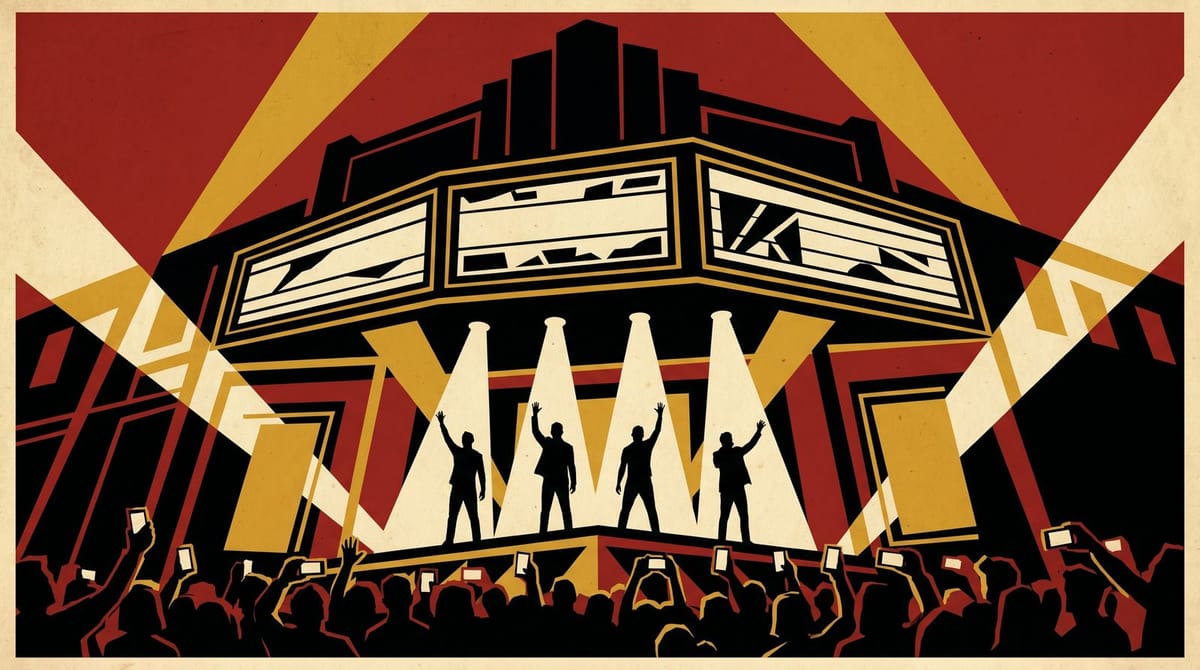
Air sponsored Boy Throb's first real-world concert at New York's Bowery Ballroom on May 12, 2026, branded as "Air Presents Throbchella". Free RSVP tickets for the roughly 575-capacity venue cleared in under a minute, with a waitlist still open four days out. The brand paid for legitimacy rights, not awareness. Boy Throb already had 1.3 million TikTok followers before Air signed on.
What Air actually paid for
Look at what Air didn't buy. Boy Throb's audience was already there. By the time the concert happened the group was sitting at about 1.3M on TikTok and 801K on Instagram, with TMZ, Yahoo Entertainment, Know Your Meme, and a small pile of music blogs covering them as either a sincere boy band or a deeply committed bit. (The band itself insists they're not satire. Wikipedia helpfully notes the question is "subject to debate.")
What Air bought is the receipt. The thing a viral TikTok act can't manufacture on its own: a real venue, a real ticket, a real crowd showing up in person. Anything before "Air Presents Throbchella" was a phone screen. After it, there's a 575-person room in Manhattan with a brand name above the marquee. That's the jump from internet curiosity to something a label, a sponsor, a manager, or another brand can underwrite at a higher rate next time.
This is the part I think a lot of brand teams misread. They look at viral acts and price them as creator deals. Sponsored post, product placement, reel-and-repost. The opportunity Air saw is one rung up. Boy Throb is already viral. The market for them as a fee-per-post account is mostly tapped. The unpriced asset was their first IRL show, because there's only one of those.
The microdrama playbook rolled into phase two
A few weeks ago I wrote about Bilt sponsoring Roomies, a microdrama-style sitcom account that pulled 8M views without ever saying Bilt's name. That was phase one of this idea. The brand paid for proximity to a piece of internet content that was already working, without dragging brand voice into the content itself.
Throbchella is phase two. Same instinct, different vector. Instead of buying ad slots inside the content, Air bought the brand-named entry point to the real-world version. The on-stage backdrop. The press copy that reads "presented by Air." The Instagram caption that has @air.hq in it. Boy Throb is doing the performing. Air is doing the framing.
From what I've seen, this is roughly the line between "creator sponsorship" and IP licensing in the trench coat of a sponsorship. The latter is what Air did here. Boy Throb's brand equity belongs to Boy Throb. The legitimacy stamp of having a real concert at Bowery is an asset Boy Throb literally couldn't have produced last week without somebody else's name on the door.
The sell-out window is the metric, not the room size
Bowery Ballroom holds around 575. RSVP tickets cleared in under a minute. A waitlist was still active four days before the show on May 8, according to Yahoo Entertainment's preview, and TMZ confirmed the act was still chasing a visa for one member when the lights went up.
The fee Air paid isn't public. But the relevant number for any brand pricing this kind of slot isn't the impression count from the room. The room only holds 575 people. The number that matters is how fast the room cleared, because that's the only public signal of real-world conversion intent the act has. 1.3 million TikTok followers, about 575 actual seated attendees, which is roughly 0.04% IRL activation on the TikTok base. That sounds low until you remember the act's "product" until this week was a series of TikToks about getting a band member out of India. The activation number isn't bad for that audience. What's important is the room filling in under sixty seconds.
If you're a brand pricing an IRL slot, that's the data point that justifies the spend. A creator's TikTok engagement rate tells you how many people will half-watch a 12-second clip. The sell-out velocity on their first real event tells you how many of them will close their laptop and physically go somewhere. For Air, the closer-to-instant the sell-out, the more they can sell the photos from inside the room as the brand asset later.
Why this only works for acts that haven't earned the venue yet
Where this gets dangerous is when brands try to apply the same playbook to acts that have already done the IRL leg themselves. Liquid Death's brand equity, for example, was earned the long way, through years of consistent voice, festival sponsorships they produced themselves, and a willingness to escalate things the brand itself put out. A "presented by" wrapper around a Liquid Death event wouldn't do much for the presenting brand. The credibility is already inside the can.
Boy Throb is the opposite. Whatever cultural credit they have lives in the act itself. They haven't earned the venue, the rig, the marquee, the press release. So when Air shows up with all of that, the brand-act trade actually has tension in it. Air gives Boy Throb a step up the legitimacy ladder. Boy Throb hands Air a cultural moment a paid Instagram post can't manufacture.
The pattern, if you want one, is that this format works in inverse proportion to how much real-world infrastructure the creator already has. Pop-up venues for actors who are huge on TikTok but never played a live show. Listening parties for musicians who only exist on streaming. Live readings for a comedian whose whole channel is animated. The thinner the IRL footprint, the more your brand name on the door is actually worth something.
How to read this if you're sitting on a brand budget
A few practical things to take from this if you're a marketer staring at viral creators right now.
First, separate the audience asset from the venue asset. They're different things. The audience asset is what creator deals already price: eyeballs, posts, reels. The venue asset is undervalued because most brands don't realize they can buy it. If a creator with no IRL footprint says yes to a $X sponsored post, try asking what they'd say to your brand sponsoring their first real event for $1.5X.
Second, write the activation clause into the contract. Air's value here is partly the photos and the press from inside Bowery, not just the live audience. If you're underwriting a first-show situation, you want shoot rights, archival rights, and a B-roll package that lives somewhere you control. Otherwise you bought a one-night thing and watched the creator keep the long-tail content.
Third, on paper this looks like a campaign. In practice it seems closer to a research bet. If Throbchella works, Air bought a template they can run again: pick a viral act before they touch a real venue, present the venue, take the photos. If it doesn't work, if the act doesn't translate IRL or the photos don't perform, Air spent the cost of one room in Manhattan to find out. Compared to what most brand teams burn on a single influencer campaign, that's a cheap test.
The unbought slot
The reason I keep coming back to this story is that the unbought slot is everywhere right now and most brand teams aren't looking for it. Every viral act has a first real-world event. Most of them aren't being sponsored. The brands paying attention are quietly picking off the early ones, often for less than a standard creator fee. The slow ones will get there in eighteen months and pay roughly double for the third or fourth show, after the agencies have caught on and the rates have moved.
Whether or not Boy Throb is "real" in the sense the music industry would prefer is probably the least interesting question in this story. What matters is that for the price of a Bowery Ballroom booking, Air got their name in front of every story written about a band the internet won't stop talking about. The act provided the cultural attention. Air provided the room.
The room is the asset both sides needed.
Notice Me Senpai Editorial