Liquid Death's Limb-Eating Ad Works Because the Brand Earned the Escalation
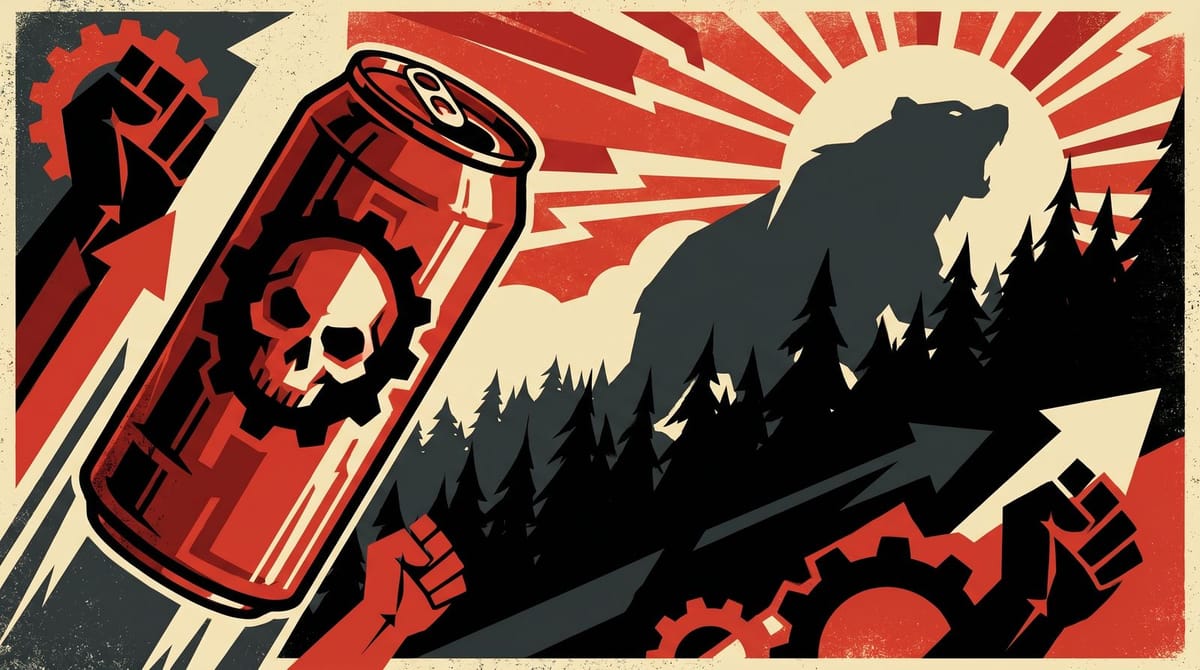
Liquid Death released a 60-second spot on May 6, 2026 in which a man bites off his own leg, lets possums gnaw his arm, and burns his fingers for kindling to reach sparkling mountain water. The ad works because the $1.4 billion brand spent five years earning the right to escalate. Most copycats skip that step and land somewhere between cringe and a brand-safety review.
The shot list nobody else would board
Director Will Carsola, who is also a Liquid Death cofounder and the original skull-logo designer, told Muse by Clios that he wrote the idea sixteen years ago and only just got it greenlit. The character loses a leg, then an arm to opossums, then his fingers, all before a hungry bear shows up. Carsola described it to the trade press as "a simple problem just keeps getting worse, unnecessarily absurd and ridiculously painful for the character."
That description is also a fair brief for the entire Liquid Death playbook. The brand has run a guillotine-for-kids spot, a Toxic Avenger crossover, a tampon-positioning series, and the Pop-Tarts massacre I covered last week. The bear ad is not a departure. It is a return after the brand spent its 2025 Super Bowl slot on something tamer, which Muse explicitly framed as a comeback to the no-holds-barred era.
The numbers that bought the limb
Most marketing teams looking at this spot will pull two takeaways: shock content gets noticed, and we should try shock content. Both are roughly correct and roughly useless without the context of what Liquid Death is actually working with.
The brand was last valued at $1.4 billion in March 2024, in a Series D that closed before this year's flavor expansion. According to Tap Twice Digital's revenue tracker, Liquid Death generated $333 million in 2024, up 26% year over year, and now sits in roughly 133,000 stores worldwide. That's an additional 117,000 stores compared to 2021. Investor materials referenced by Sacra put 2025 revenue projections around $340 million.
The math people forget: Liquid Death's first marketing video, per a breakdown by Optimonk, cost $1,500 and pulled 3 million views in four months. That was 2019. Six years and roughly 110x revenue growth later, the brand is shooting limb-eating bear ads. The escalation curve is not the story. The first $1,500 ad is.
The four-rung ladder most copycats jump
When other brand teams pitch "let's do a Liquid Death," they usually skip to rung four. That is the rung where the work is most visible and least transferable. Here is roughly the order I have watched the brand actually move through across five years of trade-press coverage.
Rung one: a name and a logo that pre-load the joke. "Liquid Death" reads as parody before you see any creative. The skull-and-water identity does the same. Founder Mike Cessario's earliest move, per eatbigfish's profile, was finding Carsola through Instagram for the logo. Most challenger brands try to win with creative on top of a clean, neutral identity. The Liquid Death name is itself a permission slip for everything that comes after.
Rung two: a category problem nobody else is solving. Bottled water in 2019 was a category competing on purity and minimalism. Liquid Death walked in selling water in a tallboy aluminum can, marketed to people who wanted to drink water at parties without looking like the only sober person in the room. That was a real product wedge. The marketing only landed because the wedge was real.
Rung three: small, frequent stunts before the budgets show up. Before Super Bowl ads, before the Toxic Avenger, there were YouTube spots about hating water that pulled millions of views on near-zero spend. The brand built audience tolerance over time. Each escalation was about 5% spicier than the last. Skipping straight to bear-eating-limbs without that tolerance window is what gets a brand a HR memo, not a sales lift.
Rung four: bigger creative swings paid for by the equity below them. The bear ad is rung four. It looks like the whole strategy because it is the most visible rung, but it is the one that breaks if any of the others are missing. In NMS terms, this is the zero-paid viral arbitrage graduating into paid distribution.
The brand-equity tax most teams underrate
There is a useful framing buried in Marketing Brew's January piece on Liquid Death, which is that the social team operates with effectively no review committee and a tolerance for content most CPG brands would block at the brief stage. That latitude was earned, not requested. It compounds. Every gross-out spot adds to the bank, and every safer Super Bowl slot pulls a small withdrawal.
If you read the bear ad as a single creative decision, you miss the math. Carsola has been sitting on this idea since around 2010. The reason he can shoot it now is the same reason he could not shoot it then. The brand is finally large and loud enough that the joke does not need to explain itself, and small and weird enough that its best customers are still flattered by being trusted with it.
That window is narrower than people think. From what I have seen, brands at this size tend to lose the latitude within two or three product cycles, partly because retailers start applying their own brand-safety filter and partly because the original founders stop running the social account themselves. Liquid Death is, in my read, roughly twelve months from that window starting to close. The bear ad is, in part, a deposit before that.
If you have to ask whether your brand can run this, it can't
The actionable read is not "be more outrageous." It is the opposite. If you are a marketing team thinking about borrowing this energy, the honest first question is which rung you are on. Most likely it is rung one or two, and the answer is to spend a quarter or two on the boring brand-positioning work first. Pick a real category problem nobody else is naming. Build a name and identity that pre-loads a stance. Run small, frequent, slightly-too-spicy stunts on owned channels and read the comments before you commit any paid budget.
If you skip those and shoot a limb-eating bear ad, what you end up with is a clip that goes viral once, alienates roughly half your existing customers, and gives your retail buyer a memo to write. The shock is the easy part. The five years of getting your audience used to it, where almost nobody else can copy it, is the part that actually moved Liquid Death from $1,500 in marketing spend to $333 million in revenue. Anyway. The bear is the punchline. The cost of admission was every smaller stunt that came before.
Notice Me Senpai Editorial