Claude Won a Cannes Grand Prix for an Ad About Not Running Ads
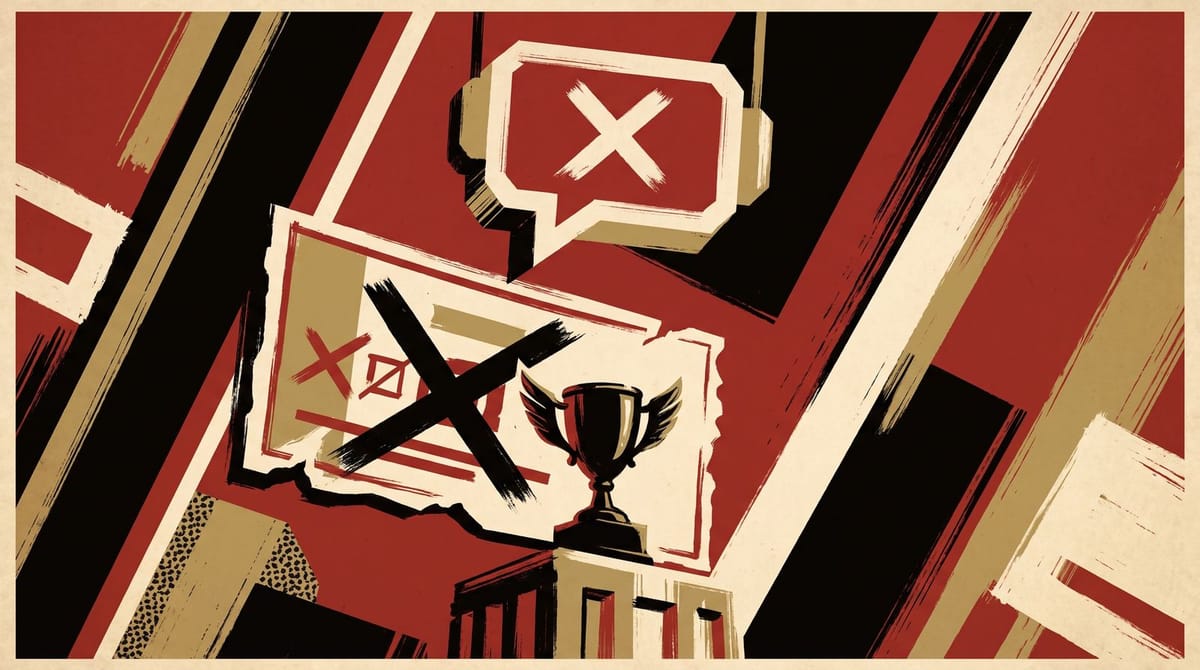
Anthropic's Claude won the Film Grand Prix at Cannes Lions 2026 for two Super Bowl spots that mocked AI chatbots steering people toward ads. The campaign ran the same week OpenAI started slipping sponsored cards under ChatGPT answers, and it helped push Claude's app from No. 41 to No. 7 on the US App Store. The lesson for marketers is simpler than the trophy suggests: position against the category's worst habit before you try to sell anything.
The two films, "Can I Get a Six Pack Quickly?" and "How Can I Communicate Better With My Mom?", took the top prize in Film, which is the oldest category at Cannes. They were made by Mother London and directed by Jeff Low through Biscuit Filmworks. The bit is darkly funny: someone asks a chatbot an earnest question, and the bot quietly nudges them toward cougar dating sites and height-boosting insoles. The joke is the ad model itself. Claude's pitch was that it would not do that to you.
Why the timing carried the joke
A satirical ad about chatbots serving ads is a decent idea on any random Tuesday. It became a Grand Prix idea because of when it aired. OpenAI had started testing ads in ChatGPT in early February 2026, placing native sponsored cards beneath responses for free-tier users. Claude's spots landed days later, during Super Bowl 60. So the satire was not pointed at some abstract future. It was pointed at the thing the biggest competitor had literally just shipped.
That is the part I keep coming back to. The campaign did not invent a villain. It waited for the category leader to hand it one, then showed up the same week with a camera. From what I have seen, this is the difference between a clever ad and an ad that does measurable work. Anthropic's films pushed Claude to No. 7 on the US App Store by that Friday, up from No. 41, and US downloads jumped roughly 32% in the days after the game versus the days before. That is a positioning ad that also moved a downloads chart, which most positioning ads never do.
It also got under OpenAI's skin, which is its own kind of evidence. Sam Altman went after Anthropic publicly on X, calling the move deceptive. When the market leader feels the need to respond to a challenger's ad, the ad has already done its job. The challenger got the leader to argue on the challenger's terms.
The actual move: own the thing the category refuses to say out loud
Strip away the AI context and this is an old playbook. A category quietly adopts a practice everyone privately dislikes. One brand says the quiet part loudly and refuses to participate. Avis did a version of it with "We try harder." The plant-milk brands did it with cartons that mocked dairy. What is new here is the speed: Anthropic compressed the whole thing into one news cycle because the offending behavior was breaking in real time.
For a working marketer, the takeaway is not "make a funny Super Bowl ad." Most of us do not have a Super Bowl budget, and honestly, the budget is the least transferable part. The transferable part is the posture. Find the practice your category has normalized that your customers secretly resent, and build your visible position on refusing it. In email, that might be the brand that publicly swears off fake countdown timers. In paid social, the advertiser that refuses to run the engagement-bait creative everyone else is pumping out. The slop is the opportunity. Positioning against it is cheaper than out-spending it.
This connects to something we wrote about AI search rewarding specific, human signals over polished brand pages. The pattern is consistent across channels right now. As more of the marketing surface gets automated and homogenized, the contrarian human position gets cheaper to occupy, because almost nobody is occupying it.
The catch the award show skips: the product has to back the claim
Here is where I would slow down anyone about to copy this. Claude's ad worked because Claude actually does not run ads in its product. The pledge was real. If Anthropic had aired those spots and then quietly added sponsored cards three months later, the campaign would have aged into a liability, and the same press that praised it would have written the takedown.
So the move is not "claim the high ground in an ad." It is "build the high ground into the product, then point an ad at it." That order matters more than the creative does. A brand that mocks intrusive ads while running intrusive ads is not being clever, it is setting a trap for itself. And to be fair, that trap is easy to walk into when a quarter goes sideways and someone in the room suggests just testing the thing you swore off. The discipline is in not doing that.
There is also a quieter risk worth naming. Positioning against a competitor's monetization model only works while that model is annoying. If OpenAI's ads turn out to be genuinely useful and low-friction, and free users stop minding them, then "we don't run ads" stops being a virtue and starts being a line item Anthropic is leaving on the table. The position is strong today. It is not guaranteed to be strong in a year. Most differentiation built on a competitor's current mistake has a shelf life.
What I would copy, and what I would leave alone
Copy the timing instinct. Watch your category leader for the moment they ship something their own users grumble about, and have a point of view ready to publish that week, not next quarter. The window where a reaction feels live is short. Copy the discipline of making the product the proof, so the campaign cannot be turned against you later. And copy the restraint of letting the contrast do the talking. The Claude films never lecture. They just show the absurd version of the competitor's model and let you laugh at it.
What I would leave alone is the assumption that you need a Cannes-grade production to run this play. You do not. The mechanism is the position, not the polish. A plain landing page that names the practice you refuse and explains why will outperform a glossy spot built on a claim your product cannot keep. Anthropic happened to have both. If I had to pick one to get right first, I would pick the claim every time, and worry about the trophy never.
The trophy is nice. The download chart is nicer. But the thing actually worth studying is that Claude won by describing its biggest competitor honestly and refusing to follow it. That is available to almost any brand, in almost any budget. You just have to be telling the truth when you do it.
Notice Me Senpai Editorial