Coca-Cola Posted $12.5B in Q1. The Industry Was Studying Liquid Death.
Coca-Cola posted $12.5 billion in net revenue in Q1 2026, a 12% jump alongside 18% EPS growth and a 64th consecutive year of dividend increases, per the company's April 28 investor release. Mark Ritson's Adweek column on May 12 noted the marketing industry barely covered the quarter while spending the same window dissecting Liquid Death stunts. Coca-Cola is roughly 140 times Liquid Death's size globally.
The numbers that didn't make the rounds
The full Q1 picture from Coca-Cola's investor release: organic revenue up 10%, concentrate sales up 8%, unit case volume up 3%, comparable operating margin expanded from 32.9% to 35.0%, and free cash flow of $1.8 billion. They serve 2.2 billion daily servings across 32 billion-dollar brands. Marketing investment was specifically called out as a contributor to margin pressure, meaning they spent more on brand work this quarter, not less.
For comparison, Liquid Death did roughly $340 million in revenue in 2025 in North America. Total. Their full-year top line is about 2.7% of Coca-Cola's single quarter.
And yet trade press, agency Slack channels, and most marketing podcasts from late April through mid-May covered Liquid Death's stunt cycle and a handful of viral TikTok moments more aggressively than they covered the quarter where the largest consumer brand on earth grew 12%. From what I've seen scrolling r/marketing this past month, that pattern holds: more threads on Liquid Death packaging variants than on any element of Coke's actual operating quarter.
What the 70/20/10 budget actually pays for at Coke
Coca-Cola still runs the 70/20/10 allocation Jonathan Mildenhall installed in the Content 2020 era. Seventy percent goes to proven, low-risk formats: out-of-home, sports sponsorships, the Christmas truck, World Cup creative, the same Coke red Pantone they've been running since the 1890s. Twenty percent goes to innovating on formats that already work. Ten percent goes to genuine new bets.
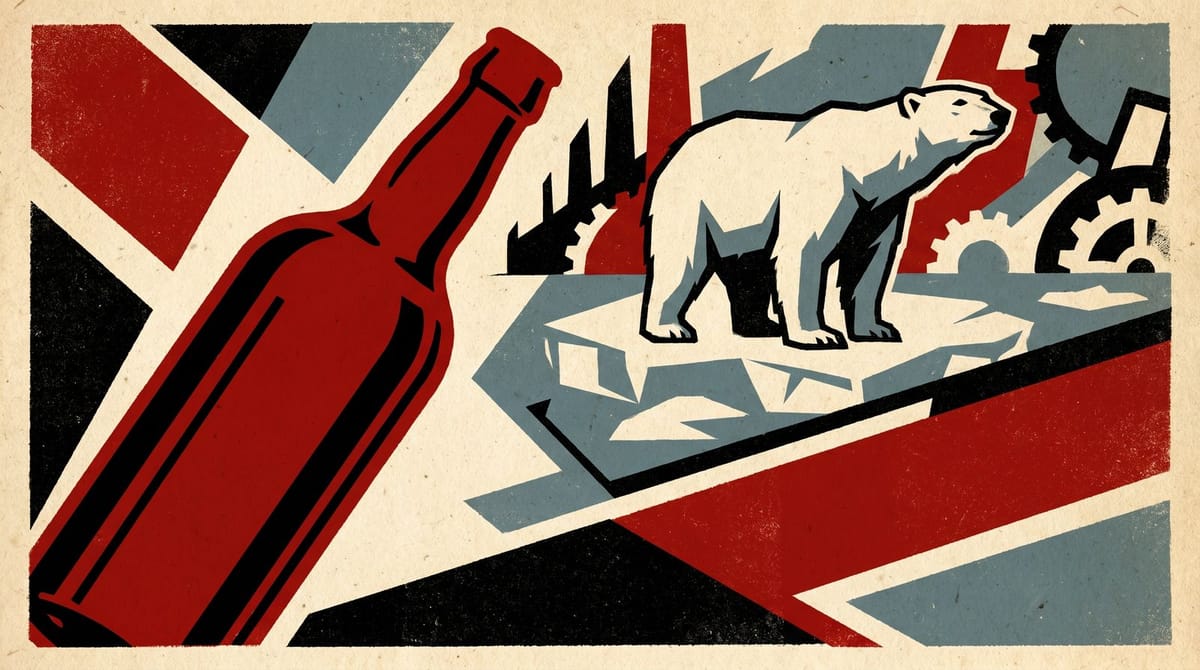
What that means in practice: when Coca-Cola tests something experimental, the rest of the machine doesn't stop. The Christmas truck still rolls. The polar bears still show up in December. The masterbrand still anchors every sub-brand. So when a single experiment misses, no quarter craters.
That's the opposite of how most challenger brands run. A challenger that bets the year on a single viral campaign is making the math harder for itself, not easier. If the stunt works, growth pops. If it misses, there's no compounding floor underneath.
The thing about the 70 in 70/20/10 is that it looks boring from the outside because nothing about it is new. That's the point. The new stuff doesn't compound. The boring stuff does.
Where the Liquid Death comparison breaks
I think most teams who study Liquid Death miss the structural unfairness of the comparison. Liquid Death is a single SKU, single price tier, single audience brand in its core market. Coca-Cola is 32 billion-dollar brands across 200+ countries with retailer relationships measured in decades. Different problem set entirely.
Liquid Death's escalation works because the brand earned a license to keep escalating from year one. Coca-Cola's job is closer to maintenance at scale: hold the masterbrand consistent, route innovation through 70/20/10, and resist the temptation to chase whichever brand is owning the conversation that month.
On paper, that sounds like an upgrade, and sometimes it is. Most of the time, though, the boring incumbent is doing harder work. They just don't get rewarded for it in trade coverage because consistency does not generate clip-worthy moments.
What CMO Manolo Arroyo is doing differently
Manolo Arroyo took the global CMO role at Coca-Cola in 2026 after the company quietly folded the title away years earlier, then brought it back. His public statements have been about media transformation, not creative reinvention. The "modern media" rollout he described to The Drum is going live in 40 markets by year-end and 76 markets by Q1 2027.
The signal worth reading: the headline change at the world's largest brand is not "we're going viral." It's "we're rebuilding how we buy and target media at global scale." That's an admission that the actual lever isn't creative virality. It's whether you can run consistent brand work and personalized activation in the same operating system without breaking either.
Coca-Cola's CFO has separately framed the marketing transformation as "more impact, less waste," per Marketing Week. Less waste, not more noise. That's a different optimization function than most challenger brands run on.
The boring discipline most challenger brands skip
If you run a smaller brand and want to actually learn from Coca-Cola instead of from Liquid Death, the question isn't "what stunt should we do." It's: do you have a 70% layer at all? Not a list of stunts you keep doing because they worked once. An actual core. An asset palette, a sonic identity, a tagline architecture, a holiday calendar, a sponsorship spine, that you commit to running for three to five years with no major shape changes.
Most challenger brands I've watched discussed in r/marketing threads and case study breakdowns don't have that layer. They have a 100% experimentation budget dressed up as a strategy. When a stunt hits, that's the marketing plan. When the next one misses, the plan resets. There's no compounding because nothing repeats.
The other thing Coca-Cola is doing well, which the trade press almost never highlights, is local execution on global platforms. The masterbrand stays consistent globally. Local teams adapt the activation. That's the part of the 70/20/10 most challenger teams can copy. Not the budget. The structural separation of "what stays the same" from "what gets reinvented this year."
The audit that exposes whether you have a 70 layer at all
Before the next quarterly planning cycle, pull your marketing calendar and tag each line item as 70, 20, or 10. Anything you've been running for three or more years that still works: that's a 70 line. New iteration on a proven format: 20. Brand-new bet: 10.
If your 70 column is empty or near-empty, you have a structural problem that no amount of clever campaign work can outpace. Add a 70 line first. Not glamorous, not screenshot-able, probably not going to win a Cannes Lion. Just the thing your brand commits to repeating until people forget when it started.
I don't think the brands that win the next five years are necessarily the ones with the wildest creative. Probably just the ones who finally let a few things compound.
Notice Me Senpai Editorial