Bing Now Shows Where AI Cites Your Rivals (Strip Their Brand Names First)

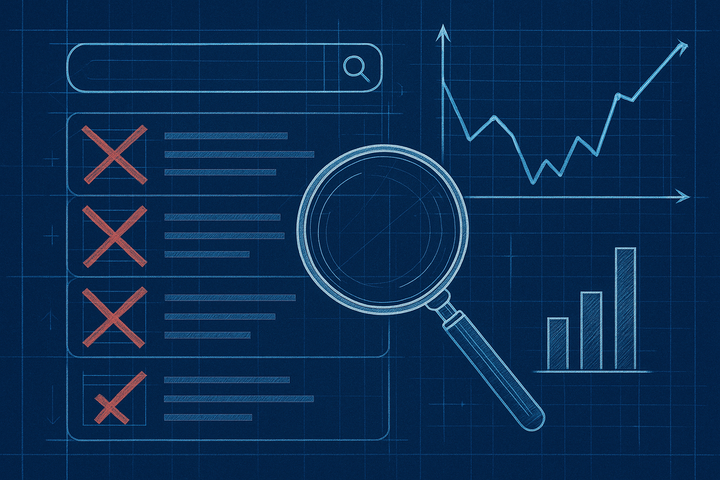
Microsoft added a Topics Portfolio beta to the AI Performance report in Bing Webmaster Tools on October 13, 2026. It groups the queries where Copilot and Bing AI answers cite your site into themes, then lists "opportunity queries" where other sites get cited and you don't. Those volumes are approximate ranges, so treat the list as a free shortlist to filter before you act.
That's the short version. The longer version is that Bing just handed every verified site owner a rough draft of the competitive gap report that GEO tools have been selling as a premium feature, and it did it with a fairly honest admission that the numbers are fuzzy. I think that honesty is the most useful part of the announcement, actually, because it tells you how to use the thing.
What Bing actually shipped
According to the official Bing Webmaster blog post, Topics Portfolio sits as a new tab next to Citations & Pages inside AI Performance. It takes the grounding queries (the searches Bing's AI systems run behind the scenes before citing a page) and clusters them into themes like "taxes" or "AI Chatbots." Each topic gets three numbers:
- Topic Size: approximate total citations across all sites for that topic in the window you pick.
- Sites Cited: approximate number of sites appearing for the topic's queries. Microsoft frames this as a crowding signal.
- Queries: approximate number of distinct grounding queries in the topic.
Below the table is a cross-topic list called Top Opportunity Queries, and every topic has its own detail page that splits queries into two tables: the ones where you already appear and the ones where you don't. You can look at a one-, two- or three-month window. And it only shows up "if there is sufficient data," which means plenty of smaller sites will open the tab and find a short list, or nothing at all.
This builds on a steady drip of releases. Bing launched AI Performance as a public preview in February, then in March linked grounding queries to the specific pages they cite, so you could trace a citation in both directions. Topics Portfolio is the first piece that looks outward at the rest of the ecosystem instead of only at your own site.
The fine print is the most honest thing Microsoft wrote this year
Microsoft's own instruction is to "treat the numbers as directional signals for planning, not as a precise ledger." That's a refreshingly blunt sentence for a product launch. (Most dashboards imply decimal-point precision they don't have. This one tells you up front.)
The beta caveats deserve a slow read, because each one changes how you should work the data:
- Topic labels are AI-generated and "can occasionally be imperfect." You'll probably see a few clusters that make you squint.
- Opportunity volumes are ranges, not counts, and PPC Land points out that Microsoft hasn't published the bucket widths or defined what makes an opportunity query "strongest."
- Sites Cited is a number, not a list. You learn that 40-ish sites are crowding a topic, not which 40.
- Competitor-branded queries can show up as opportunities. Microsoft's own example is a running shoe site being told that a rival brand's product name is an opportunity for it.
That last one made me laugh a little, because it's the most predictable failure mode imaginable and Microsoft just put it in the launch post instead of waiting for SEOs to screenshot it. Credit where it's due.
One more catch: the three-month max window is a lot shorter than the 24 months of history Bing keeps for regular search data. So it works as a planning view. If you want a trend archive, you'll need to export it yourself on a schedule.
Why a 4% search engine's report deserves an hour this week
The obvious objection is that Bing's share of US search is small. PPC Land cites Datos figures putting it somewhere around 3.2% to 3.8% in early 2026. Fair. If this were only about Bing's blue links, I'd tell you to skip it.
But the grounding queries in this report cover Copilot, Bing's AI summaries and partner integrations, and Bing's index sits underneath a lot of other AI search. Go Fish Digital's breakdown of where AI citations come from describes Bing's index as the primary discovery layer for ChatGPT's real-time answers, while also noting experiments where Google's index seemed to influence ChatGPT Plus responses too. So it's not a perfect mirror. It seems to be a decent proxy, though, and it's free.
Compare that with the measurement situation most teams are in. Semrush's AI Visibility Index, which analyzed 126 million US prompts, included a survey of 481 marketers where 45% said they can't properly measure their AI visibility and only 9% could track all the metrics they cared about. If you're in that 45%, a free directional gap list from the engine that actually feeds a chunk of AI answers is a real upgrade, even with the fuzziness.
Microsoft also gives away competitive AI citation data through Clarity's Topic Insights, which includes a "share of authority" metric that Topics Portfolio doesn't. Between the two, a small team can get maybe 70% of the way to what a paid GEO tracker shows them. That's my rough guess, not a benchmark, but I'd be surprised if I'm far off.
A 30-minute filter before you trust the opportunity list
The mistake I'd expect most teams to make is exporting Top Opportunity Queries, dumping it into a content calendar and briefing 20 new articles. Please don't. That list is raw, and some of it is literally your competitors' brand names. Here's how I'd work it instead:
- Start with your concentrated topics. Microsoft's own getting-started guidance says to begin where your citations are already clustered. Pick the two or three topics where your own citation count is highest relative to Topic Size. You already have authority there, so gaps are cheaper to close.
- Strip branded queries. Delete anything containing a competitor's brand or product name. Then thumbs-down a few in the interface, since Microsoft says that feedback goes to the teams tuning opportunity selection (whether it changes what you see is unclear).
- Map every survivor to an existing URL. For each remaining query, find the page on your site that should have been cited. If one exists, you're looking at a refresh job. Usually, from what I've seen of AI citation gaps, the fix is a missing direct answer in the first few paragraphs, a stale stat, or a comparison table that doesn't exist yet.
- Only brief net-new content for clusters of 3+ unmapped queries. One orphan query isn't a content brief. Three related ones in the same topic probably are.
For a benchmark: if fewer than about half your filtered opportunity queries map to an existing page, your topic coverage is thinner than your citation data suggests, and that's where to spend the next sprint. If more than half map cleanly, the problem is page quality, and new content will mostly add noise.
Then set a calendar reminder to export the report monthly. With a three-month cap, you'll lose your baseline otherwise.
Sites Cited is the column I'd watch
On paper, Topic Size looks like the headline metric, since it's the closest thing to "demand" in the report. But Microsoft is careful to describe it as citations across all sites, which isn't the same as searches or users. A topic where AI answers cite 10 sources per response will look bigger than one where they cite three, even if the second has more people asking.
Sites Cited is more interesting to me. A big topic with few sites cited is the kind of place where a decent page can actually break in. A big topic with hundreds of sites cited is probably a commodity answer, and you're fighting for one slot among many. I'd rank opportunities by Topic Size divided by Sites Cited before I looked at anything else. It's a crude ratio built from two approximate numbers, so treat it like a sorting hint and nothing more.
And to be fair, none of this is entirely new thinking. SEOs have been estimating keyword difficulty from crowding for 15 years. It just feels different when the engine itself hands you the crowding number.
If you've been tracking which AI engines cite which kinds of sources, this pairs well with the recent data showing ChatGPT cutting Reddit citations and searching brand sites instead. Both point the same way: your own pages are getting more of the citation opportunities, if they answer the fan-out query directly. Just don't take that as permission to chase citations with tricks. Anthropic recently named answer manipulation in its usage policy, and the engines are clearly paying attention.
A prediction, and a small worry
My guess is that Google adds some form of competitor gap view to its Search Console AI reports within 12 months, mostly because Bing and Clarity keep making the "we don't show query data" position look stingy. Google's AI reports reached every site in August without click or query data, and I don't think that holds once advertisers start asking why Microsoft shows more.
The worry is smaller and more practical. Free gap lists tend to produce a lot of same-ish content across a vertical, because everyone gets the same list on the same day. I don't really know how Bing's grounding systems will respond to 30 sites all publishing the same answer to the same opportunity query. Probably they'll just cite whoever answered it best, which is the boring, correct outcome. So maybe the real edge this month is just being one of the few teams that filters the list before writing anything.