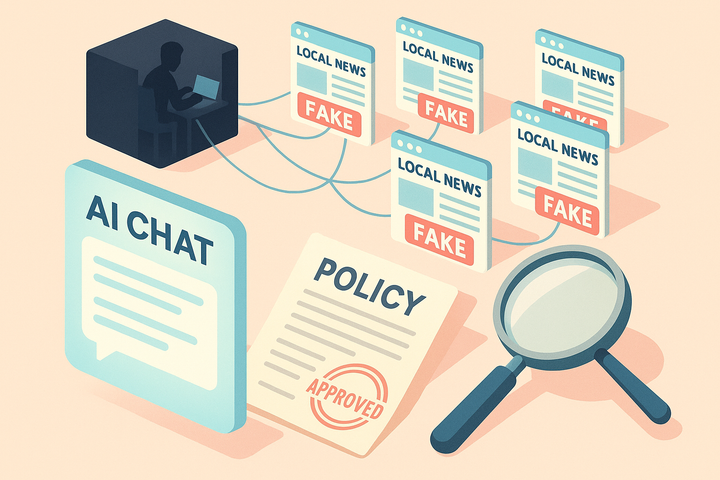
Google Now Feeds Rank Trackers Fake SERPs (8% of Them, Nozzle Says)
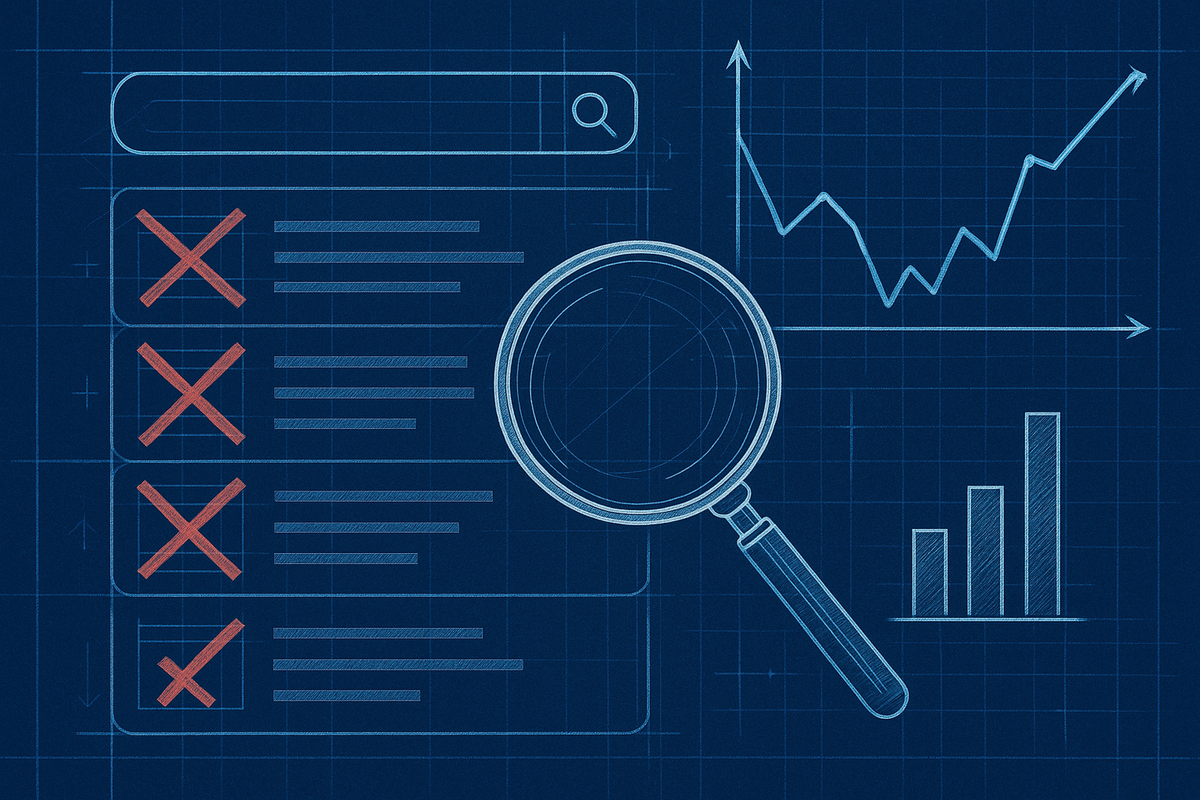
Nozzle analyzed 27.5 million Google results pages across 49 countries and found that 8.0% of the SERPs served to its rank tracker since September 13, 2026 were "poisoned," up from 0.17% before. On those pages a tracked site fell out of the top 10 58.6% of the time, and 77.9% of the drops reversed within three days. Any sudden ranking loss in a third-party tool needs a second source before anyone acts on it.
The research is Nozzle's "Poisoned Google SERPs" report, published October 10 with data through October 9, and Barry Schwartz pulled it together with a pile of practitioner complaints in Search Engine Roundtable on October 12. The short version: Google is blocking scrapers harder than it has in years, and when a suspicious request does get through, it sometimes gets an answer that looks completely normal and is quietly wrong.
That second part is the bit I can't stop thinking about. A tracker that gets blocked knows it got blocked. A tracker that gets a fake page just writes the fake ranking into your dashboard and moves on.
What Google is apparently doing to the scrapers
Nozzle's Derek Perkins described three things happening at once, per Schwartz: wide IP blocking aimed at the big residential proxy networks, a sharp rise in captchas, and injecting bad data into SERPs that look like they came from a bot. Schwartz had already flagged Google blocking scrapers and tracking tools a few weeks earlier, so this has been building for a while.
The timeline in Nozzle's data is pretty clean. Requests started failing in large numbers on September 13. The first poisoned pages showed up September 20. Then September 27 to 29 were the worst days, with roughly a quarter of all collected SERPs poisoned (27.0% at the peak). Since October 1 it's been running at about 5% to 11% a day, which is lower, but nowhere near the old baseline.
Nobody at Google has said why. The most common read, which Sistrix states fairly directly on its support page, is that Google wants to make life hard for AI companies pulling live search results, and SEO tools are just standing in the blast radius. DemandSphere CEO Ray Grieselhuber made a similar argument, as reported by PPC Land, saying Google "does not want the AI labs" using its SERPs, and his company separately measured wrong results on about 11% of its own daily rank checks. Different keyword sets, different methods, roughly the same story.
What a poisoned SERP looks like (it looks fine)
On a normal day, 88.5% of the organic sites from the previous SERP for a keyword show up again. On a poisoned SERP, only 20.7% do. Nozzle counted 1.79 sites vanishing per poisoned page, against 0.23 at baseline.
And the gaps get filled with social and forum content. Reddit's share of top-10 appearances rose from 20.8% to 28.8% on poisoned pages, Facebook from 28.3% to 33.8%, LinkedIn from 6.2% to 9.3%. On US keywords, foreign country-code sites (.ca, .co.uk and so on) showed up in the top 10 on 14.2% of poisoned pages versus 6.1% otherwise.
Some other tells from the same report:
- "People also search for" carried over on just 30.7% of poisoned pages, against 87.9% normally
- AI Overviews appeared on 34.9% instead of 54.2%
- Image packs nearly doubled, from 23.0% to 44.2%
- Desktop pagination often stopped at page 4 or earlier on keywords that usually run 8+ pages deep
Nozzle is careful to say none of those signs is reliable on its own. There's no error, no captcha, no template change. It's like a store that recognizes a shoplifter and, instead of calling security, quietly swaps the price tags on everything they pick up.
The industry breakdown is worth a look if you work local. Legal keywords in the US ran 15.9% poisoned (51.3% on September 27, which is wild), home services 12.7%, weddings 11.6%. "Near me" queries hit 11.4%. Country matters too: Austria 18.8%, Australia 11.5%, the US 8.5%, the UK just 3.0%.
The tools aren't failing the same way
This is where it gets messy for anyone comparing vendors. Glenn Gabe posted an example on October 7 of a site hit by the September 29 spam update: Ahrefs caught the drop, Semrush picked it up late, and Sistrix didn't show it at all. Lily Ray said around the same time that rank trackers were "too unreliable at the moment" to use for sharing findings.
Sistrix, to its credit, explains its behavior. It says it only publishes results that pass extra checks, so some keywords simply update less often, and on-demand updates have been switched off since September. It also says its top-10 data and Visibility Index remain reliable, while top-100 metrics can move without any real change in visibility. SE Ranking's status page acknowledged missing positions for some keywords. Advanced Web Ranking says it now re-queries thin-looking SERPs before storing a position, and recommends reporting ranges and trends rather than single daily numbers.
So you have one tool that's slow but cautious, one that's fast but possibly ingesting junk, and one somewhere in between. Which is better depends on whether you'd rather miss a real drop for a week or chase a fake one for three days. Personally, I'd take the slow one for client reporting and the fast one for my own monitoring, but I don't feel strongly enough to argue with anyone who does the opposite.
Also, a caveat I'd keep in mind: Nozzle, DemandSphere and AWR all sell rank tracking. They have every reason to make the problem sound serious (and to make their own fix sound good). Google hasn't confirmed either the 8% or the 11% figure. I still find the Nozzle data convincing, mostly because the methodology is published in detail, but it's vendor research.
A three-day rule before anyone touches a page
Here's how I'd handle this until the tools stabilize, which could be a while.
1. Don't report a top-10 loss until it survives three days. Nozzle found 77.9% of poisoned drops recovered within three days, with a median of two. If a keyword falls out of the top 10 on Tuesday, mark it "unconfirmed" and check again Friday. A real ranking change sticks around. A poisoned one usually doesn't.
2. Cross-check in Search Console before the client call. Open the Performance report, filter to the exact query, and compare impressions for the drop dates against the prior two weeks. If impressions held steady, the site didn't disappear. Nozzle's own guidance says the same thing. GSC average position is a blended number and isn't great for single-day positions, as AWR points out, but it's very good at telling you whether something actually vanished.
3. Compare against history, not yesterday. Yesterday's SERP might also be poisoned. Look at which domains usually hold page 1 for that keyword over the last month. If the new top 10 is suddenly half Reddit, Facebook and a .co.uk site that's never ranked before, be suspicious.
4. Add a note to every report covering September 13 onward. Something like "third-party ranking data for this period was affected by Google anti-scraping measures; figures validated against Search Console." It takes two minutes, and it'll save you an awkward conversation when the numbers snap back.
5. Be extra careful in legal, home services and local. At roughly double the average poisoning rate, these verticals need the three-day rule more than anyone, and they're also the clients most likely to panic over a single dropped keyword.
If you also had a site hit by the spam update, this overlaps awkwardly with Google's own advice that recovery takes three to six months. Bad tracker data on top of slow recovery is a good way to make reactive changes you'll regret later.
Rank tracking was always a sample, we just forgot
The slightly uncomfortable thought underneath all this: a rank tracker has always been an outsider asking Google a question and writing down the answer. That worked because Google mostly answered honestly. As Daniel Skov Jacobsen put it in the SER roundup, most tools now sample rather than count, so some daily swings are just noise. Honestly that was partly true even before September, ever since Google stopped returning 100 results per query back in 2025.
I'd guess (and it is a guess) that within six months at least half the major tools start showing some kind of data-confidence or sampling indicator next to positions, the way DemandSphere already reports error and sampling rates. The ones that don't will probably keep producing charts that look precise and aren't.
Meanwhile, ranking position is getting less useful as a business metric anyway. Branded queries are increasingly answered by AI Overviews (83% of brand searches in one study), and Search Console still doesn't give you clean query data for AI Overviews or AI Mode. So the tracker is unreliable, and the thing it tracks matters a bit less than it used to.
None of that means you stop tracking. It means a single red arrow in a dashboard isn't evidence of anything until it's still there on Friday, and Search Console agrees with it.