ChatGPT Ads Is Testing Bigger Images on Old Creative, and Nobody Asked You
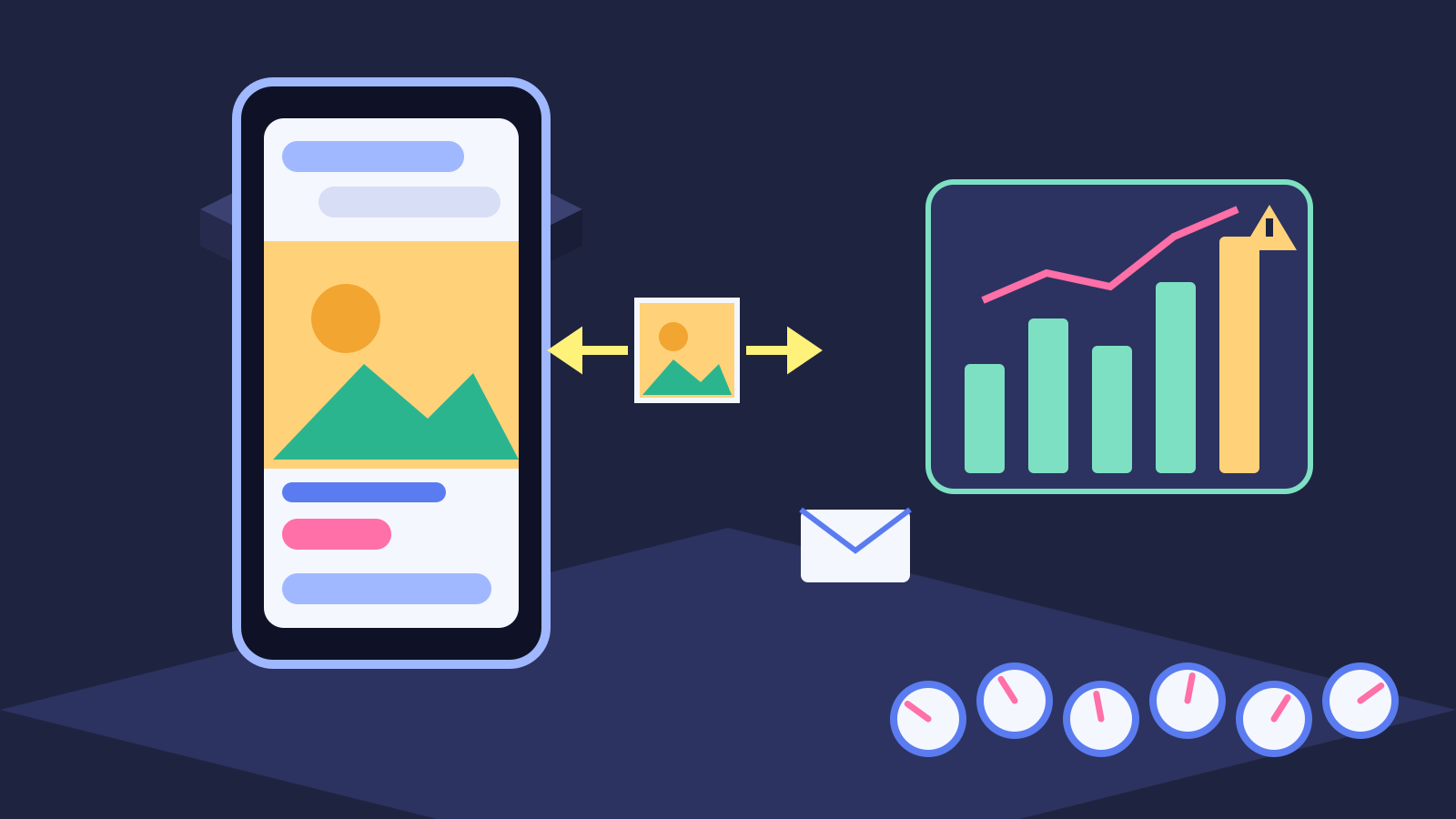
OpenAI is testing wider ChatGPT ad cards, larger desktop images and full-width mobile images, and the tests run on advertisers' existing campaigns and creative with no action required. The same Friday update added a redesigned Conversions page, weekly performance emails and six named measurement partners. Whatever image you uploaded for a small card may soon run at full screen width, so check it first.
That last part is the bit I'd pay attention to. According to Search Engine Roundtable's write-up of the advertiser email, OpenAI says the format tests "use existing campaigns and creative, with no action required from advertisers." On paper that sounds friendly. In practice it means a square-ish product shot you picked for a compact card back in May could get stretched into a much more prominent slot on someone's phone, and you'll find out when somebody sends you the screenshot.
Four updates in one email, and only one changes what users see
Here's what actually shipped or started testing, per the email Barry Schwartz published:
- Visual format tests. Wider cards, bigger images on desktop, full-width images on mobile. A multi-image format is "coming soon," no date.
- A redesigned Conversions page in Ads Manager. It shows event volume and trends, the share of your active campaigns optimizing for conversions, and live warnings linked to the Diagnostics tab.
- Weekly performance emails for advertisers with active campaigns, with week-over-week changes and a link back to Ads Manager.
- Measurement partner setup guides for Northbeam, DV Rockerbox and INCRMNTAL on the web side, plus Kochava, Tenjin and Airbridge for mobile apps.
There's also a bug report and product feedback option tucked into the account menu, bottom left. Small thing, but it tells you OpenAI knows the product still has rough edges and would rather hear about them inside the tool than on X.
None of this is earth-shaking alone. Put together, it reads like a platform trying very hard, and pretty quickly, to look like a grown-up ad network.
The image test is the one with no off switch
This builds on a separate announcement. On October 5, OpenAI said it would test a visual ad format that appears while ChatGPT generates images, starting later in October in the US with an initial group of advertisers. The new email widens the idea: bigger images in regular conversation placements too.
Creative fit was already the weak spot. Direct Agents, writing up its closed beta campaigns, said banner-style and search-style copy reads as out of place in a chat interface, and called creative mismatch the biggest execution gap for teams new to the channel. If text already felt off, a low-resolution lifestyle photo blown up to full mobile width is going to feel worse. And honestly, a lot of the images sitting in these accounts were probably pulled from the Meta asset library in a hurry, because ChatGPT was "just a test."
Think of it like a billboard company quietly moving your poster from the bus shelter to the side of the highway. Same poster. Very different scrutiny.
So, before the test reaches you:
- Export every active ChatGPT ad and its image. Most accounts I'd expect to have fewer than 20, so this is roughly a 20-minute job.
- Look at each image at full phone width (around 1080px wide). If it's smaller than that, soft, or has text baked into the corners, replace it.
- Cut any image where the product is tiny in the frame. At bigger sizes the background basically becomes the ad.
- Write down the date you swapped creative so you can separate a format effect from a creative effect later.
That last step matters more than it sounds, because you won't control when the format test lands in your account.
Twenty measurement partners this early says something about trust
The measurement news is bigger than one email. OpenAI's own post, Building advertising for the way people use AI, named attribution partners including AppsFlyer, Triple Whale, Northbeam and DV Rockerbox, plus geo-experiment partners Haus, Measured and WorkMagic. PPC Land counted 20 firms in measurement roles and two more (DoubleVerify and IAS) in brand suitability pilots.
My read: a platform that started selling ads in February does not line up 20 third-party graders unless buyers are asking, loudly, whether the in-platform numbers can be believed. Which is a fair question. The early proof points OpenAI chose are mostly attributed results. PPC Land notes WeightWatchers' attributed CPA came in 15.3% below its blended paid search benchmark, per DV Rockerbox, with no spend, dates or conversion counts disclosed.
The other side of the ledger is messier. Crypto Briefing rounded up advertiser reports including roughly 14% of ads having limited or no connection to the conversation, and one unnamed advertiser who spent $477 over six weeks for 370 clicks and zero conversions. One anecdote isn't a trend. But it's exactly the kind of anecdote that makes a CFO ask for an independent read.
Attributed CPA is what ChatGPT Ads says it did. Incremental CPA is what it actually did. Only one of those should decide your budget.
The view-through number I keep staring at
One stat from PPC Land's breakdown stuck with me. In OpenAI's early data from deeper-funnel campaigns, 52.7% of eligible one-day view-through conversions happened within an hour of the matched impression. That could mean ChatGPT ads are unusually persuasive in the moment. It could also mean they're showing up in conversations where the person was already about to buy anyway, which is a much less exciting story for incrementality.
I genuinely don't know which it is, and I don't think anyone outside OpenAI does yet. That's sort of the whole point of the partner list. OpenAI itself describes the geo-experiment work as "still in its early stages."
If you're spending real money here (call it $5,000 a month or more), I'd do this:
- Report ChatGPT conversions in two columns: click-through only, and click plus one-day view-through. If view-through is more than about a third of the total, treat the blended CPA with suspicion.
- Use the new Conversions page to confirm event volume isn't flat-lining and the warnings panel is empty before you trust any optimization.
- Run a holdout. Geo split, two to four weeks, ChatGPT paused in one set of regions. We wrote up how to run a first lift test for close to $0, and the same approach works here.
If you already pay for Northbeam or Rockerbox, connect them now so the history starts building. A partner integration you set up in month six is a lot less useful than one that has been watching since month one.
The weekly email is a nudge, and that's fine
Quick aside on the weekly performance emails. They're useful for anyone running ChatGPT as a side test who forgets to log in, which, from what I've seen, is most teams. They're also a retention tool for OpenAI. Week-over-week deltas on a small-budget channel swing wildly, and an email saying conversions rose 40% on six conversions is noise dressed up as news.
The Conversions page has a similar subtext. Showing you the share of active campaigns optimizing for conversions reads to me like a gentle push toward conversion bidding, which lines up with OpenAI turning on automated bidding by default earlier this year. Not sinister. Just worth knowing what the dashboard wants you to do.
Where I'd land on ChatGPT Ads this month
My prediction: within 90 days, at least one of the named partners publishes a geo-lift study showing ChatGPT's incremental CPA running 30% or more above its attributed CPA. That would put it roughly in line with what lift tests tend to find on other walled gardens, and it'd be healthy for the channel, honestly.
Until then, the practical order is boring. Fix the images first, since that's the one change happening to you without permission. Connect a partner second. Run a holdout third. I don't think ChatGPT Ads is overhyped or underhyped right now. It's just early, and the advertisers who do well will probably be the ones who knew their real numbers before everyone else started arguing about them.