Chili’s Put McDonald’s on Trial Next Door (and Court TV Broadcast It)
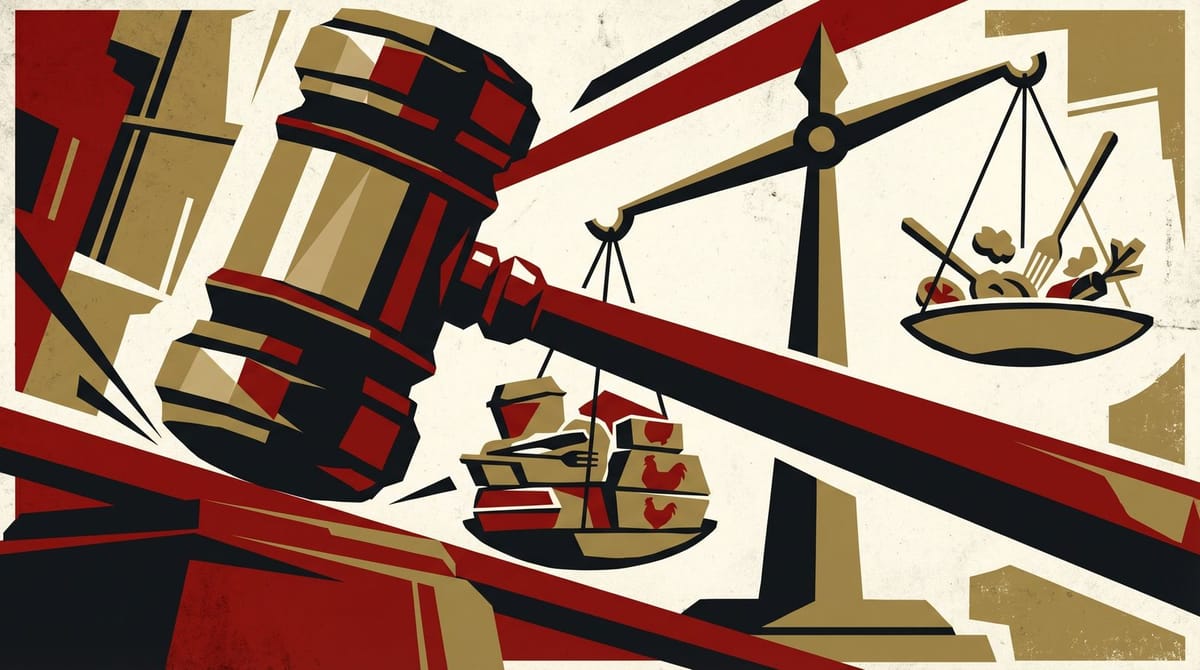
Chili’s is opening a pop-up courtroom in New York City’s Union Square on April 16, right next to a McDonald’s, to make its case that its $10.99 Big Crispy 3 For Me meal beats the McCrispy. Court TV is broadcasting the “trial.” Consumers serve as the jury.
This sounds ridiculous. And it’s the fourth time in roughly 18 months that Chili’s has done something like this. The Big Smasher went after the Big Mac. The Big QP targeted the Quarter Pounder. The Fast Food Financing pop-up offered to help customers “finance” a McDonald’s combo meal. Now, an actual courtroom set. Same target, slightly different costume each time.
And it’s posting a 62% four-year cumulative same-store sales comp while doing it.
A Two-Year Grudge Match With Receipts
I think most marketers misread what Chili’s is doing here. The pop-ups get attention because they’re visually interesting, but the competitive comparison itself is the strategy. George Felix, the CMO, has essentially built the entire marketing playbook around one premise: Chili’s is bigger, cheaper, and better than the fast food you’re settling for.
The numbers tell you whether that’s working. Under Felix and CEO Kevin Hochman, Chili’s has tripled its marketing budget over three years to $105 million and posted 21.4% same-store sales growth in Q1 FY2026, driven by a 13% increase in traffic. That’s not a bump from a viral moment. That’s six consecutive quarters of double-digit same-store sales growth in a category where most brands are flat or declining.
The Big Crispy filet in the new 3 For Me meal is 82% bigger than a McCrispy, according to a Chili’s-commissioned study in the Dallas-Ft. Worth area. You can quibble with the methodology, but the visual is compelling enough for a pop-up courtroom. They know that.
Why Most Challenger Brands Won’t Do This
Naming your competitor by name in advertising makes legal teams nervous. It makes brand teams nervous. It requires you to have a product claim that’s defensible when someone holds it up to scrutiny. Most brands skip this entirely because the downside risk feels high and the alternative (vague positioning against an unnamed “the other guys”) feels safer.
Chili’s keeps doing it because they’ve figured out something that should be more obvious than it is: when a casual dining chain compares itself to fast food, it reframes the entire category conversation. You stop thinking “Chili’s vs. Applebee’s” and start thinking “Chili’s vs. McDonald’s.” That’s a different competitive set with a different value equation. On price, a $10.99 combo with a drink, fries, and an entrée is close enough to fast food that the quality gap does the rest of the work.
The Campaign US coverage of their earlier pop-ups called the approach “savage and unsubtle.” I’d argue that’s the point. Subtlety doesn’t generate earned media. Putting a courtroom next to a McDonald’s does.
It reminds me of what Dollar Shave Club did when they made the pink razor aisle the villain of their launch. Different industry, same underlying move: name the thing your customer already resents, and position yourself as the obvious alternative. The aggression reads as confidence.
The Earned Media Math Is Absurdly Efficient
The pop-up itself probably costs somewhere in the low six figures when you factor in venue, build-out, staffing, the Court TV integration, and the free food. Call it $200K on the generous end. The Marketing Dive coverage alone reaches a trade audience that would cost multiples of that in paid placement. Add Ad Age, NRN, Restaurant Dive, and whatever Court TV drives, and the earned-to-paid ratio on these stunts looks very good.
This pattern keeps repeating because the format is inherently newsworthy. “Restaurant opens pop-up” is not a story. “Restaurant opens pop-up courtroom next to its largest competitor” is. The competitive element is the hook. Without it, there’s no coverage. With it, trade press practically has to write about it.
And honestly, the consistency is the part that impresses me most. Anyone can get lucky with one stunt. They’re doing this quarterly, each one building on the last, each one keeping the narrative alive that Chili’s is the value alternative to fast food. I’d estimate Chili’s has generated more earned media per marketing dollar than almost any restaurant chain in the last two years.
The Part That’s Actually Replicable
This is where it gets interesting for brands outside of QSR. The Chili’s playbook has three components, and none of them require a $105 million budget.
First, pick a specific competitor people already have mild frustrations with. Not the entire category. One name. McDonald’s works for Chili’s because everyone has an opinion about fast food prices. Your version might be different, but the principle holds: the named competitor should be one your audience already half-agrees with you about.
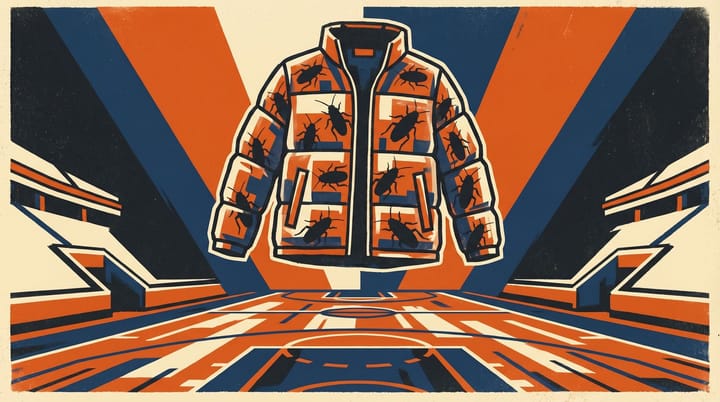
Second, make the comparison physical. A social media post saying “our chicken is 82% bigger” gets some engagement. A courtroom pop-up next door where people can taste both gets press coverage. From what I’ve seen, the brands that get the most mileage out of challenger positioning are the ones willing to create a moment people can walk into, not just scroll past. We saw a version of this when Uncommon NY put live roaches in a puffer jacket and generated coverage on zero media spend. Physical stunts have an earned media multiplier that digital campaigns rarely match.
Third, repeat. Chili’s didn’t do this once and move on. The Big Smasher, the Big QP, the Financing pop-up, now the courtroom. Each iteration reinforces the same message through a different lens. By the fourth or fifth execution, the press starts covering the pattern itself, which doubles your coverage.
The one catch: you need a product that can actually withstand the comparison. If Chili’s chicken sandwich was worse than a McCrispy, this entire strategy would backfire spectacularly. The confidence has to be earned, not performed.
Your Move Depends on Whether You’re Willing to Name Names
If you’re a challenger brand in any category, the question after watching Chili’s isn’t whether this strategy works. Nineteen straight quarters of same-store sales growth, outperforming casual dining by 680 basis points, and a stock price that’s roughly quadrupled since early 2024 says it works.
The question is whether you’re willing to do it. Most brands default to positioning against a category rather than a competitor because it feels less risky. And in fairness, it probably is less risky. But the ceiling is lower too.
Category positioning makes you one of several options. Competitor positioning makes you the alternative.
I don’t think every brand should do this. But if you’re sitting at 15-20% market share in a category where the leader is at 40%+, and you genuinely have a better product at a comparable price, the Chili’s playbook is probably the most efficient growth strategy available right now. They’ve been doing it for two years and nobody in their category has copied it yet. That tells you something about how risk-averse most marketing teams are. It also tells you the lane is still open.