Coca-Cola Put 13 Competing Restaurants in One Ad. The Audience Isn't at the Drive-Thru.
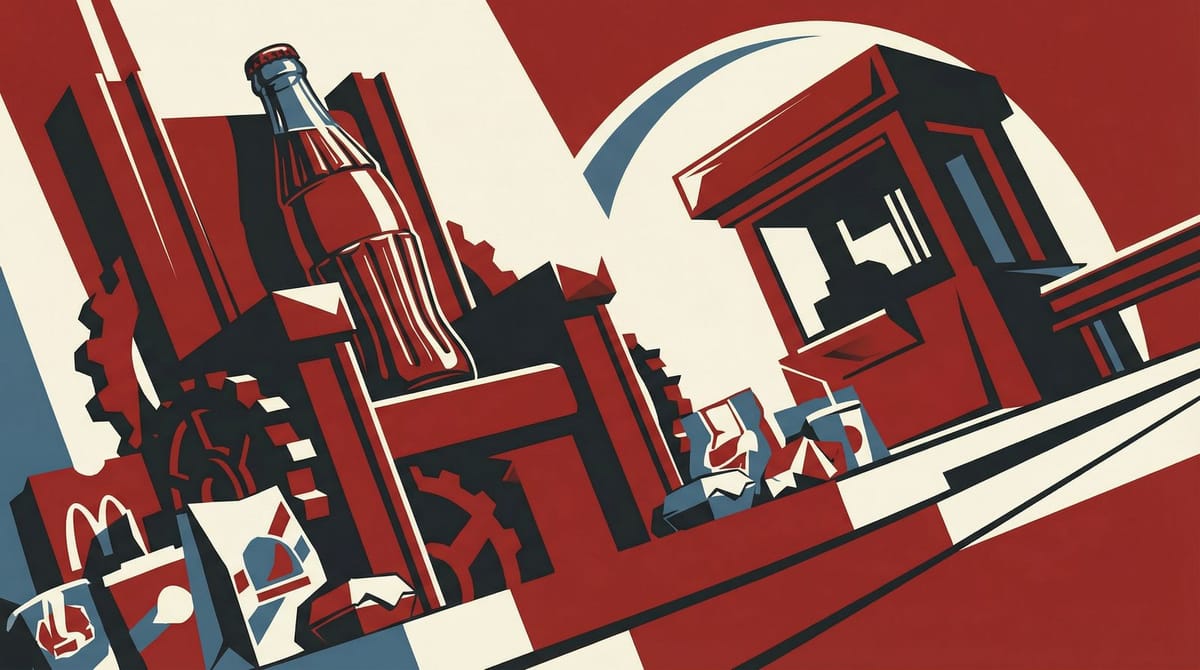
Coca-Cola released “And a Coke” this week, a three-spot campaign featuring 13 fast-food chains in scenarios where customers order wildly different meals but always end with the same three words. Arby’s, Domino’s, Wendy’s, Wingstop, Panda Express, Five Guys, and seven others all show up in the same creative. On the surface, it’s a brand awareness play about Coke being the natural companion to any meal.
Look harder.
Coca-Cola convinced 13 competing restaurant chains to share screen time in a single campaign. That doesn’t happen because a creative brief was compelling. It happens because Coca-Cola controls the beverage supply to all 13 of them, and it wants everyone in the industry to know it.
The real audience is in a conference room, not a drive-thru lane
This campaign exists because Coca-Cola lost Subway.
In March 2024, Subway announced a 10-year exclusive deal with PepsiCo to replace Coca-Cola across all 21,000 U.S. locations, ending a nearly 20-year partnership. That’s a significant footprint to lose. Pepsi didn’t just win a beverage contract. They won a narrative: that Coca-Cola’s grip on foodservice was slipping.
“And a Coke” is the response. Not to consumers (they were going to order a Coke anyway) but to every restaurant operator and procurement team watching the Subway switch and wondering whether they should take the next Pepsi pitch more seriously.
The subtext is pretty simple: we have 13 of your competitors locked in, nine of them for more than 30 years, representing over $66 billion in combined 2024 sales. That’s not an ad. That’s a shareholder letter to Coca-Cola’s own distribution network.
Why distribution matters more than brand right now
Here’s what makes this interesting for anyone who runs marketing at a brand that isn’t Coca-Cola: the campaign barely tries to sell Coke to the person buying it. The creative shows people ordering food, not beverages. The product is an afterthought, literally. “And a Coke” is a phrase that happens after the real decision.
That’s the whole point. Coca-Cola isn’t trying to convince you to drink Coke. It’s trying to make sure Coke is the only option available when you decide you’re thirsty. Distribution, not persuasion.
The foodservice channel is worth paying attention to right now. Restaurant and foodservice sales are projected to hit $1.55 trillion in 2026, up from $1.4 trillion last year. Restaurants now capture 53% of the American household food dollar. More than groceries. And that number has been climbing for years.
For a beverage company, controlling which products sit behind that counter matters more than any TV spot. Coca-Cola knows this. Pepsi knows this. The campaign is the scoreboard.
550 years of lock-in, visualized in 90 seconds
The 13 partners in the campaign collectively represent over 550 combined years of partnership with Coca-Cola. Nine of the 13 have been exclusive for more than three decades. That’s an absurd amount of contractual lock-in.
I think what Coca-Cola actually did here was turn those contracts into content. Normally, an exclusive beverage deal is an invisible competitive advantage. It lives in a filing cabinet somewhere. By putting Arby’s next to Wingstop next to Domino’s in the same 30-second spot, Coca-Cola made the invisible visible. They’re basically saying: look how many restaurants we own the drink menu for. Try and compete with this.
It also functions as a loyalty signal to the chains themselves. Being in a national Coca-Cola campaign isn’t nothing. It’s free brand exposure alongside WPP/Ogilvy-level creative, funded by Coca-Cola’s ad budget. The franchise operators watching this aren’t just seeing a Coke ad. They’re being reminded of what staying with Coke gets you versus what Subway got by leaving (a press release and some Pepsi signage).
What this actually teaches smaller brands
Most brands reading this will never have half a million foodservice locations or $66 billion worth of partner sales. That’s fine. The lesson isn’t about scale. It’s about where to invest when your category gets more competitive.
Coca-Cola could have responded to the Subway loss by running more traditional ads. More celebrities, more Super Bowl spots, more “open happiness” messaging. Instead, they doubled down on the distribution relationship. The campaign isn’t about Coke’s brand equity. It’s about Coke’s physical presence at the point of purchase.
From what I’ve seen, smaller brands tend to do the opposite. When they lose a distribution partner or a shelf placement, they increase top-of-funnel spending. More awareness, more impressions, more reach. And honestly, that’s usually the wrong instinct. If a retailer or distributor drops you, the most effective response is almost always to strengthen the remaining distribution relationships first, then worry about demand generation.
A brand that reaches 10 million people but is available in 500 locations will always lose to a brand that reaches 1 million people but is available in 50,000 locations. Coca-Cola understands this better than probably any company alive.
The timing tells you everything about the strategy
“And a Coke” launches in cinemas on April 3 and expands to linear TV, digital, social, and food delivery platforms like Uber Eats and DoorDash through mid-April. The cinema premiere is a nice touch. You’re sitting in a theater, about to watch a movie, probably thinking about snacks. It’s one of the few remaining contexts where Coca-Cola’s product placement feels organic.
But the timing is also deliberate. Pepsi’s Subway transition is now fully operational. Every Subway in America now pours Pepsi. Coca-Cola waited until the transition was complete before responding, which is a specific kind of restraint. They didn’t panic when the deal was announced. They took roughly 18 months to build a response that said: you took one chain, we still have thirteen of the biggest.
I don’t think this is the last time we’ll see a beverage company weaponize its distribution network as creative content. The KitKat “stolen chocolate” campaign pulled something similar earlier this year, turning operational reality into earned media. When your infrastructure is your advantage, showing it off is the ad.
Coca-Cola’s real moat isn’t the taste test
The uncomfortable truth for Pepsi is that in blind taste tests, they’ve consistently won. Pepsi literally built a decades-long marketing campaign around this fact. And it hasn’t mattered. Coca-Cola still outsells Pepsi roughly 2-to-1 globally.
The reason isn’t branding in any abstract sense. It’s that Coca-Cola is available in more places, more of the time. When you walk into a Wendy’s, a Five Guys, a Wingstop, there is no Pepsi option. The choice was made for you before you arrived, by a procurement team that signed a 30-year contract.
That’s the business model this campaign is actually about. Not convincing you. Removing the alternative.
Notice Me Senpai Editorial