Chrome's New AI Mode Side Panel Just Made the Source Page a Footnote
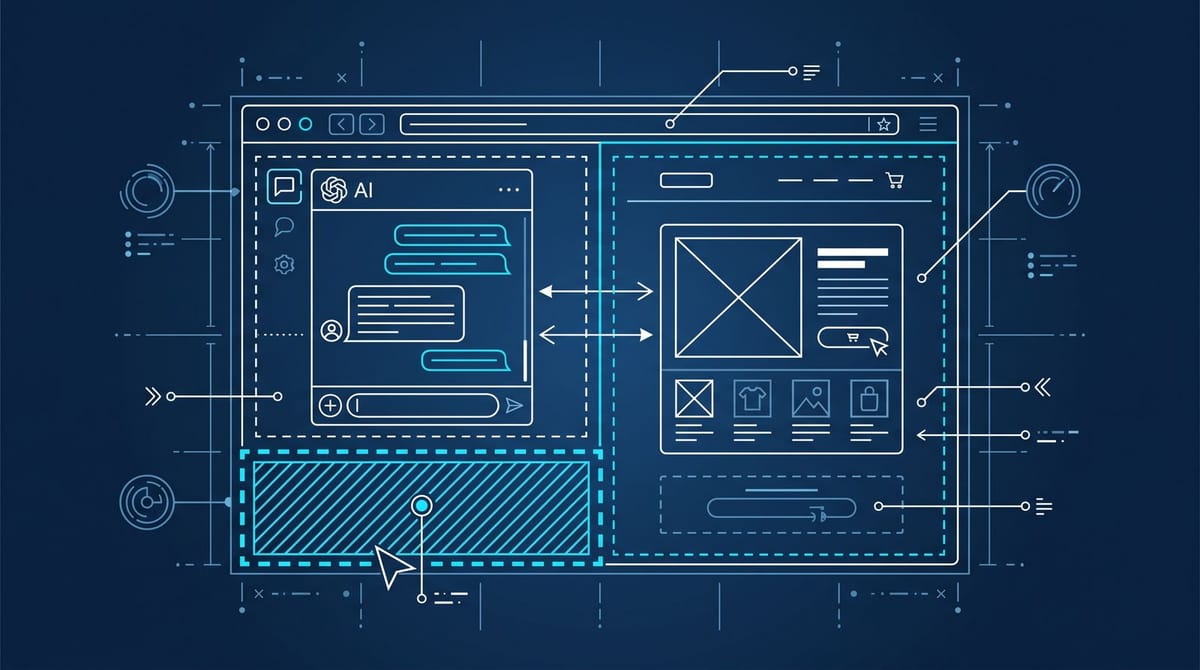
Google launched a Chrome AI Mode side panel on April 16, 2026, opening source pages next to the AI answer so users can read and ask follow-ups without a new tab. AI Mode already has 75 million daily users and a 93% zero-click rate, per Seer Interactive. The fix for publishers: optimize for citation placement inside the AI answer, not rank on the SERP.
What Google actually shipped on April 16
Two changes landed in Chrome this week. Click a link inside AI Mode and the webpage now opens in a side panel next to the conversation. The AI Mode panel shrinks, the source page gets a lane, and follow-up questions stay within scrolling distance. A new plus menu in the search box lets users pull tabs, images, or PDFs into the conversation as context. Canvas and image generation also moved outside the AI Mode destination and onto any Chrome surface.
Robby Stein, Google Search's VP of Product, and Mike Torres, Chrome's VP of Product, announced it on the Google blog. US only for now, expanding to more regions soon. Coverage from TechCrunch and Search Engine Land broke the same day.
The coffee-maker example in Google's demo is worth paying attention to. A user asks AI Mode for recommendations, clicks a retailer's product page inside the side panel, and then asks "how easy is this to clean?" without closing anything. AI Mode reads the page on the user's behalf and answers. That's the whole mechanic, and it is what changes the work.
Why the side panel matters more than the plus menu
The plus menu is the feature that gets demoed at conferences. The side panel is the one that quietly changes how publisher traffic gets valued.
Before the panel, a click from AI Mode sent the user away. Analytics got a referrer. The publisher got attribution, even if the user bounced in 6 seconds. After the panel, the click still happens (Google is saying it does), but the user never really leaves AI Mode. The AI conversation stays open. The follow-up question is asked inside Google. The second and third interactions get answered by AI Mode using the page it just loaded, not by another click to a different URL.
From what I've seen, this is the part most SEO decks are glossing over. The side panel creates a format where the first click is a loading event for AI Mode, not a user action with commercial intent. A publisher's ability to run a second step (newsletter signup, comparison CTA, bottom-of-funnel offer) depends on the user actually committing to the page. If the AI Mode panel stays visible, the page functions like a research input. The user never fully commits.
Publishers will still see pageviews. Whether those pageviews convert is a different question entirely.
The 93% number that should anchor every SEO review this quarter
Seer Interactive's 25.1 million-impression study found that 93% of AI Mode queries end without a click to any external website. Their earlier CTR data on AI Overviews put organic CTR at 0.61% after AIO, down from 1.76% before. A 61% drop. The paid side got hit harder. 19.7% to 6.34%, a 68% drop.
AI Mode is already at 75 million daily active users as of late 2025, per Google's own reporting covered by Search Engine Journal. That's up roughly fourfold from launch in May of that year. The side panel update doesn't cause any of those numbers. It just makes them stickier. Every friction point the panel removes is a reason a user doesn't need to click a second tab.
The branded-search data is the counterweight. Brands cited inside AI Mode see a 35% CTR bump on organic and 91% on paid, per the same Seer analysis. So the distribution is splitting. Cited brands benefit disproportionately. Everything else loses share. There is no middle tier being protected.
Three audit moves to run before commercial-query CTR drops further
These are the practical things to do this week. No 12-week strategy, just the actions worth running tomorrow.
1. Check whether your entity names render in the raw HTML. AI Mode cites entities it can confirm from crawlable text. Product pages that lead with hero images and load brand names via JavaScript get skipped. Pull up view-source on your top 10 commercial pages and confirm the product name, brand name, and core attribute (price, model, category) appear in the first 2 KB of raw HTML. If they do not, move them.
2. Audit structured data on category and comparison pages. Side-panel users are asking follow-up questions like "is this dishwasher safe?" and AI Mode is parsing the page to answer. Product schema with material, additionalProperty, and isSimilarTo gives the model something to latch onto. A thread on r/bigSEO this week noted that retailers who added hasEnergyConsumptionDetails to appliance listings saw a measurable uptick in AI Overview citations. One data point, not a study, but it matches the direction the panel is pushing.
3. Surface differentiators in the first 300 words of product pages. AI Mode answers follow-ups from the visible top of the page, not the FAQ section at the bottom. If your strongest claim ("battery lasts 14 days" or "the only dishwasher-safe blender under $80") is buried in the specs table, move it up. Our earlier coverage of the Ahrefs ChatGPT citation study found that title-match in the first paragraph predicts ChatGPT citations more than backlinks do. The dynamic in AI Mode is related, even if the engines are different.
The quieter bet: pages that get shared in email and Slack
The plus menu is easy to dismiss as the minor feature. It might actually matter more for publishers outside the product-comparison space.
Users can now pull open tabs into an AI Mode query. Practical effect: a page that got shared in a team Slack or a subscriber email can become the base for an AI comparison layer, without ever getting searched for first. That inverts the usual SEO funnel. Pages that were already open, via a past search, social share, or newsletter link, become the reference material AI Mode uses for its next answer.
If your distribution strategy leans on newsletters, Reddit threads, or partner site placements, this feature rewards that more than pure rank does. The page lives longer in context. Bookmarked pages matter more. Evergreen content that circulates in communities has a second surface that did not exist three weeks ago.
It is not a full replacement for search visibility. But it is a reason to fund dark-social distribution alongside traditional SEO, not as a hedge against it.
Where I would pull budget this month
Stop investing in above-the-fold title variations for commercial queries where AI Mode is already appearing. A better meta title still helps when the traditional SERP shows, but the fraction of commercial queries where that matters is shrinking month over month.
Also stop pitching "long-form evergreen guides" as a hedge against AI Mode. They probably are not. AI Mode reads them and summarizes them faster than any reader will. What seems to survive is specificity: named tests, named benchmarks, original data, and the kind of product-level detail an AI cannot synthesize from adjacent coverage.
This is the part I am slightly less sure about. Long-form content still compounds in traditional search, and traditional search is not zero yet. Maybe 40% of commercial sessions still happen outside AI Mode in most verticals, depending on the category. Just, you know, budget for the right floor.
The bet I would take on how this plays out
My guess is that Google ships a second version of the side panel in Q3 that lets publishers mark specific page sections as "citable" for AI Mode, the way they already let publishers exclude content from AI answers. That is the compromise that keeps the panel useful without fully hollowing out publisher incentives. Whether publishers actually use it is a separate fight.
What I would watch instead of the feature roadmap: commercial-query organic CTR by category in your Search Console. If the numbers break below 1% on queries where you used to hover around 3-4%, the side panel is doing the work the spec suggests. If they hold, the rollout is slower than it looks.
Either way, the incentive has moved. Ranking is still the price of entry. Citation inside AI Mode is increasingly where the outcome actually happens. That is the shift worth planning the rest of the quarter around.
Notice Me Senpai Editorial