Google LSAs Now Hide the Phone Number (Right as Missed Calls Got Billable)
Google Local Services Ads started hiding the advertiser's phone number behind a "Get phone number" button on desktop, Search Engine Roundtable reported on October 2, 2026. The change lands one day after LSA began charging for missed calls that last longer than 20 seconds. That means more friction before the call and more billable leads that never became jobs, so audit your lead mix by type now.
On its own, the button is a small thing. Barry Schwartz, who spotted it and posted a screenshot on X, wasn't even sure it was brand new, and he pointed out the button is mostly redundant: the number appears as soon as you move your mouse near the ad. So nobody is literally locked out of calling you.
I still think it's worth more attention than "Google tweaked a button," mostly because of what it's sitting next to.
A button, a billing change, and a migration walk into an invoice
Three things changed in the LSA world inside roughly six weeks, and they read differently together than they do one at a time.
First, the billing. Starting October 1, Google charges for missed calls during business hours if the caller stays on the line for more than 20 seconds. Follow-up calls between you and the same customer can also be charged, though Google's Ginny Marvin clarified it's capped at once per 15-day window. There are exceptions for callers who never press a routing key, plus new filters for robot and spam calls.
Second, the platform. LSA is being folded into Google Ads as Performance Max campaigns with pay-per-lead goals. The first phase started in August 2026 for U.S. categories like plumbing, HVAC, electrical, roofing, pest control and moving. Service-area businesses follow in late 2026, everyone else in 2027. Manual bidding and vertical-level Target CPA are being deprecated, weekly budgets become daily averages, and historical performance reports don't carry over.
Third, now, the number gets a button.
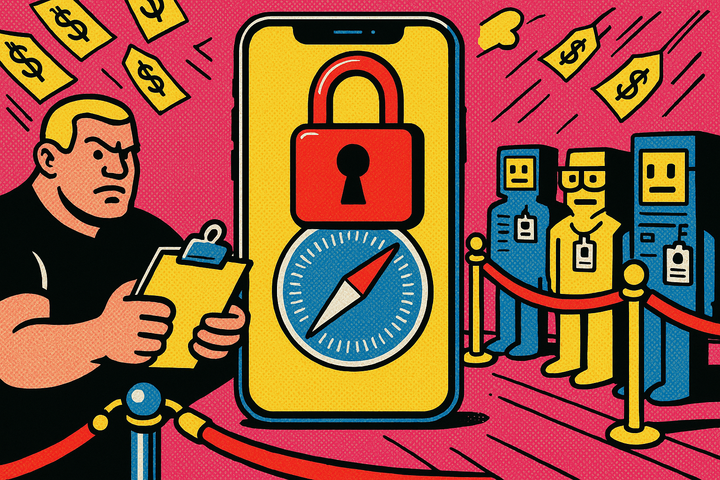
None of these is a scandal. Put them on one timeline, though, and the direction seems pretty clear: Google wants every contact to flow through a step it controls, counts, and bills. A visible phone number is the one part of an LSA that a customer could, in theory, copy down and use without Google ever seeing the interaction. A "Get phone number" button is a measurable click. Draw your own conclusions about which one Google prefers.
Why the lead mix is the thing to watch
LSA leads come in a few flavors (calls, messages, and in some categories direct bookings), and Google's own help page says you only pay for valid leads such as phone calls and messages. They aren't the same quality, and they aren't charged on the same trigger.
According to Invoca's breakdown of the PMax migration, text leads are charged as soon as they're sent. A call at least has to connect, or now ring past 20 seconds during your listed hours. A message just has to exist.
My concern, and I'll admit it's a hypothesis rather than something I can prove from one screenshot. Anything that adds a step between "I need a plumber" and dialing seems likely to nudge some share of people toward the other buttons on the ad. If that share moves from calls to messages, you could see your cost per lead hold steady while your booked-job rate quietly drops, because a message lead and a phone lead are not the same customer.
Invoca cites research that 37% of home services consumers prefer calling when they have a problem, and that 79% will switch to a competitor that responds faster. The people who wanted to call are the urgent ones. A burst pipe doesn't send a polite inquiry and wait for a reply.
The part that makes this harder to spot: after the migration, Invoca notes, Google's "conversions" metric in the new campaigns simply counts charged leads. Not booked jobs. If your reporting stops at the Google Ads dashboard, a shift in lead quality is basically invisible.
Google's conversion column now counts what Google charged you for. It has no idea which of those leads paid you back.
The October audit I'd run before the first new invoice
None of this needs a new tool. It needs about 30 minutes and a spreadsheet you probably already half-have.
1. Split September and October leads by type. Pull calls, messages and bookings separately for the last 30 days of September and every week of October. You want the percentage of total leads that are calls. If that share drops by more than 5 percentage points week over week with no change in your budget or hours, I'd dig into it before assuming it's noise. (That threshold is my own rule of thumb; Google publishes nothing like it. Small accounts with under 40 leads a month will bounce around more than that naturally.)
2. Tag missed calls that got charged. October is the first month missed calls over 20 seconds during business hours can show up as billable. Go through the lead list and mark which charged calls were missed. If more than 10% of your charged call leads are missed calls, the cheapest fix is probably not in Google at all. It's your answering setup, an overflow line, or tightening the business hours listed in LSA so they match when someone actually picks up.
3. Check message response time, honestly. Responsiveness is a ranking factor for LSA, Local Falcon notes, including average response time to inquiries. If messages become a bigger share of your leads, slow replies hurt twice: once on the lead you lose, and again on where your ad ranks next week. Local Falcon's suggestion to pause ads during stretches when nobody can respond sounds drastic. For a two-truck operation, it's probably sensible.
4. Keep a booked-job number outside of Google. Whatever CRM, field service software, or shared sheet you use, log which LSA leads became booked jobs. Divide October spend by booked jobs, not by leads. That's the only number in this whole exercise that Google isn't grading for you.
If you're an agency, I'd add one more thing: tell clients about the button and the billing change before they see the invoice. "Google started charging for calls you missed" lands a lot better coming from you on October 5 than from the client on November 3.
It might be nothing, which is sort of the problem
To be fair to Google, there's an innocent read here. A hover-to-reveal number could cut down on scrapers harvesting contractor phone numbers, which is a real nuisance in home services. It could also just be a test that disappears next week. Google runs a lot of these, and Search Engine Roundtable reports plenty of them that never ship.
And honestly, desktop is not where most emergency plumbing searches happen anyway. Nobody has reported the same change on mobile so far, where the call button is what most people tap. So the direct impact on your lead volume could be close to zero.
What I keep coming back to is less about this particular button and more about the pattern. This feels a lot like what happened when Google pushed advertisers off manual controls elsewhere; we saw a similar move when Microsoft Ads dropped Max CPC, and Google is already pulling offers off landing pages to write ads for you. Each step is defensible on its own. Together they move a little more of the customer relationship onto Google's side of the counter, one small UI change at a time.
LSA used to be the simplest product Google sold to local businesses. You paid per lead, the lead called you, and you answered the phone or you didn't. It's getting more complicated, and I'm not sure most owner-operators running these ads have noticed yet.
My guess on where LSA call share goes from here
My prediction, for what it's worth: by the end of Q1 2027, accounts that have moved into the PMax version of LSA will see calls make up a smaller share of total leads than they did in September 2026, and I'd put the drop somewhere around 10 percentage points for the median home services account. I could be wrong on the size. I'd be surprised if I'm wrong on the direction.
If that happens, cost per lead will look fine in the dashboard, and the businesses that notice will be the ones who were already counting booked jobs somewhere Google can't see. Probably worth starting that spreadsheet today, even if the button turns out to be a test that never ships.