YouTube Is Throttling Recycled Shorts, and Your TikTok Exports Look Recycled
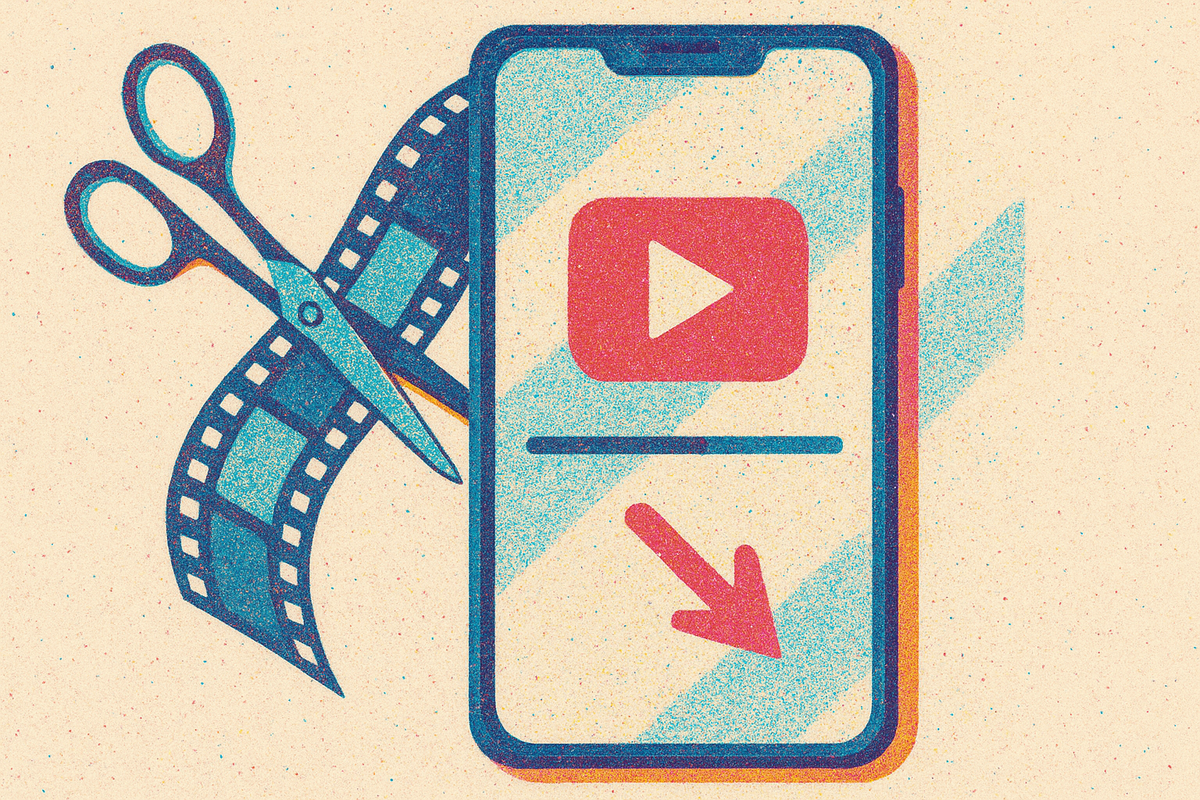
YouTube said on October 1, 2026 that Shorts channels "primarily aggregating or re-uploading other creators' videos without significant changes will likely see less distribution," PPC Land reported. YouTube gave no ratio, lookback window or definition of "significant." For brands bulk-exporting TikToks and Reels to Shorts, that vagueness is the risk: a classifier can't easily tell your recycled clip from a scraped one.
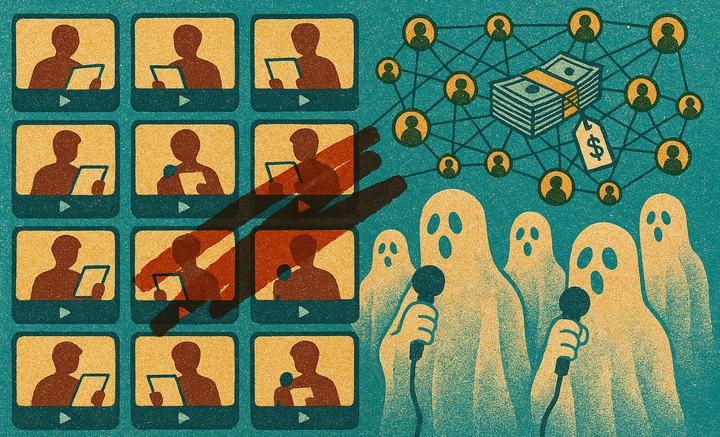
The announcement itself is aimed at a specific villain. It came from a TeamYouTube community manager in the YouTube Help Community, originally posted in Indonesian, and YouTube's Creator Liaison Rene Ritchie talked it through on Creator Insider the same day. The target is the repost farm: channels that rip other people's clips, slap a caption on top and ride the Shorts feed for free views.
So on paper, if you run a brand account and only post your own footage, this has nothing to do with you. And maybe it doesn't. But I'd be careful about taking that at face value, for reasons that have more to do with how these systems get enforced than with what the announcement says.
The part YouTube didn't answer is the part that matters
PPC Land's write-up lists what's still open, and it's a long list. There's no numeric threshold for "primarily." No lookback window. No implementation date. And two questions that matter a lot for marketing teams went completely unaddressed: whether brands cutting Shorts from their own long-form videos are affected, and whether creators clipping their own content count.
The policy YouTube is pointing to isn't new either. It's the existing spam, deceptive practices and scams policy, which already covers scraped content: re-posting material from other platforms or other videos "without adding anything of your own," with original commentary, educational value or unique editing listed as the things that count as adding something.
Read that sentence again with a brand social calendar in mind. "Re-posting material from other platforms" is, quite literally, what a post-once-export-everywhere workflow does. The intent of the rule is about stolen content. The wording is about where content came from. Automated systems enforce wording, roughly, and intent only on appeal.
The classifier doesn't know you own the footage. It only knows it's seen it before.
Why I think brand cross-posters are in the blast radius anyway
This is the fourth platform in about four years to formalize an originality preference, and every previous round followed the same arc. Announce a crackdown on aggregators, ship a duplicate-detection system, and let the detection system sort out the edge cases.
Instagram did it first. In 2022 Adam Mosseri said Instagram would rank original content above reposts, adding labels to reposts and swapping in the original when it detected identical content. Meta brought the same logic to Facebook in July 2025, when it announced reduced distribution for accounts that repeatedly reuse other people's videos and said duplicate videos would get their reach cut so the original gets the credit. TikTok has its own version too: its For You feed eligibility rules push recycled, visibly watermarked uploads from other platforms out of recommendations.
YouTube's own groundwork landed the same month as Meta's. In July 2025 it tightened monetization rules around mass-produced and repetitive content and said it had improved its detection systems for that kind of material. The October announcement reads less like a new rule and more like YouTube telling people the detection system now feeds into Shorts distribution, not just monetization.
The uncomfortable bit is mechanical. Duplicate detection works on fingerprints: frames, audio, maybe on-screen text. A TikTok export with the TikTok logo bouncing in the corner, the TikTok caption font and the TikTok trending sound looks, to a fingerprinting system, a lot like a scraped TikTok. Your legal team knows you own it. The model doesn't have a field for that.
I'm not saying every brand Short is about to tank. I genuinely don't know how aggressive the threshold will be, and YouTube clearly doesn't want to say. I'm saying the cost of being wrong is asymmetric. Re-editing a clip takes maybe 10 minutes. Losing reach on a channel quietly for a quarter costs a lot more than that, and you probably wouldn't notice until someone asks why Shorts views fell off.
The stakes are bigger than they look on your dashboard
It's easy to treat Shorts as the afterthought channel, the place the TikTok edit goes to get a second life. Plenty of brand teams still run it exactly that way (and honestly, it made sense when Shorts was the scrappy newcomer). But Neal Mohan said at Cannes in 2025 that Shorts averages 200 billion daily views, up from 70 billion daily views in March 2024. That's daily views, not daily viewers, so it's not a reach number. Still, it's not the format you want to be quietly throttled on.
There's also a monetization knock-on for anyone working with creators. According to PPC Land, starting February 1, 2027, qualified Shorts views used for Partner Program thresholds will exclude reuploads and compilations without original additions. If your creator partners are hitting their numbers partly on recycled clips, their Shorts revenue math gets worse, and so does their incentive to keep cross-posting your sponsored content without re-cutting it.
A 30-day reach audit before you change anything
Don't overhaul the workflow on vibes. Pull data first. This takes maybe an hour in YouTube Studio:
- Tag your last 30 days of Shorts. Two buckets: native (shot or edited specifically for Shorts) and cross-posted (exported from TikTok, Reels or CapCut and uploaded as-is). Be honest about the "lightly trimmed" ones. They go in the cross-posted bucket.
- Compare median views per Short, not totals. One viral outlier will wreck an average. Also compare the "shown in feed" vs "viewed" ratio in the Shorts engagement report if you have it, since a throttled clip tends to show up as fewer impressions, not worse retention.
- Re-run it in 30 days. The announcement came without a date, so the before-and-after matters more than the absolute numbers.
My benchmark, and it's a rough one: if your cross-posted Shorts are pulling less than about 60% of the median views of your native ones over the same window, the re-edit step pays for itself. If the gap is under 20%, you probably have time, though I'd still strip watermarks today because that one's free.
What a re-edit actually needs to include
The spam policy's own language gives you the checklist: commentary, educational value, distinctive editing. Translated into a production step, per clip:
- Export clean. No TikTok or CapCut watermark, ever. Pull from the project file, not a downloaded copy.
- Re-cut the first two seconds. A new hook frame changes the fingerprint and, more usefully, fits Shorts viewers better anyway.
- Swap platform-native audio and on-screen text styling for something that isn't obviously TikTok's.
- Add something: a voiceover line, a text callout, a different ending. YouTube's guidance (per PPC Land) says simple narration describing what's on screen doesn't count, so make it actual commentary.
One slightly off-topic thought, because it keeps bugging me. Every platform asking for "original" content is also shipping AI tools that make producing content faster and more templated. YouTube rolled Veo into Shorts the same year it started filtering mass-produced video. I don't think that's hypocrisy, exactly. It's more that "original" is turning into a moving target that each platform defines in its own favor, and brands are going to keep paying a small editing tax to stay on the right side of whatever the current definition is.
If you're also rethinking where your social data comes from right now, our piece on Reddit killing RSS and what it breaks in social listening is a related audit worth doing the same week.
Where I'd bet this lands by spring
My prediction: by the February 2027 Partner Program change, at least one major social tool (Buffer, Hootsuite, Later, someone in that tier) ships a "platform-specific variant" feature that auto-generates a re-cut per network, because their customers will start noticing the Shorts numbers. I'd put that at around 70% odds.
Until then, I don't think the answer is to stop cross-posting. It's cheap distribution, and most of it will probably keep working. I'd just stop treating Shorts as a dumping ground and give each clip ten minutes of its own. That's probably enough to stay on the right side of a rule nobody at YouTube is willing to put a number on yet.