Ahrefs Is Rewriting Your Rank History After Google Poisoned Up to 20% of It
Ahrefs said on October 22, 2026 that Google is "poisoning" between 5% and 20% of the search results it serves to SEO data providers, depending on the provider. Ahrefs is now filtering those pages and cleaning up past results that may have been affected, which means September and October rank history inside the tool can change after you have already reported on it.
That second part is the bit I'd pay attention to. The poisoning itself is old news by now (we covered Nozzle's 8% finding last week). What's new is a major tool vendor saying, more or less, the numbers you exported last month might not be the numbers we show you next month.
What Ahrefs actually said (it's short)
The Ahrefs post is six paragraphs long, according to PPC Land's breakdown, and it's light on detail. Ahrefs says it has seen an increase in poisoning "over the past few weeks," calls it "an industry-wide issue impacting many companies in our space," and says it has "multiple filters in place to detect and reject the abnormal results." Then the line that matters: "We're also cleaning up any past results that may have been affected."
What it doesn't say is how far back the cleanup goes, how many data points were replaced, or whether corrected numbers will be flagged anywhere in the interface. No methodology, no sample size, no country breakdown. Updates will come through dashboard notifications.
I don't think Ahrefs is doing anything wrong here, to be fair. Scrubbing bad data is the right call. But a silent retroactive edit to rank history is a strange thing to live with if you're an agency that already sent a client a September report built on that history.
Why 5% to 20% is a wider range than it sounds
The spread between providers is the real story inside the story. Other vendors have reported very different numbers:
- DemandSphere reported wrong results on about 11% of its daily rank checks.
- Nozzle found swapped results on 8% of pages, first seen September 20 and peaking at 27.0% on September 29.
- AccuRanker, per PPC Land, says its rate dropped under 1% from mid-October and argues the poisoned share depends heavily on how data gets collected.
So the same Google behavior produces something like a 20x difference in damage depending on whose scrapers you're riding on. Your tool's exposure seems to be a function of its collection setup, which you can't see and the vendor mostly won't describe.
Country matters too, possibly more than device. Ryan Doser's analysis of the Nozzle data found Canada hit 48.1% poisoned on September 29, while the UK peaked at 2.8% that same day. If you track a Canadian client, late September is basically noise.
What a poisoned SERP looks like
These pages don't throw errors or captchas. They look like normal results, just with most of the usual sites swapped out. Search Engine Journal's write-up of the Nozzle study lists the tells:
- Only 20.7% of a keyword's usual sites stay on a poisoned page, versus 88.5% normally.
- More Facebook, Instagram, LinkedIn, Quora and Reddit. Less Yelp, MapQuest and YouTube.
- AI Overviews show up 34.9% of the time on poisoned pages, versus 54.2% at baseline.
- Image packs jump to 44.2%, from 23.0%.
- Ads and shopping results stay stable, which is a nice wry detail if you were wondering what Google considers worth protecting.
Most episodes are short. In the Nozzle data, 80% of poisoned spells lasted a single search. BrightLocal CEO Myles Anderson wrote that the damage concentrates on page 2 and beyond, below position 10, while Map Pack results are less affected and Google Maps isn't affected at all.
The spam update made this genuinely confusing
Here's where it gets messy, and honestly a little unfair to anyone who had to explain September to a boss. Google's September spam update ran for nearly 14 days, roughly September 24 to October 8. Poisoning peaked on September 29, smack in the middle of it.
So a site that "dropped" in late September might have been hit by the spam update. Or it might have been a poisoned scrape. Or both. The tools didn't even agree with each other: PPC Land notes Glenn Gabe said Ahrefs picked up a spam update drop accurately while Semrush was late, and around the same time another SEO said Ahrefs numbers didn't seem to match reality. Both could be true for different sites.
Think of it like a bathroom scale that randomly adds 10 pounds one morning in five. You'd still own the scale. You'd just stop panicking about any single weigh-in.
And if that drop led someone to rewrite content, strip links or file a reconsideration request, that's a real cost. Google itself has said recovery from quality changes takes three to six months, which is a long time to be wrong about the cause.
A ranking drop that only exists in your rank tracker is not a ranking drop.
The 20-minute snapshot before your history gets edited
If you report rankings to anyone, I'd do this today, before Ahrefs (or whoever you use) finishes the cleanup:
- Export September and October rank history now. Every tracked project, as CSV. If the cleanup changes numbers later, you want a "before" copy to explain why your old deck doesn't match the live dashboard.
- Pull Search Console for the same window. Performance report, filter to the specific query and page, not site totals. The Doser analysis makes the point that a site-wide total can hide a single-query drop. Steady clicks and impressions for that exact query mean you're probably looking at a tracking problem.
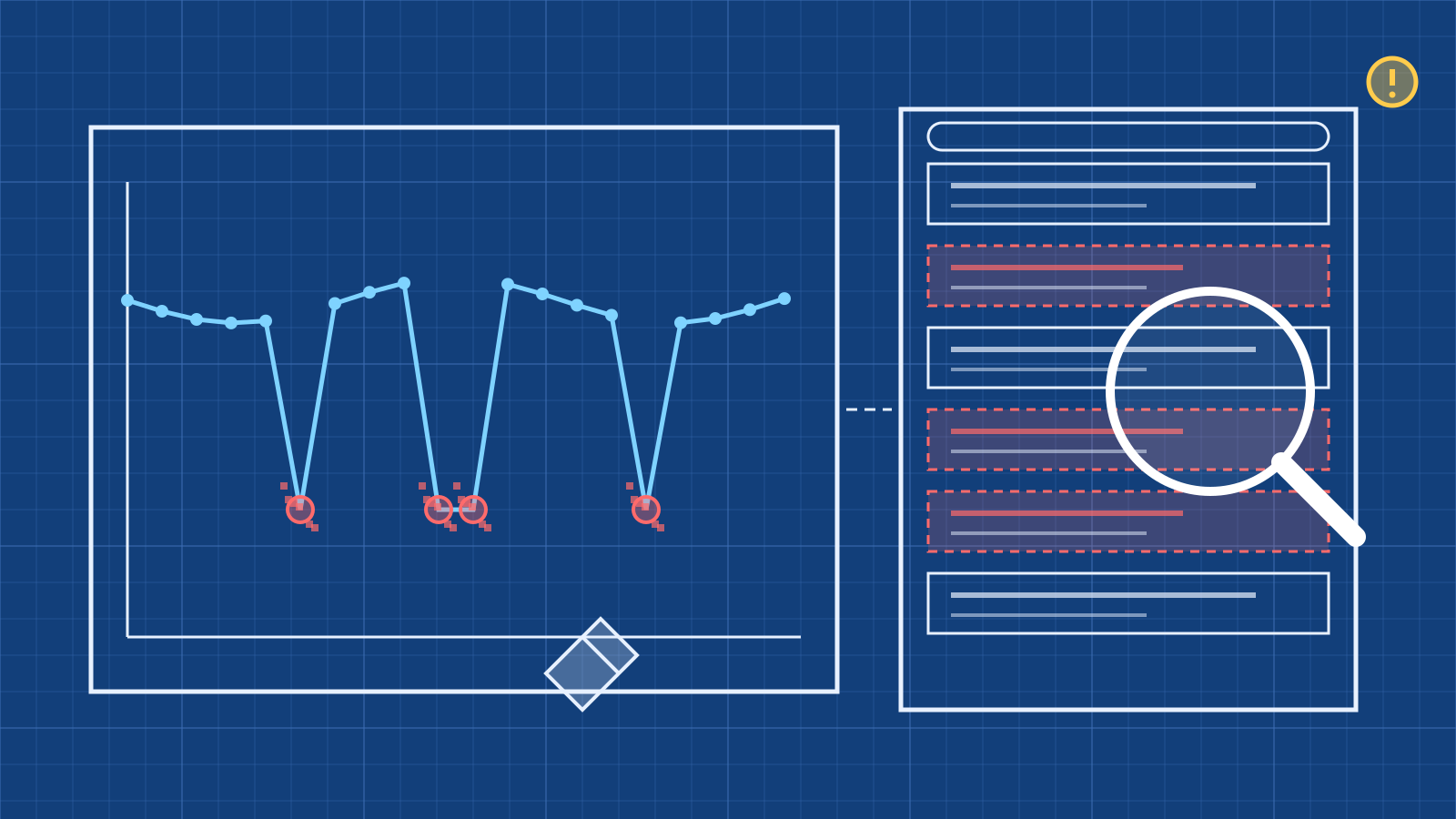
- Flag any keyword that moved 10+ positions for one day and came back. With 80% of poisoned spells lasting one collection, a single-day plunge is the strongest signature you'll get.
- Re-check anything you diagnosed as a spam update hit. If the drop shows in your tool but GSC average position for the query moved less than 2 positions over the same two weeks, I'd treat it as suspect and hold off on any fixes.
The benchmark I'd use: if more than about 10% of a client's tracked keywords show a one-day drop of 10+ positions between September 20 and October 8 that recovered within three days, assume the period is contaminated and say so in writing. That's roughly in line with the 8% to 11% rates Nozzle and DemandSphere reported, so anything well above it probably points at your tool's collection rather than your site.
A slightly uncomfortable question for your tool vendor
This isn't new behavior from Google, exactly. Google killed the num=100 parameter in September 2025 and it took Ahrefs about six weeks to restore top 100 tracking. Poisoning is just the sneakier sequel. Blocking a scraper tells it something is wrong; feeding it plausible garbage doesn't.
I think most teams will just shrug and keep trusting the line chart, which is understandable. But it's worth emailing your vendor and asking three things: what share of your collected SERPs got filtered, which dates were rewritten, and whether corrected data points will be marked. If they can't answer, that's an answer.
My prediction: within six months at least two of the big rank-tracking vendors will add a visible "data confidence" or "verified" flag on individual ranking data points, because retroactively editing history without one is going to generate a lot of awkward support tickets. I'd put that around 60% likely.
Anyway, rank tracking was always an estimate pretending to be a measurement. It's just a bit more obvious now, and Search Console, for all its delays and sampling quirks, is suddenly the most honest number in the room.