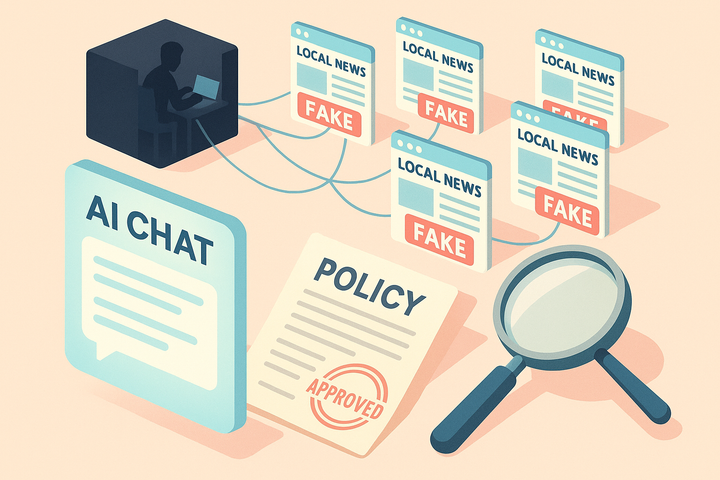
Agency AI Buying Agents Hallucinate Pricing. Nobody's Hired the QA Role.
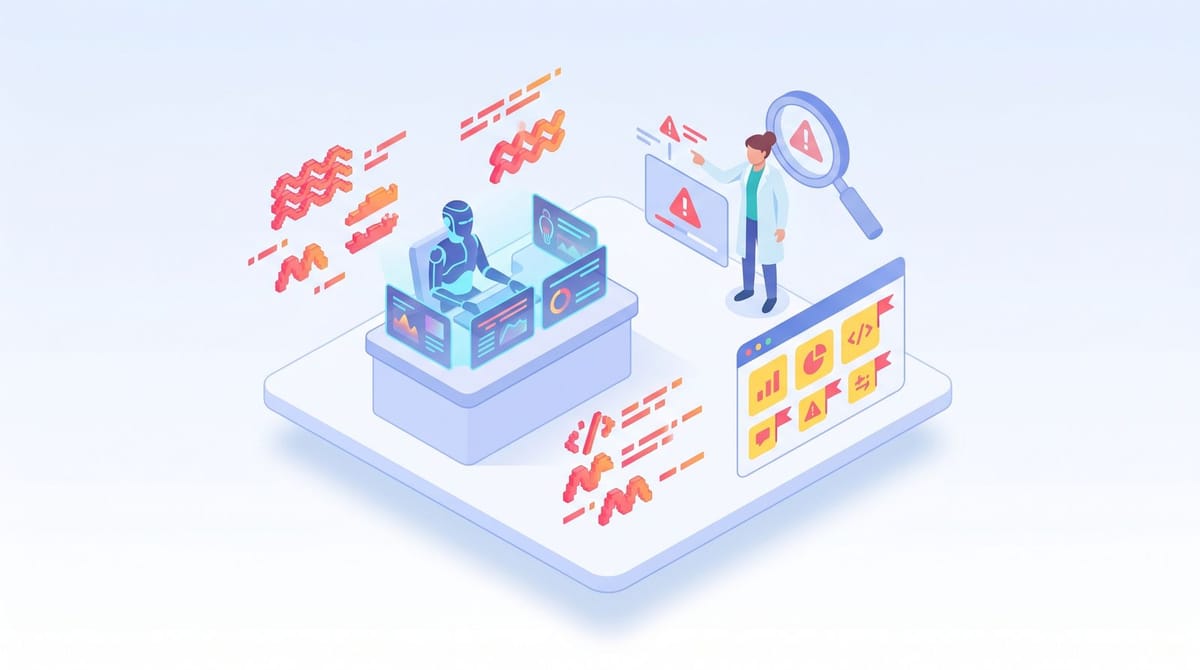
Ad Age reported May 7 that AI agents running media buys are hallucinating ad pricing and booking inventory into the wrong line items inside ad servers. The IAB's own research found 70% of marketers have already hit at least one AI ad incident, and 40% have had to pause or pull spend because of one. Only 6% of those marketers say their current safeguards are sufficient.
That gap, between how confident agencies are and how often AI is breaking buys, is now the single most expensive question in 2026 media operations. The fix isn't a better model. It's a QA layer most agencies have not actually built.
What the hallucinations look like in a real ad server
The Ad Age piece describes two flavors of agent error that practitioners are catching the morning after a buy goes live. The first is hallucinated pricing. An agent quotes a CPM that doesn't exist on any rate card, and the planner only spots it when reconciliation runs. The second is structural: agents booking media into the wrong line items, which means budgets land against creative they were never meant to touch.
This isn't theoretical. Omnicom told Digiday in late April that it has already executed live agent-to-agent media buys for several clients, with real money flowing through what its head of AI Paolo Yuvienco called "agent to agent buying." CEO John Wren framed the strategy as cutting out the ad tech "toll." The framework runs on the Ad Context Protocol and Acxiom Real ID, both of which Omnicom controls after the IPG deal closed in late 2025.
So the Ad Age caveats and the Omnicom investor pitch are describing the same workflow. One side calls it a hallucination problem. The other calls it a margin opportunity. Both are right.
Practitioners have been quieter. Butler/Till, Omnicom, and Kinesso are all running AI planning agents in production, with the buying-side agents trailing as a more nervous bet. The pattern that keeps showing up: agents that look fine in slide decks introduce silent variance once they touch a live ad server.
Why "human in the loop" stopped meaning much
The IAB's preparedness numbers are the part of the report agencies should be quietly worried about. Roughly 90% of marketers said they feel prepared to catch AI issues before launch. 70% had already hit one. That gap is the entire problem in one stat.
What that tells you is that "human in the loop" has been getting credit it hasn't earned. Most agency workflows treat the loop as a final approval checkbox. Plan goes through agent, plan goes through buyer, buyer signs off. If the buyer didn't catch the hallucinated CPM in the plan, the loop didn't do anything.
The investment side of the report is worse. Less than 35% of marketers plan to increase AI governance spending over the next twelve months. Only 17% currently bring in external partners for governance support, even though more than 90% said they would consider it. 14% admitted that nobody at their organization owns AI governance at all. That is the org-chart equivalent of a fire alarm with no number to call.
From what I've seen in agency conversations this quarter, the working assumption is that existing QA staff will absorb hallucination review on top of current work. That tends not to hold once the buy volume scales. It is one thing to spot-check ten campaigns a week. It is another to spot-check a hundred and trust your spot-check coverage.
The IAB survey was 125 US ad executives at companies of 50 employees or more. That is not a long-tail sample. These are exactly the agencies and brands that have either already deployed agentic buying or are weeks away from a pilot. The 70% incident rate is the median experience inside the segment that should be most prepared, and the 6% confidence number is a rounding error.
The five pre-flight checks worth running before each buy
Below is the operational version of what hallucination QA should look like. Treat this as a baseline, not a finished checklist. The agencies that put a name next to each step are the ones who will not be issuing the apology email next quarter.
1. Rate-card diff. Pull the CPM the agent quoted and diff it against the publisher rate card or signed IO. Flag anything more than 8% off the contracted rate. Most hallucinated pricing fails this check on the first pass.
2. Audience size sanity. Agents tend to inflate audience reach claims to justify the buy. Cross-check against the platform's own reported floor. If the agent says the audience is 14M and Meta's interface says 9M, the agent is rounding optimistically, and that rounding becomes the CPM math.
3. Line-item confirmation, the morning after. Pull the ad-server export the day after a buy lands. Not the planning doc, not the agent's confirmation log. The export. That is where mis-booked line items show up, and it is where the loss gets quantified before it compounds.
4. Disclosure log entry. The IAB AI Transparency and Disclosure Framework went live January 15, 2026. Routine production AI use does not need a label, but anything that materially shapes the buy's targeting or representation does. Logging which decisions the agent actually made is the only way to honor that rule when a client asks.
5. Override path with a name on it. Who has authority to halt a live buy mid-flight, how fast can they do it, and what page in the runbook explains how. If the answer is "we'd figure it out," the answer is no.
None of these are hard. They are just not, currently, anybody's job. That is the structural gap.
The shift in agency billing this points at
The deeper move underneath this story is one we wrote about last week with Meta's Ads CLI. The agency hour was already on shaky ground as a billing unit. Hallucination QA accelerates it. You cannot reasonably bill an hour for catching one CPM error that took 90 seconds, but you also cannot eat the cost of not catching it.
What probably emerges is a per-buy retainer with a hallucination-incident SLA attached. Some agencies will price this as insurance, some as governance consulting. The ones that get there first will look like they invented a category. They didn't. They just put a name on the role that the IAB report says 14% of organizations don't have anyone in.
The job nobody put in the org chart yet
I think the under-discussed part of this story is who actually wants the role. Hallucination QA isn't strategy. It isn't creative. It is the closest thing 2026 has to a forensic accountant for media buys. From what I've seen, the people best suited to it are senior buyers who already know where the ad-server smoke usually rises from, not junior hires trained from scratch on agent outputs.
The headline on the Ad Age piece treats this as a media-buying problem. From an agency operations seat, it is a hiring and structure problem first. Until somebody owns it, nobody owns it. Probably the agencies that solve that this quarter, before the IAB framework deadlines force the issue, will quietly run cleaner books than the ones that let agents run loose and assume the existing process catches what slips.
Notice Me Senpai Editorial