Amazon Just Posted the 40-Engineer Job That Hands ChatGPT a Cart
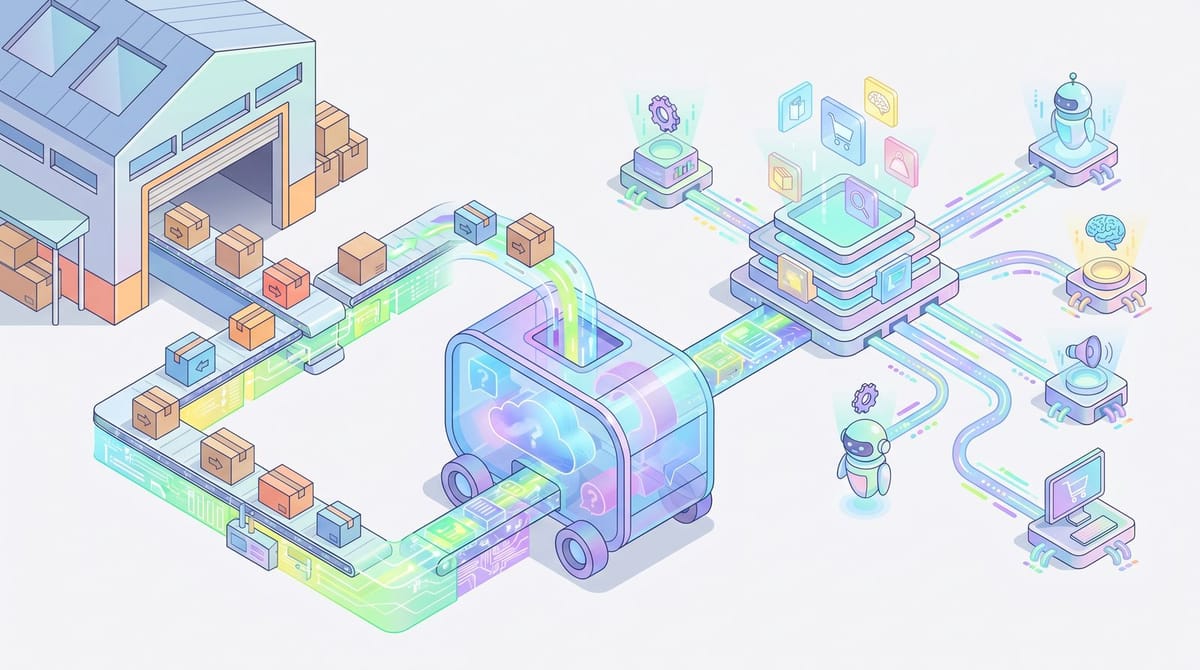
Amazon posted a Principal Technical Program Manager job in Seattle on May 9, 2026, to lead a 40-engineer organization building "agentic commerce experiences," with base pay of $177,000 to $239,400. The role wires Amazon's marketplace into outside AI agents like ChatGPT, Gemini, and Perplexity through APIs and an integration layer. Brands selling on Amazon now have to plan for a parallel checkout they do not fully control.
A 40-engineer org sitting between Amazon's catalog and everyone else's agents
The listing was surfaced on May 8 by Juozas Kaziukenas and documented in detail by PPC Land. The Principal TPM leads a 40-person engineering organization split across three specialized teams. Amazon's own framing in the post is APIs and an integration layer that connect the marketplace to "third-party AI agent platforms" for both on-site and off-site commerce. Job ID is 10411992.
40 engineers is not a research lab. That is a product organization with a multi-year roadmap, an approved budget, and a director who already won the funding fight inside Amazon. The compensation band confirms it. $177,000 to $239,400 base for a Principal TPM, plus sign-on and restricted stock, is what Amazon pays when somebody outside the team is tracking the ship date.
The pivot here is genuinely fast. On August 21, 2025, Amazon blocked AI bots from OpenAI, Anthropic, Meta, Google, and Huawei. By February 2, 2026, the company opened its advertising APIs to AI agents through Model Context Protocol. By February 22 it had a formal Agent Policy live. By April 24 it joined the Universal Commerce Protocol Tech Council with Meta, Microsoft, Salesforce, and Stripe. Five months from "no agent traffic on our properties" to "we are staffing the team that handles agent traffic on our properties." That is not a slow drift. That is somebody at the top reorganizing around a thing they decided was inevitable.
ChatGPT was the wedge, not the destination
OpenAI launched Instant Checkout in ChatGPT on September 29, 2025, with Etsy and Shopify as the launch partners and the Agentic Commerce Protocol as the underlying spec. By March 2026, TechCrunch reported OpenAI had quietly pulled most of it. Onboarding merchants one at a time turned out to be slow. As of last month, only roughly 30 Shopify sellers were actually live in Instant Checkout, which is closer to a pilot than a rollout.
So OpenAI shifted. The new model is in-ChatGPT apps that route shoppers into the retailer's own environment to complete the purchase. Walmart was the first headline partner, announced through CBS, with account linking, loyalty, and Walmart payments inside the chat. Forrester called the broader Amazon-OpenAI alignment the new "power couple" of consumer agentic commerce after Amazon's $50 billion investment in OpenAI in February.
When Amazon staffs a 40-engineer team for "agentic commerce experiences" three months after that, the most credible read is that Amazon does not want to be a Walmart-style app sitting inside ChatGPT. It wants to be the catalog and checkout substrate that ChatGPT, Gemini, and Perplexity all plug into. The team is building Amazon's side of those plumbing connections, not a single OpenAI integration. The fact that the role explicitly references "third-party AI agent platforms" in the plural matters more than any specific partner name on a slide somewhere.
Why this changes brand-side planning, not just Amazon's
If you sell on Amazon, this is the moment your top-of-funnel detection starts to break. Rufus already drove an estimated $12 billion in incremental sales across roughly 300 million users in 2025, per Amazon's own figures cited in the PPC Land report. Once the same SKUs show up inside ChatGPT-driven or Gemini-driven cart flows, the click that used to land on a product detail page disappears. The transaction completes with no Sponsored Products attribution, no PDP visit, and, this part matters, no organic search term you can pull from Brand Analytics.
We have already seen a small version of this on the Google side. Wayfair booked a Google Search sale through UCP checkout without a click earlier this spring, and the SERP was where the conversion event lived. The Amazon-side version is going to be worse for measurement, because Amazon has historically been the closed loop you could trust. If the agent owns the cart, Amazon owns the data the agent passes back, and brands get whatever Amazon decides to expose. From what I have seen across attribution conversations the last three quarters, "whatever Amazon decides to expose" has not been the side of the bet that ages well.
The AOV math gets rewritten too. Rufus and ChatGPT-style agents are very good at single-item retrieval and, in most cases I have watched, pretty inconsistent at building 4-item baskets. If 18 to 30% of a brand's unit volume currently rides on "frequently bought together" stacks or coupon mechanics on the PDP, that share is at risk the moment the agent skips the page. Single-SKU intent in, single-SKU cart out. On paper that sounds like a clean conversion. In practice, average order value drops, and contribution margin per order drops with it.
Three reversible moves for the next thirty days
None of these are speculative, and all of them are cheap to undo if Amazon's rollout slips by a year.
- Tag your top 50 SKUs by agent-discoverability. Agents read structured data. Verify the same product attributes you have on your DTC schema markup (color, size, material, dimensions) are populated on the Amazon catalog. The gap between your DTC product feed and your Amazon detail page is now an agent-conversion gap. Most brands I have looked at with full DTC schema have at least 6 to 8 attributes missing on Amazon for the same SKUs.
- Pull a 30-day Brand Analytics export this week. If Amazon does route agent transactions differently than PDP transactions, a clean baseline of search-term-to-conversion data from before the shift becomes priceless. Not paranoia. The same lesson anyone who lived through the GA4 transition wishes they had front-loaded.
- Reprice Sponsored Products bids on PDP-skip-vulnerable SKUs. If the agent is going to bypass the page, the marginal value of an impression on it drops. I would not slash budgets, but I would model what happens at 70% of current bid levels on the SKUs where Rufus and off-site agent traffic is climbing fastest. The agency that brings that math to the next QBR is the agency that keeps the account.
One more open question to flag. Amazon's Agent Policy, live since February 22 per the PPC Land timeline, is the contract layer this new team will almost certainly enforce. Read it before somebody else's agent is the one buying your inventory under terms you never negotiated. And to be fair, the policy is still pretty short, which probably means revisions are coming, so re-read it once a quarter rather than treating any current version as settled.
The honest read
A 40-engineer team is a commitment, not an experiment. Amazon seems to have decided that being the cart Walmart runs inside ChatGPT is a bad asymmetry, and that being the cart everyone else's agent runs is a much better one. That is the bet. Whether OpenAI, Google, and Perplexity all sign on at parity is the part nobody has answered yet, and honestly probably will not answer for another quarter or two.
What I would not do is wait for that clarity to arrive. Eighteen months from now, the brands that locked in catalog hygiene and pulled clean attribution baselines this month will be arguing with finance about whether agent-driven revenue is 6% or 8% of total. The brands that did not are going to be reverse-engineering the same number out of quarterly variance reports. I would rather be in the first conversation.
By Notice Me Senpai Editorial