Wayfair Just Got a Google Search Sale Without a Click. UCP Checkout Is Live.
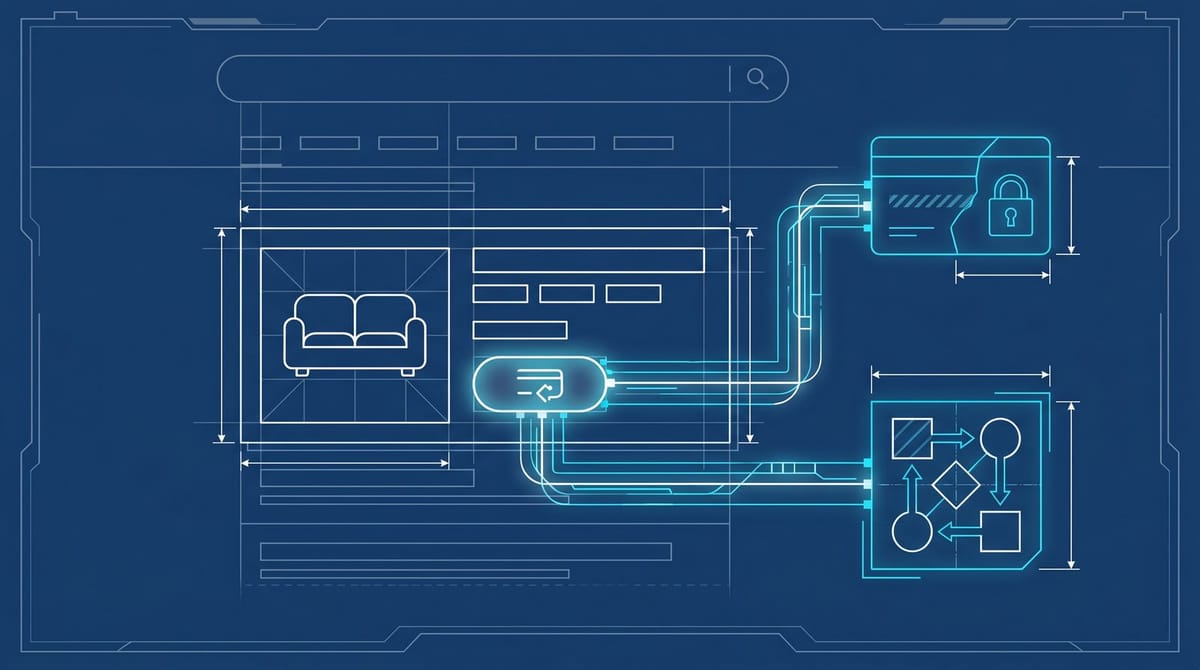
Google moved its UCP-powered checkout feature out of the experimental AI Mode interface and into standard Search results on May 5, 2026. Wayfair is the first merchant live with a Buy button appearing on free product listings in the main SERP, letting shoppers complete a purchase via Google Pay without clicking through to the retailer's site. The 75 million daily AI Mode users are no longer the only audience exposed to agentic checkout. Every search shopper is.
What changed on May 5
SEO researcher Brodie Clark spotted a Buy button on a Wayfair sofa listing in regular Google Search results, and PPC Land confirmed the rollout the same day. Until then, the Universal Commerce Protocol checkout experience was restricted to AI Mode and the Gemini app, where Google has been measuring how shoppers respond to in-place purchase flows. Now that infrastructure has been bolted onto the standard product overlay millions of people see when they search for a coffee table or a duvet cover.
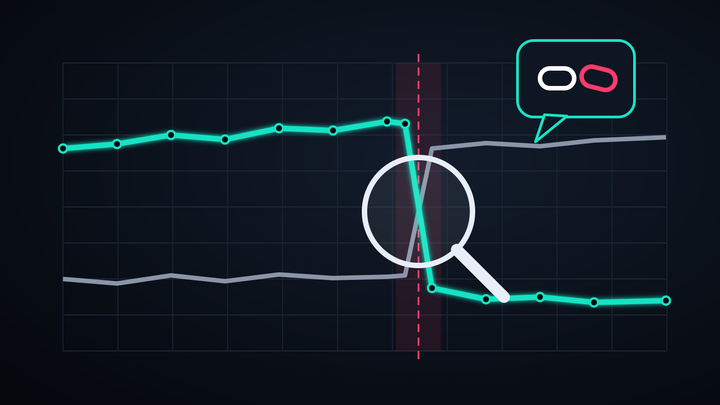
Clicking the button connects a shopper's existing Google Pay credentials to the retailer and completes the order. No site visit. No branded checkout. Wayfair sees the order and the customer record, but, as Search Engine Land noted, the attribution data on Wayfair's side shows an impression with no click and no session. The transaction just appears in the order export.
I think this is the part most retail teams have not modeled yet. A free listing impression that used to drive a click can now drive revenue without sending traffic. That sounds like a free upgrade. In some cases it probably is. In a lot of others, it changes the meaning of every dashboard your team is currently using to justify Google Shopping work.
The native_commerce attribute most retailers haven't shipped
UCP eligibility hinges on a single boolean field in your Merchant Center feed: native_commerce. Set it to true and the product is eligible for the in-SERP Buy button. Skip it and you stay on the old click-through model.
The full requirement list is broader than that one attribute, though. According to Google's UCP Merchant Center prep guide, retailers also need:
- A Merchant Center account in good standing with no policy strikes
- Free listings enabled
- Approved products, not just submitted ones
- Configured return policies and customer support contact info as part of the merchant-of-record setup
- A Google Pay & Wallet Console account with FPAN configuration through the PSP
- A PSP that supports Google's payment token exchange
The UCP FAQ on Google for Developers covers eligibility caveats most teams skim past. So merchants have had roughly two months of warning, and from what I have seen a lot of them still treated UCP as an AI Mode beta worth ignoring.
A few categories are explicitly ineligible: subscriptions, anything requiring installments or merchant-mandated financing, and personalized goods like engravings or monograms. If your catalog leans heavily into any of those, this might be a non-event for you. Pretty much every other ecom category is fair game.
Why "free listings only" is not as small as it sounds
Free product listings get dismissed as the consolation prize next to Shopping ads. From what I have seen across mid-market retail accounts, free listings still account for a meaningful share of total Shopping impressions, even when paid spend is healthy. UCP currently rides on free listings only, but this is the surface that gets the upgrade first.
The implication is uncomfortable. If your team optimized free listings as a low-priority feed hygiene task, the priority just changed. The same listing that was sending a marginal click is now closing a transaction. The merchandising data attached to the feed (titles, attributes, return policy, image quality) is no longer just a ranking input. It is the checkout experience.
For a related angle on how Google's AI surfaces fragment shopping intent, our breakdown of the Etsy ChatGPT app covers why instant checkout is not necessarily the format that wins.
What this does to your attribution model
This is where I expect the real headaches to land. UCP transactions show up in your order management system, but they originate from a session that, on your side, looks like nothing happened. No click event. No referrer. No GA4 session. The merchant gets the revenue and a Google-issued order ID, and that is it.
You lose:
- The click as a counted event in any conversion tracker you've wired to GA4 or Google Ads (these are free listings, but the same UCP plumbing is presumed to expand to paid Shopping eventually)
- The on-site behavior data: cart adds, abandonment, cross-sells, post-purchase upsell triggers
- Email capture at checkout, unless your PSP integration retrieves it through the UCP order payload
- Any RLSA-style audience build from the click
You gain a sale. That is a fair trade if the alternative was a low-intent click that was going to bounce. It is a worse trade if it was a customer you would have captured into a list and re-marketed to twice over.
The honest answer is that nobody has clean post-launch data on which behavior pattern dominates yet. Wayfair's first-week numbers are not public. I would not bet either way until at least one earnings cycle reports on it. Google has also conceded that AI Mode and AI Overviews run on separate stacks, which means UCP signal in AI Mode is not the same data flow that is now powering the SERP version. So the eligibility evidence Google leans on may end up looking different than retailers expect.
What to ship before the next merchant goes live
The practical part. Two things matter in the next 30 days.
First, get the native_commerce attribute set on every eligible SKU in your feed. The technical lift is small. The procurement lift, at agencies, is bigger because somebody has to own the Google Pay & Wallet Console setup, which often falls between paid media and engineering. Pick the owner now or it will sit on the backlog into Q3.
Second, work out how UCP-driven orders will surface in your reporting. Most of the BI stacks I have seen tag orders by source/medium pulled from the session. UCP orders will not have session data. If your dashboards quietly drop them into a "direct" or "unknown" bucket, you are about to misread the channel mix at the exact moment Google is about to widen the program.
And to be fair, this is not entirely new. Google ran Shopping Actions for a few years and pulled it back in 2023. The difference this time is the protocol layer. UCP was co-developed with Shopify, Etsy, Wayfair, Target, and Walmart, with payment partners including Stripe, Visa, and Mastercard, which means Google does not have to build every retailer integration in-house. That is the part that scales.
The third thing, and this is more uncomfortable: think about what happens when your free listing becomes a competitor's UCP slot. Wayfair was first because Wayfair was a co-developer. Google has every incentive to expand the supply of eligible Buy buttons. If you sell into the same SKU space as a Walmart or Target line, the SERP overlay you used to share is about to favor whichever of you has UCP wired up.
The line where Google Search becomes the retailer
UCP is small enough today that most shoppers will not see it for months. Google has, though, collapsed the gap between the search query and the purchase to one tap, with no need for the retailer's domain, brand, or front-end. This is closer to the Etsy-on-ChatGPT model than the old Shopping Actions experiment, and it will scale faster than either of those did because the integration sits at the protocol layer.
If I had to predict where this lands by Q4 2026, my guess is UCP eligibility opens to paid Shopping ads and forces every TLAS-style attribution model to be rebuilt from scratch. I could be wrong on the timing. The direction seems pretty clear though.
What I keep coming back to is how quietly this kind of change rolls out. A May 5 SERP appearance, no formal launch event, a single merchant live, and the attribution model for Google Shopping is genuinely different than it was a week ago. I am not sure I would have noticed if Brodie hadn't tweeted it.
Notice Me Senpai Editorial