Etsy's ChatGPT App Is the Browse-First Bet OpenAI's Instant Checkout Missed
By Notice Me Senpai Editorial
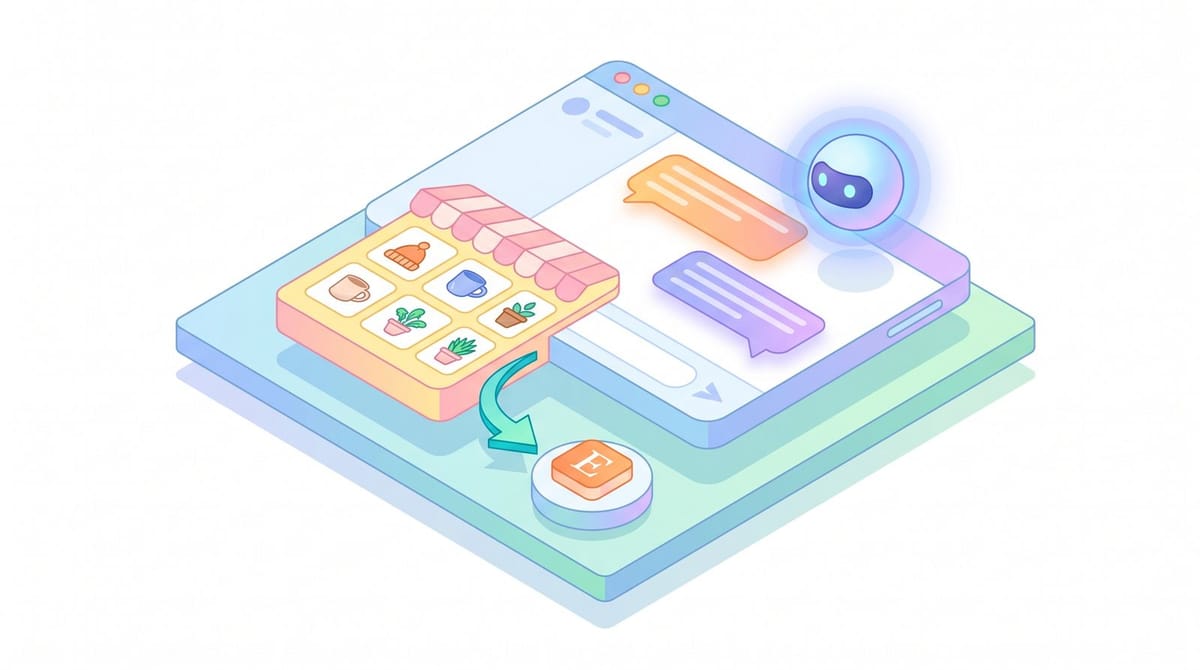
Etsy launched a native app inside ChatGPT on May 5, 2026, replacing the Instant Checkout integration that ended in March after weak sales. Buyers tag @Etsy in any prompt to browse 130 million listings, then click through to etsy.com to buy. The shift concedes that for marketplaces with millions of similar items, browsing context, not one-click checkout, closes the sale.
What killed Instant Checkout in seven months
The September 2025 Instant Checkout launch was supposed to be the proof point. OpenAI built it on the Agentic Commerce Protocol, Stripe powered the rails, and Etsy was the headline launch partner alongside Shopify. The pitch was simple. ChatGPT users would describe what they wanted, see Etsy listings, and complete purchases without leaving the chat. Etsy stock popped 16% the day it was announced.
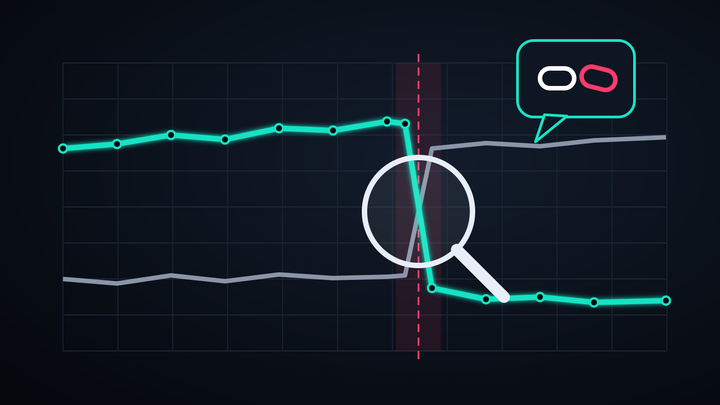
It didn't really work. By March 2026, CNBC reported the integration was being wound down because volume was disappointing. Etsy's Chief Product and Technology Officer Rafe Colburn told Retail Brew why. Users wanted to click through and dig in in more detail on the site rather than complete transactions exclusively within ChatGPT.
That is a quiet but important admission. The Agentic Commerce Protocol was designed around the assumption that frictionless checkout is the prize. For some categories, sure. But for a marketplace where a single search for "Mother's Day gift" returns millions of results from millions of sellers, the buyer doesn't want fewer clicks. They want enough product context to feel confident. From what I've seen, that gap is actually the entire reason marketplaces still exist as standalone destinations.
Why an app instead of a button
The new build sits on OpenAI's Apps SDK, which went into preview October 6, 2025 and started accepting third-party submissions in December. The original pilot partners were Booking.com, Canva, Coursera, Figma, Expedia, Spotify (which has been quietly turning AI placements into distribution elsewhere), and Zillow. Notably, no commerce marketplace was in that list.
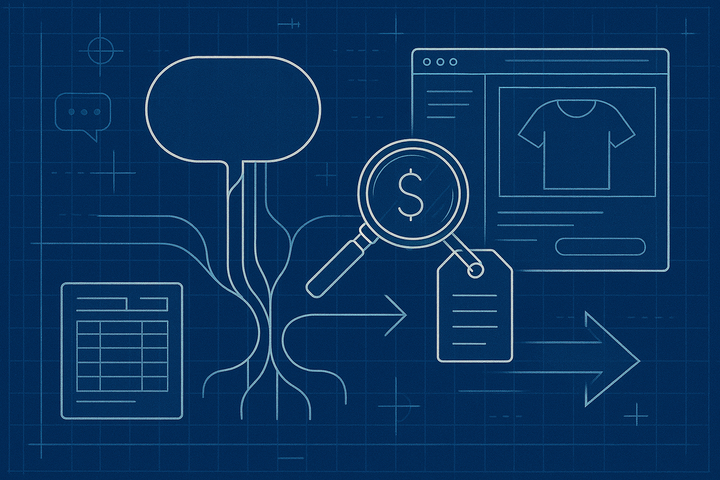
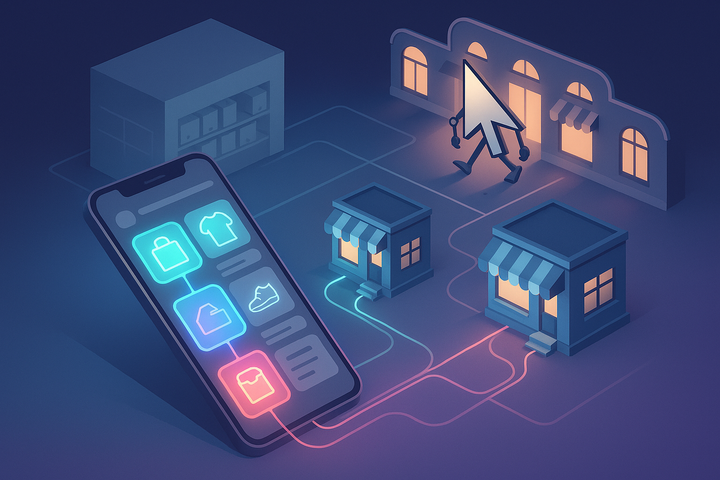
That's because the Apps SDK isn't really a checkout layer. It's a way for an app to render its own interface inside ChatGPT, hold session state, and surface its own catalog when the conversation calls for it. Built on Anthropic's Model Context Protocol, the Apps SDK behaves more like an iPhone development environment than an embedded payment layer. The host operating system just happens to be the chatbot. For Etsy, that means it can show actual listings with seller names, item photos, and price ranges, then push the buyer back to etsy.com to finish.
The trade-off is obvious. Etsy gives up the convenience of an in-chat purchase and accepts a click-through to its own site. In exchange it keeps the relationship with the buyer, the seller's storefront context, and the data trail that funds Etsy Ads. Etsy Ads pushed take rate up 180 basis points YoY in Q1 2026 to 25.7%, so this is not a hypothetical revenue line.
The thing OpenAI's protocol couldn't price into the equation was the seller's storefront. Etsy isn't a single retailer. The marketplace runs on 5.6 million of them.
What this actually gives Etsy that Rufus doesn't
Amazon's Rufus crossed 250 million users this year, with monthly active users up 149% YoY and engagement up nearly 400%. By every meaningful metric of agentic shopping adoption, Rufus is winning. But Rufus only works on Amazon. If a buyer asks ChatGPT a shopping question, Rufus is irrelevant.
This is the structural opening. ChatGPT had 800 million logged-in users by the time the App Directory opened, and it is the default conversational entry point for users who don't open Amazon first. Etsy doesn't need to beat Rufus to win this. The play is to be the answer when somebody types "Mother's Day gift under $100 for my mom who loves gardening" into ChatGPT instead of into the Amazon search bar.
The angle that matters. Etsy isn't building its own LLM. The cheaper hedge is renting OpenAI's distribution and pricing it back through its existing seller-funded ad system. That is a much shorter check than what Walmart, Target, or any direct-Amazon competitor will need to put together. And it works precisely because Etsy's product mix (handmade, vintage, customized) doesn't compete head-on with Amazon's logistics machine.
Most retailers looking at this will draw the wrong lesson. Most will hear "ChatGPT app" and start scoping a roadmap. The smarter read is to map your moat inside someone else's chat interface, then build for that part. For Etsy, the moat is product variety and seller storytelling. For a different retailer, it might be inventory localization or returns flexibility. The Apps SDK lets you keep the moat. Instant Checkout flattened it.
Three e-commerce plays worth running by Friday
First, audit how your product titles read as conversational answers. Etsy's app surfaces listings against natural-language queries, not keyword matches. If your top SKUs only rank for two-word phrases, you are invisible inside the chat. Pull your top 50 listings and rewrite the first 80 characters as a description that answers "what is this" in plain English. This is the same shift Amazon sellers are already running for Rufus.
Second, treat the Apps SDK as a real distribution channel, not a science experiment. OpenAI is now reviewing third-party submissions for the App Directory, and approvals are visible to all 800 million logged-in ChatGPT users. The retailers with commerce models that work without forced checkout (subscription trials, brand catalogs, configurator-driven products) have a real opening here. Most CMOs I would guess are still treating this as a Q4 2026 problem. It is not.
Third, pull your Etsy ad spend forward. Etsy's Q1 take rate moved 180 bps off ad load. If the ChatGPT app drives even modest incremental traffic, the auction inside Etsy gets denser before sellers adjust budgets. The advertisers who scale into that window before competitors react will lock in better cost-per-favorite numbers. From what I've seen, agencies typically wait one quarter to confirm a new traffic source. That is the wrong cadence here.
The metric to watch in Q2 earnings
Etsy's mobile app GMS already grew 11.2% YoY in Q1 and accounts for 47% of total GMS. The ChatGPT app is functionally a third app surface (alongside iOS and web), and it's the one that doesn't require a download or a session re-authentication. If Etsy reports a meaningful split between ChatGPT-originated traffic and the rest of its mix in Q2 or Q3, that number will reset how every other marketplace prices its agentic strategy. My rough call. If ChatGPT-attributed sessions hit even 1.5% of total GMS by Q3, the next earnings season triggers a wave of marketplace app submissions that floods the App Directory.
The interesting thing about second tries is they tend to overcorrect, and Etsy might be doing that here. Maybe buyers really did want frictionless checkout, just not from a marketplace where the product is the seller's identity. Or maybe the Apps SDK was always the right surface and Instant Checkout was a six-month detour. We will know by August. For now, the move that matters has nothing to do with whether ChatGPT becomes Etsy's biggest channel. The story is that Etsy figured out fast enough that it could rebuild for the same audience without writing a check OpenAI wouldn't cash.