OpenAI's Self-Serve ChatGPT Ads Beta Is the CPC Window Before Holdcos Move In
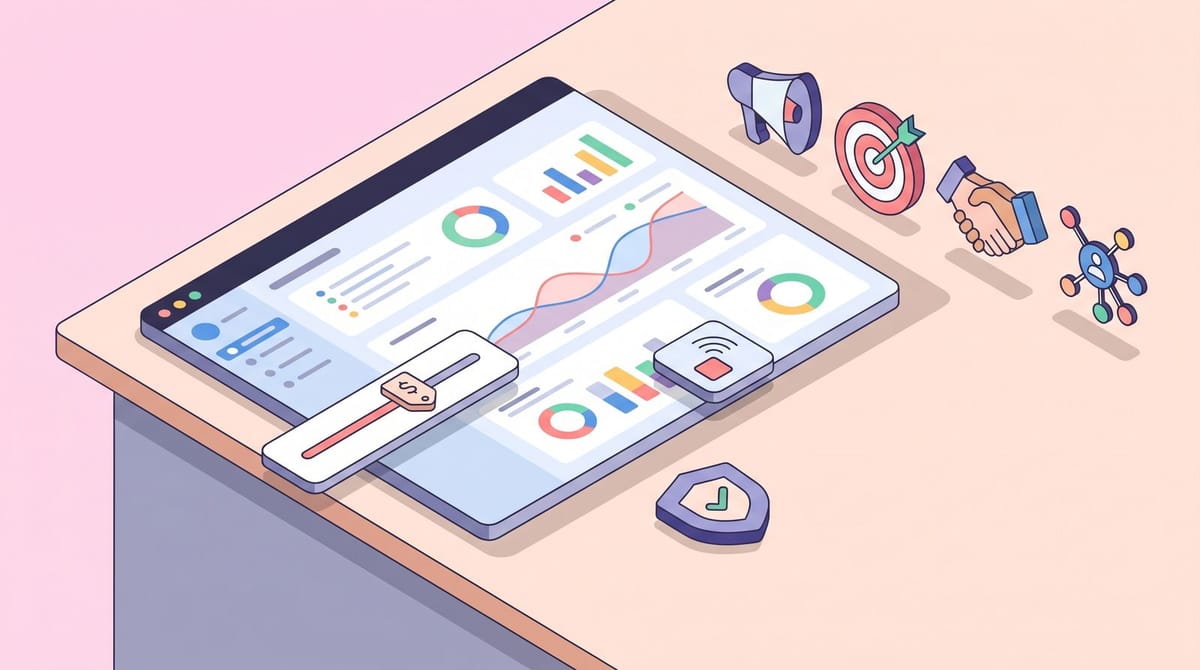
OpenAI launched a self-serve Ads Manager for ChatGPT on May 5, 2026, opening direct ad buying to U.S. advertisers and adding cost-per-click bidding alongside the existing CPM model. Pixel tracking and a Conversions API now report purchases, sign-ups, and leads in aggregate, with no access to individual conversations. Verification is required, and no minimum spend has been published.
The actual product, minus the press release gloss
OpenAI's announcement frames this as "new ways to buy ChatGPT ads." Stripped down, it's a campaign console with budget controls, pacing, and pixel-plus-Conversions-API support, gated by advertiser verification. Two bidding modes are available. CPM (carryover from the pilot) and CPC, which is the meaningful add. CPC means OpenAI only charges on a click. CPM was charging for impression delivery during a phase when nobody had a clean read on click-through rates, which is why most of the early advertisers couldn't price the inventory.
We covered the underlying problem when OpenAI made the CPC switch: average CTRs on ChatGPT ad placements ran wide enough that the average number was hiding most of what advertisers needed to plan budgets. CPC fixes the symptom. It does not fix the variance underneath.
David Dugan, OpenAI's Head of Global Solutions, told Search Engine Journal that what stood out in his first month was "how thoughtfully this is being built." Translation: the team has been moving slowly. That's about to change.
Why the CPC bid mode actually matters for SMBs
Self-serve plus CPC is the only combination that lets a five-figure-monthly advertiser plausibly test this inventory. CPM in a pilot with no measurement is gambling. CPC with pixel tracking and a Conversions API is just performance media, and that's a category SMBs already understand from Meta and Google.
The real gate for smaller advertisers is the verification floor. There's no published minimum spend, but advertiser verification means OpenAI can rate-limit who actually gets in. In effect this is a soft cap on demand during the beta, and that soft cap is what's keeping CPCs down. From what I've seen across new ad platforms, the gap between "open beta" and "any agency can pipe a full media plan in" is usually 60 to 120 days. After that the auction prices in everyone.
The four agency holding companies named as partners are Dentsu, Omnicom, Publicis, and WPP. Those four collectively bill more media than the entire SMB tier of the U.S. economy combined. When their client books finish onboarding through Adobe, Criteo, Kargo, Pacvue, and StackAdapt, the CPCs that look reasonable today will not look like the same auction.
What the measurement actually does and doesn't do
The Conversions API and pixel cover purchases, sign-ups, and leads. That's the standard performance-media stack. What's missing, at least publicly, is any view-through attribution model that would let you compare ChatGPT spend against Meta or Google on a like-for-like basis. The privacy framing, "aggregated insights, no individual conversations," is real and probably required for OpenAI's relationship with users. It also means the reports look more like 2014 search data than 2026 omnichannel data.
In practice that means you'll see clicks, conversions, and CPA on your own pixel events. You will not see assist value, you will not get a transcript of the conversation that produced the click, and you cannot retarget the user inside ChatGPT. From what I've seen in early-platform reporting, that's a six-month problem at minimum. Bid for direct response. Don't try to model upper-funnel value yet, because the data isn't there to support it.
This also means the optimization signal you're feeding the auction is whatever your pixel tells it. If your pixel quality is bad on Meta, it will be bad on ChatGPT too. The platform is new, but the discipline is the same one Meta has been asking for since iOS 14.5.
One workaround that practitioners have started talking about on r/PPC and the paid-social subreddits is treating ChatGPT as a UTM-tagged paid channel and forcing the rest of the attribution onto your own data warehouse. That's not glamorous, but it's the only way you'll have a defensible CAC number to compare against your other channels six months from now. The aggregated reporting from OpenAI is enough to optimize. It is not enough to win a quarterly budget review on its own.
The TikTok parallel that nobody wants to admit
Early TikTok Ads, in the period right after self-serve went global, ran CPMs that practitioners now describe as stupid cheap. Six months in, the auction caught up. Within a year, TikTok CPMs were in line with Meta. The compounding effect was that brands who tested in the cheap window had creative templates, audience signals, and pixel data already in place when prices normalized. Brands who waited paid full freight on day one of their learning phase.
ChatGPT ads will follow a similar curve, probably faster, because the agency holdco onboarding is happening in parallel with the SMB self-serve open instead of years apart. My guess is the CPC discount window here is closer to 60 days than 180. The named tech partners are not the kind of vendors that spend twelve months on integration work. Adobe and Criteo move enterprise budgets fast, and Pacvue and StackAdapt have programmatic pipes that route client money the moment a partner is certified.
The other compounding factor is the OpenAI revenue target. Reporting on the announcement put the company's 2026 ad target at roughly $2.5 billion and the 2030 target at $100 billion. Targets that aggressive don't get hit by keeping a beta narrow. They get hit by opening the auction to as much qualified demand as the inventory can absorb, which is exactly the path that pulls CPCs up the fastest.
There's also a structural difference worth flagging. TikTok's auction was a generic CPM/oCPM pool. ChatGPT's auction sits inside a generative response, which means placement scarcity is real in a way it wasn't on TikTok. OpenAI can throttle ad density per query and the auction will see whatever density they choose. That gives them a lever TikTok never had, which means even the CPC floor is a policy decision, not a market clearing price.
How to spend the next 30 days if you have a budget for it
Assume the inventory is mispriced today and won't be in 60 days. The play that pays off later is building the asset stack that survives the price reset.
What that looks like specifically. A verified advertiser account before the verification queue gets crowded. The pixel installed on every page where you'd want a conversion event. At least one CPC campaign live with a small budget so you can build a learning history on this platform's auction. A creative testing slate of three to five direct-response variants, not brand work, because the reporting can support DR and cannot yet support brand measurement.
If you don't have a U.S. operation, you can't run this beta. If you're not a U.S. advertiser, watch for the geographic expansion. OpenAI added the UK to managed ChatGPT Ads in late April and skipped the EU on purpose. The self-serve rollout will probably follow a similar shape, which means UK self-serve before EU self-serve, with the EU likely waiting on AI Act clarity.
One last thing worth saying out loud. The version of this beta that's live today is the version where OpenAI is still figuring out what fraud looks like, what creative quality controls look like, and how the auction actually clears. Placement quality and ad approval times will be uneven. Plan for some campaigns getting paused for reasons that won't be clear. That's the cost of being early on a platform whose ad team is still being built, and it's also the only reason the cheap window exists.
Notice Me Senpai Editorial