Albertsons Added LTV After Its Own iROAS Audit Flipped 83% of Scores

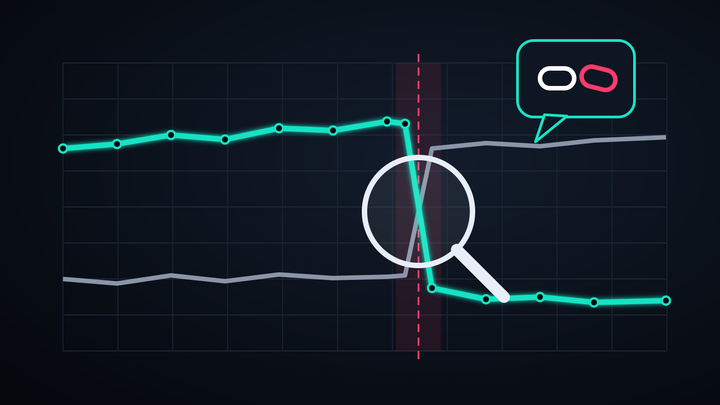
Albertsons Media Collective added projected lifetime value as a core measurement metric on May 15, 2026, segmenting brand cohorts across a 52-week window. The framework validates within roughly 15% of historical campaign outcomes and follows an internal audit, run with Ovative and Northwestern's Kellogg School, where iROAS values varied by 6.5x and 83% of campaigns could flip from positive to negative based on methodology alone.
The audit that made ROAS look unsellable
Liz Roche, Albertsons' VP of Media and Measurement, told The Drum at NewFronts that ROAS "doesn't tell you a lot about what's really happening" and called it an efficiency metric, not a growth one. That's the executive line. The number underneath it is what carries the move: across 42 campaigns the Collective audited with the help of an academic partner, the per-campaign iROAS could swing by a factor of 6.5x depending on which incrementality model you used. More than four in five of those campaigns could be made profitable or unprofitable on methodology alone.
If you have ever sat in a QBR where the retailer's iROAS deck and your own MMM disagree by a factor of two, you already know this. The retailer side just made it public.
The fix Roche is proposing is straightforward in framing and much harder in execution. Stop optimizing toward a single moment-of-purchase efficiency number and start tracking cohort behavior across a year. "Lifetime value, new-to-brand, new-to-category and longitudinal performance," she called the alternative set. It is closer to how CPG brand teams already think internally. It is much further from how their media teams currently buy.
What the 52-week framework actually does
The new LTV product reports at the brand level, not the customer level. That is the design choice everyone should pay attention to.
For each campaign, Albertsons segments exposed shoppers into four cohorts based on their pre-campaign relationship with the brand:
- New-to-brand: zero purchases in the prior 52 weeks
- Repeat: one or two purchases in the prior 52 weeks
- Lapsed or reactivated: at least one purchase in the second half of last year, none in the first half, then engaged during the campaign
- Loyal: three or more purchases in the prior 52 weeks
It then projects what each cohort is likely to spend on that brand across the next 52 weeks, based on historical patterns from comparable shoppers. The initial reporting focuses primarily on new and reactivated cohorts because, in Albertsons' words, those are the ones advertising actually moves. Loyalists were going to buy you anyway. That distinction is honest, and it is a small thing, but most retail media decks bury it under one weighted number.
Validation work showed the projections land within a median 15% of what historical campaigns actually delivered. That is not impression-level precision. It is good enough to inform "did this campaign attract the right kind of buyer" at the brand level. From what I have seen with CPG measurement programs, 15% is roughly the same range a brand's internal MMM produces, so the cohort projections will at least be arguable inside a brand finance meeting.
Why brand-level aggregation is the constraint, not the win
Here is where the story gets honest. If LTV at Albertsons is brand-level only, it cannot feed bid strategy. You cannot take a projected $14 cohort LTV and pipe it back into a DSP as a per-impression value. The Collective framed this as a reporting and storytelling tool, with customer-level forecasting on the roadmap.
That gap matters because the rest of the industry has been racing the opposite direction. Walmart Connect, Kroger Precision, and Amazon's ADSP are all pushing toward auction-time, signal-rich bidding. Albertsons is saying, in effect, that the per-impression model is wrong for grocery basket categories and the reporting layer should reset first. That is a defensible bet for a retailer where brand loyalty in a category gets earned over months of repeat purchases. It is not a defensible bet if you are trying to win bid-shading dollars from a beauty CPG buying performance across five retailers.
So the framework is doing two things at once. It is giving CPG buyers a number they can take to their CFO. And it is quietly admitting that the bid-time activation model that works for Amazon does not transfer cleanly to grocery.
The S. Martinelli campaign that is now exhibit A
Albertsons has been previewing the cohort layer using a real advertiser case. S. Martinelli & Co., the apple juice and sparkling cider brand, ran an onsite display campaign through the Collective's earlier iROAS incrementality test. The reported results were a $7.45 iROAS, a 33% sales lift, and (the number that matters here) 65% new-to-brand buyers.
Under the new framework, that campaign is going to look very different in a brand QBR. The 33% sales lift is one number. The 52-week projection on the new-to-brand cohort is another. If even half of those new buyers convert into repeat cohort behavior, the original $7.45 iROAS understates the program by a wide margin. If they do not, the campaign was an acquisition burn at retail prices. Same campaign, two completely different stories, and now the retailer is offering you the math to tell either one.
What to change in your retail media reporting next quarter
If you buy Collective inventory or plan to, three things are worth doing before your next QBR.
First, ask whether your iROAS report is one of the 83%. Specifically: pull the methodology document from your retailer measurement partner and check whether it uses propensity-matched control, marketplace control, or holdout cells. Then run the same campaign data through a second methodology and compare. If they disagree by more than 50%, your iROAS is not telling you what you think it is.
Second, when LTV cohort reports start showing up (Albertsons has not given a public availability date, but the product is in field test as of May 2026), do not just compare them to your in-house customer lifetime value model. Compare them to your internal CFO definition of new-customer payback. The cohort numbers from the Collective will be projections, not ground truth. Your CFO has a payback window. Map the two before someone else in your org does it badly.
Third, audit which of your retail media campaigns are about acquisition versus loyalty defense. The Collective's framing makes this explicit, which is helpful, but the implication is that loyalty defense campaigns are going to look weaker under LTV reporting than under ROAS. If your category lead is using retail media to defend shelf, the math is about to change on them. Tell them now, not in the deck.
The pattern other retail media networks will copy (or won't)
We covered the same dynamic in TikTok's recent attribution portfolio rollout, where the platform handed advertisers a menu of measurement options to pick from. Retailers have been doing the same thing with iROAS quietly for two years. Albertsons is the first one to publish a number on how unstable that menu actually is.
83% of campaigns could flip positive to negative based on methodology alone.
That sentence belongs in every retail media buyer's next planning deck.
My guess, and it is a guess: there is roughly an 18-month window before another top-five US grocer publishes a similar framework. Kroger has the data and the loyalty program to do it now. Walmart has the data but every incentive to leave the bid-time model intact. Whoever moves second will copy the cohort structure but argue against the brand-level aggregation.
The unspoken admission
For now, the only metric on the Collective's new deck that survives full scrutiny is the one Roche did not promote. It says retail media's biggest unsolved problem is not targeting. It is the spreadsheet underneath it.
Notice Me Senpai Editorial