Aleyda Solis's 83-Check Quality Audit Works Best If You Skip 54 of Them
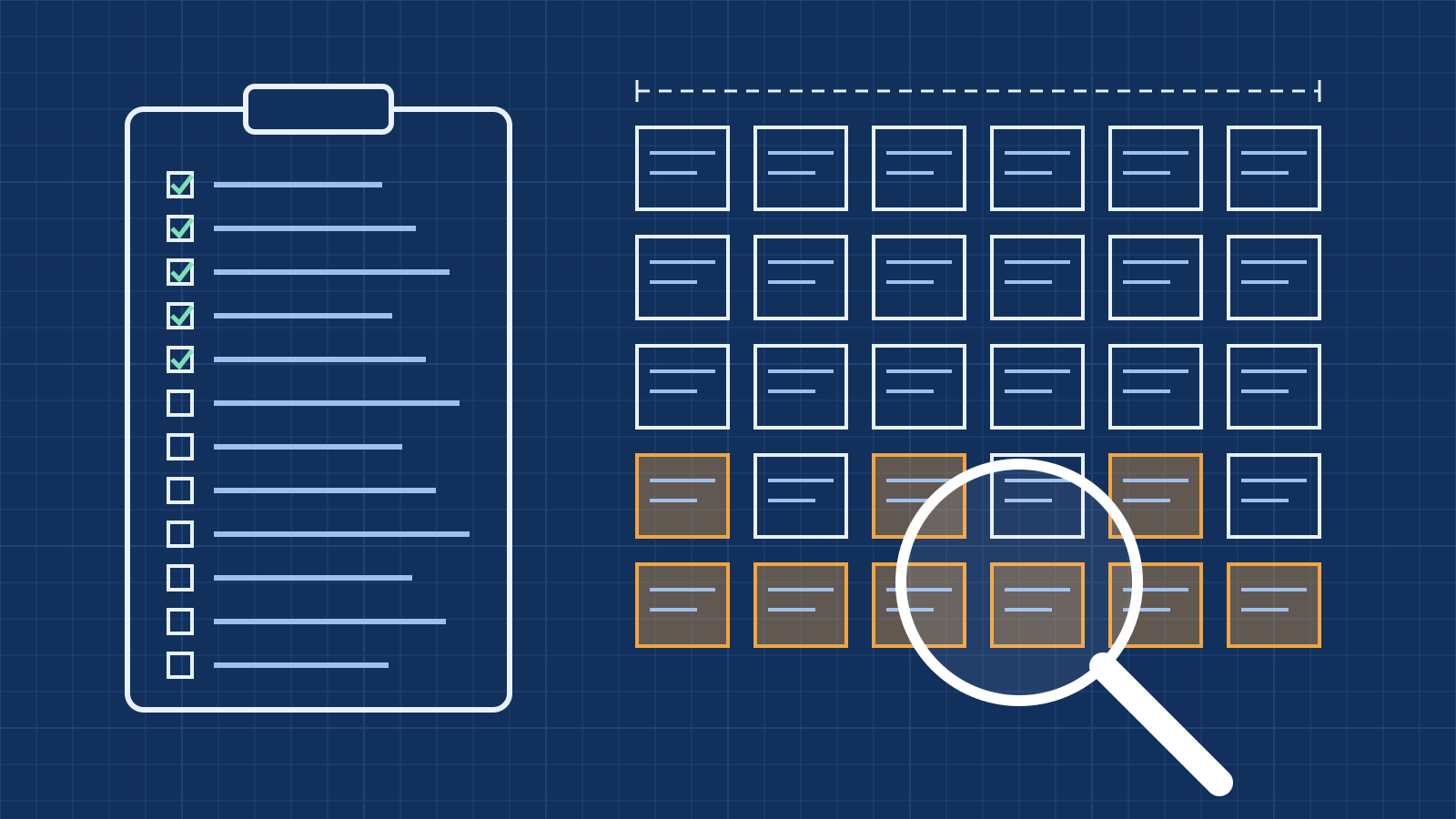
SEO consultant Aleyda Solis published an updated Google content quality checklist on November 2, 2026. It turns Google's public guidance on helpfulness, E-E-A-T and page experience into 83 checks across 10 areas. Only 22 of those checks apply to every page, and 29 are site, template or workflow checks. A sitewide quality problem usually lives in those 29, so that's where to start.
Solis announced the update on X, and PPC Land went through it line by line. It's a Google Sheet with columns for the check, when it applies, how to verify it, the exact source wording, the primary Google document, and a scope field. Every row starts as "Not assessed." There's no score and no weighting. Google didn't write it or review it, and 7 of the 83 rows are Solis's own practical recommendations rather than Google's words. The other 76 point back to 11 Google URLs, with 31 checks coming from a single page, Creating helpful, reliable, people-first content.
It's a good piece of work. I also think most teams will use it badly.
54 of the checks multiply by your page count
The scope split is the part I'd pay attention to. According to PPC Land's breakdown, 54 checks are page-level, 12 are site-level, 9 are template-level and 8 are workflow-level. On a 400-page blog, honestly running the page-level checks means 21,600 individual judgments. Nobody does that.
What people actually do is open the sheet, run it against the homepage and their three best-performing articles, mark most rows "Meets," and feel fine. Those are the pages least likely to be the problem. It's a bit like a health inspector who only checks the dining room. The dining room is always clean. That's why it's the dining room.
Google's quality systems seem to judge sites in aggregate, at least partly. The helpful content system was folded into core ranking in the March 2024 core update, and the scaled content abuse policy introduced in that same post is explicitly about patterns across many pages, not any single URL. So the weak 20% of a site can drag on the rest, and a checklist run on the strong 5% tells you very little about it.
Google rewrote the source material a month ago
Part of why this update matters now: the main Google page it draws from changed in early October. Marie Haynes spotted the edit on October 2, and Search Engine Journal covered it a few days later. Google added a definition of main content, four attributes for judging it (effort, originality, skill, accuracy), and a warning about fabricated creator profiles.
The effort definition is blunt. Google describes it as "the extent to which human work went into creating the content or the systems powering it," and then adds a line that should make a lot of marketing blogs uncomfortable: "Attribution or giving credit to other sources doesn't replace the need for original effort." Citing your sources is the floor now, apparently, not the contribution.
The fake author part is just as direct. PPC Land's write-up describes Google calling AI-generated headshots, invented names and false credentials a form of deception that marks a page as low quality. And this landed in a year when Google ran four spam updates, the last of which wrapped on October 8 with manual actions rising. The timing probably isn't a coincidence, though Google hasn't connected them.
The 10 rows I'd run before the other 73
Google doesn't publish what its classifiers actually measure, so this is a judgment call. But some checks describe things a system could plausibly detect across a whole site, and some describe things only a human reader would notice. I'd start with the first kind:
- Real, resolvable authors. Every byline links to a page about an actual person or a clearly named editorial team. Site-level, takes an hour. (We wrote about why author pages were worth fixing back in October.)
- No invented personas. If "Sarah, Senior Content Strategist" doesn't exist, she goes. Today.
- The "how" is visible. Google's page asks whether it's clear how content was produced, and its 2023 guidance on AI content says disclosure helps where readers would reasonably expect it.
- Something beyond the sources. Original data, a test, a screenshot, a number you calculated. Per the new effort line, a tidy summary of other people's reporting doesn't count by itself.
- Templated pages that only swap a keyword. City pages, "best X for Y" grids, glossary stubs. This is the scaled content pattern, and it's the one most likely to be visible at scale.
- Easily verified factual errors. That's one of the checklist's verbatim Google questions. Wrong dates and dead stats are cheap to find and cheap to fix.
- Update dates that mean something. The checklist says dates should reflect substantive changes. Bumping "updated" on 200 posts with a new intro paragraph is the kind of thing that looks fine on one page and odd across a whole site.
- Paid links marked properly. The checklist notes a disclosure alone isn't enough; it needs rel="sponsored" or rel="nofollow".
- Core Web Vitals at the 75th percentile. LCP at or under 2.5 seconds, INP at or under 200 milliseconds, CLS at or under 0.1. Probably a minor quality signal, but it's template-level, so one fix covers hundreds of pages.
- Human review of AI-written metadata. If titles, descriptions or alt text are generated, somebody reads them. The checklist's own line on this is fair: "AI use alone is neither a failure nor a quality guarantee."
Rows 1, 2, 3, 5, 7 and 9 are site or template fixes. You do them once and the whole site moves.
Run the page-level checks on your worst 20%, not your best
Once the structural rows are done, the page-level checks become useful, as long as you point them at the right pages. Export 12 months of page data from Search Console, sort by clicks ascending, and take the bottom fifth of indexed URLs. On that 400-page blog, that's 80 pages. Run the 10 rows above against those 80 and you're at roughly 800 judgments, which is two focused afternoons instead of a quarter.
A rough benchmark I'd use (it's my threshold, not Google's): if more than about a quarter of your indexed URLs got zero clicks in 12 months, treat it as a site problem rather than a page problem. Merge, rewrite, or noindex until that number is under 10%. Every page you keep should be able to pass rows 4 and 6 without you squinting.
And to be fair, no checklist can tell you whether anyone wanted the page in the first place. That's the question most audits skip, and it's probably the one that matters most. A page can meet all 83 rows and still be the ninth near-identical answer to a query nobody asked twice.
The checklist has no score, and that's the most useful design decision in it.
The Claude Skill knows what it can't see
Solis also shipped a companion Claude Skill, eeat-helpfulness-assessment, version 1.2.1, that runs the assessment and writes a report. Two details surprised me. The instructions say "Zero problems is a valid outcome," which is rare for any audit tool, and every report has to state near the top that it isn't a Google rating, an E-E-A-T score or a ranking prediction.
The gap, per PPC Land, is evidence the model can't see. Field Core Web Vitals, Search Console data and your actual editorial workflow aren't on the page, and 17 checks depend on template or workflow evidence. So feed it that context directly, or treat those rows as yours to fill in. Otherwise you'll get a confident report about the parts of your site that were already fine.
My prediction: within six months, at least one SEO platform ships an "E-E-A-T score" out of 100 built on lists like this one. Solis's own disclaimer will be the best argument against trusting it.
Start with the pages you'd rather nobody read
The checklist is free and well sourced, and it's probably the clearest map of Google's public quality guidance anyone has put together this year. Just don't confuse finishing it with fixing anything. The sites that recover from quality problems usually aren't the ones with the most thorough audits. They're mostly the ones willing to look hard at their weakest pages and delete a few they were secretly proud of.