Google's November Core Update Could Still Be Rolling on Black Friday
Google started rolling out the November 2026 core update on November 10 and says it "may take up to 2 weeks to complete," putting the likely finish around November 24, two days before Thanksgiving. Google's advice is to compare a post-update week with a pre-update week, and for retailers that window now lands on Cyber Week. Compare year over year instead, and freeze structural site changes until it's done.
The official entry on the Google Search Status Dashboard is two sentences long: released, global, all languages, up to two weeks. Search Central's companion post called it "a regular update designed to better surface relevant, satisfying content for searchers from all types of sites," which, as these things go, tells you about as much as a weather forecast that says "weather." According to Search Engine Journal, it's the third core update of 2026, there was no Search Central blog post at launch, and the core updates documentation hadn't been revised since December 2025.
None of that is unusual. The timing is.
Two weeks is a ceiling Google has blown through before
The "up to 2 weeks" line reads like a promise. It isn't really one. The last time Google shipped a core update in mid-November, it started on November 11, 2024 and didn't finish until December 5, almost 24 days later. Search Engine Roundtable's completion recap noted it "was expected to take two weeks to roll out but took almost twice as long." That rollout ran straight through Black Friday and Cyber Monday, and plenty of store owners spent that December trying to work out whether they'd lost rankings or just lost the holiday shoppers.
The history is mixed, to be fair. Barry Schwartz's running list of confirmed core updates shows 2026 has been tidy so far: March ran March 27 to April 8, May ran May 21 to June 2. Both landed around 12 days. Go back further, though, and five of the last nine core updates on that list ran longer than 14 days (March 2024, August 2024, November 2024, June 2025 and December 2025).
So my prediction, for whatever it's worth: I think this one finishes inside the window, probably around November 22 or 23, because Google seems to have gotten more disciplined about rollout length this year. But I'd put the odds of it still being "in progress" on Thanksgiving morning at something like one in three. That's high enough that I wouldn't plan around a clean finish.
Google's comparison advice breaks in late November
Google's core updates documentation is pretty specific about how to check whether you were hit. Wait "at least a full week after a core update completes," then compare that week "with a week before the core update started rolling out."
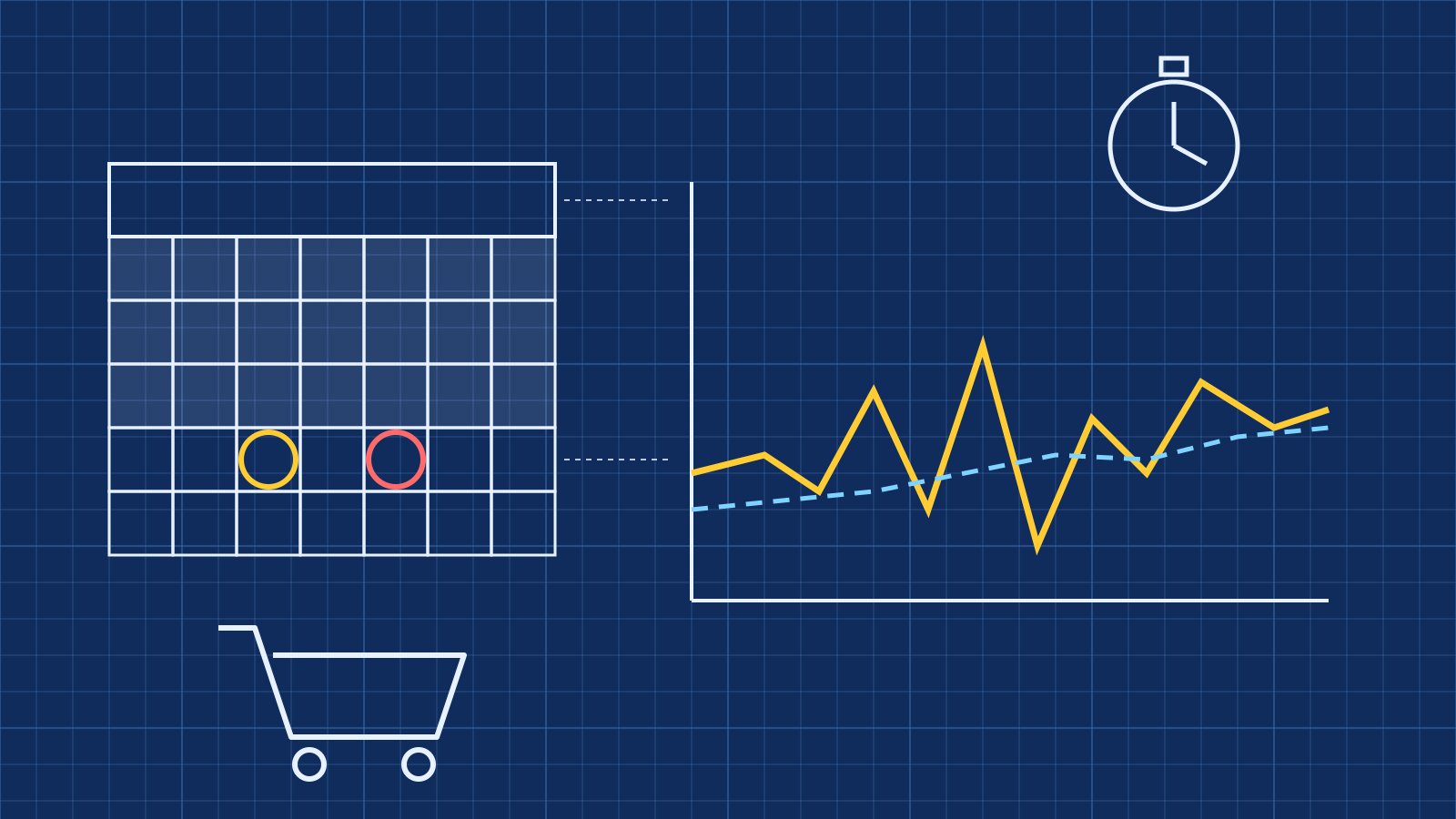
Run the calendar on that. If the update completes November 24, the earliest clean post-update week starts around December 1. The pre-update baseline is roughly November 3 to 9. You'd be comparing the week right after Cyber Monday to an ordinary early-November week. For a lot of ecommerce sites those are two completely different demand curves, and the update's effect, whatever it turns out to be, gets buried under seasonality.
PPC Land's coverage lands in a similar place, noting the data isn't really comparable until about December 1. It also points out that two rank-tracking vendors have reported unreliable data since September, which matters here more than it might seem. We wrote about Google feeding rank trackers fake SERPs last month. If your tracker says you dropped six spots on a money keyword on November 14, I'd want to see that in Search Console before I believed it.
Comparing week over week in late November is a bit like judging a new diet by stepping on the scale the morning after Thanksgiving.
A cleaner read: year over year, weekday-matched
The fix is boring but it works. Search Console keeps 16 months of data, so you can compare against last year's version of the same shopping calendar.
The useful bit of luck: shift back exactly 364 days and the weekdays line up. Tuesday, November 10, 2026 maps to Tuesday, November 11, 2025. Thanksgiving 2026 (November 26) maps to Thanksgiving 2025 (November 27). Black Friday maps to Black Friday. And last year's December 2025 core update didn't start until December 11, so a November 11 to December 6, 2025 window had no confirmed core update in it (unconfirmed volatility is another story).
Here's roughly how I'd set it up. It takes maybe 10 minutes in the Performance report:
- Date range: Compare mode, November 10 to December 5, 2026 against November 11 to December 6, 2025. Look at it daily, not weekly, so the holiday days sit side by side.
- Split brand from non-brand. Filter queries containing your brand name into one view and exclude them in another. Brand searches are mostly demand; core updates mostly move non-brand rankings.
- Read the gap, not the number. If brand clicks are up 8% year over year and non-brand clicks are down 12%, the roughly 20-point gap is your best estimate of the update's effect. If both moved together, it's probably demand.
- Use a threshold before you act. My own rule of thumb: a non-brand gap under about 10 points on your top 20 category and product pages is noise during a holiday month. Over 20 points, sustained across the full week after completion, is worth a real content review.
One caveat I honestly don't have a great answer for. If your site changed a lot since last November (migration, new category structure, a big content push), year over year gets messy too. In that case the brand vs non-brand gap still helps on its own, you just lose the clean seasonal baseline. Also, if you saw a weird traffic spike around Halloween, check whether it was real before trusting it as a baseline. Search Console had a 10x click spike on October 31 that probably wasn't people.
Leave the templates alone until Google says it's finished
The other part is restraint, which is harder than it sounds two weeks before the biggest revenue period of the year.
Google's documentation says there's "no need to take drastic action" for small drops, and that some changes "can take effect in a few days, but it could take several months." So a reactive fix you ship on November 18 may not get credited until the next core update, and in the meantime you've muddied your own data. Change title templates, internal linking or category page layouts mid-rollout and you'll never know whether the movement came from Google or from you.
What I'd actually do this week:
- Annotate November 10 in GA4, Looker Studio or whatever your team reports from, so nobody explains a December dip as a "Black Friday hangover" without context.
- Freeze template, URL and navigation changes on revenue pages until the dashboard shows the rollout complete. Holiday promo content is fine; structural changes can wait.
- Tell whoever owns paid search that organic may wobble. If non-brand organic drops on key categories during Cyber Week, a temporary budget lift on those exact terms is cheaper than losing the week. For most teams this is probably the most practical lever they have.
- Export your current top 50 non-brand landing pages by clicks. Having a pre-update snapshot makes the December review a lot faster.
And if you did your homework in October, you're mostly done anyway. Our piece on the core update forecast argued that author pages and first-hand signals were the place to spend time before November, and nothing in Google's two-sentence announcement changes that.
Schedule the December review, skip the November panic
I'll admit the timing irritates me a little. Google has shipped updates into the holiday quarter before, and it says core updates don't target specific sites, which I believe. But "we don't target anyone" and "we picked the two weeks before Black Friday" can both be true, and retailers eat the uncertainty either way.
The realistic plan is to put the real analysis on the calendar for the week of December 7, using year-over-year numbers and the brand gap, and spend November selling things. If you're down 25 points on non-brand by then, you'll have clean evidence and probably a few months before the next update to do something about it. If you're flat, you'll have saved yourself a month of chasing rank tracker noise, which I suspect is the more common outcome than SEO social feeds would have you believe.