Search Console's 10x Halloween Click Spike Probably Wasn't People
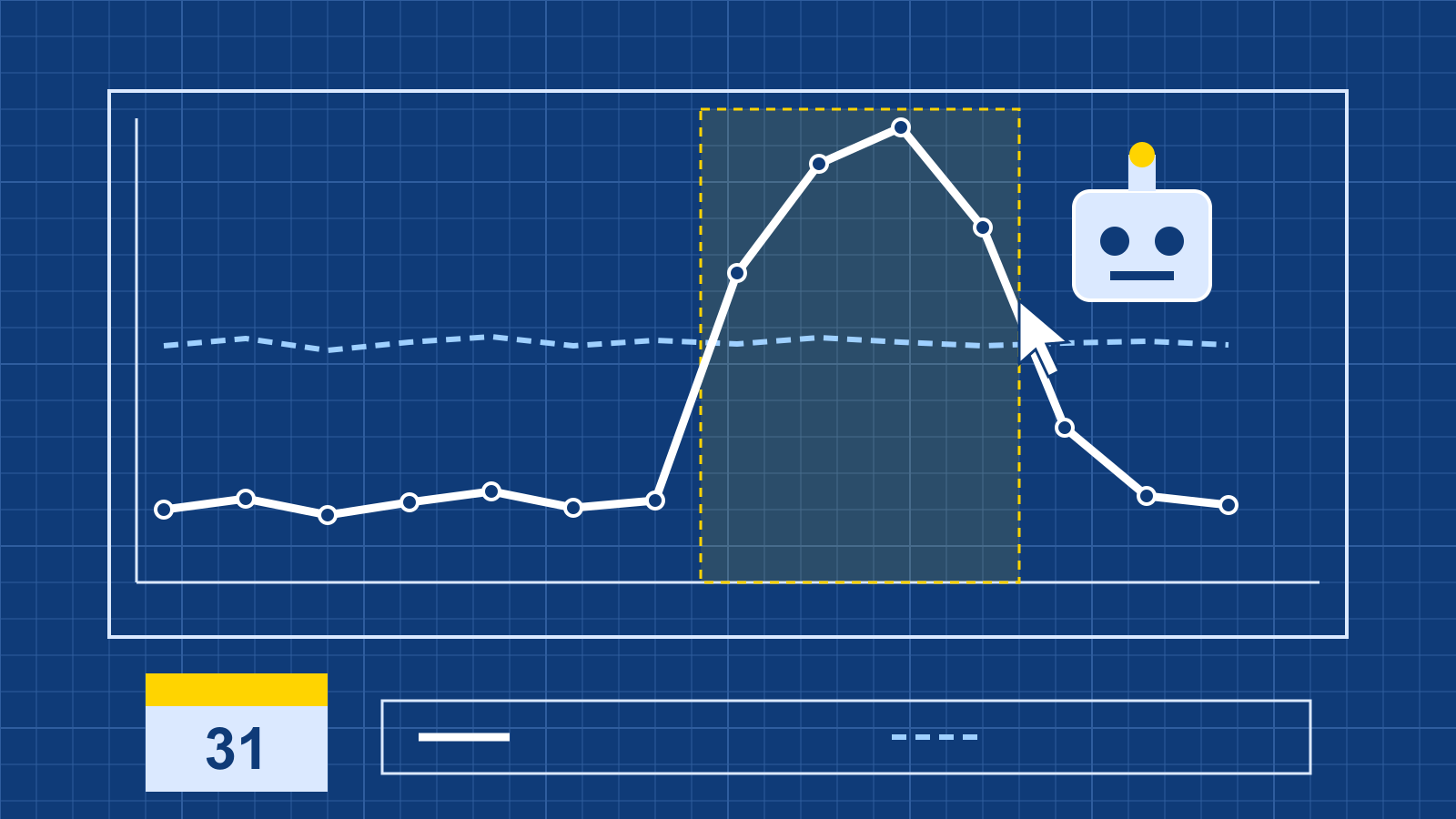
Google Search Console showed sudden click spikes for some sites between October 31 and November 3, 2026, with reports of up to 10 times a normal day's clicks while impressions stayed flat. Clicks that rise without impressions point to bots or a logging bug, not rankings. Cross-check GA4 organic sessions for those dates before any October or November report goes out.
The timing is what makes this annoying. Most monthly SEO reports get built in the first week of the month, which means a lot of people are about to open Search Console, see a Halloween weekend that looks like the best two days of the year, and paste it straight into a slide. I'd hold that slide.
What people actually saw (and what they didn't)
Search Engine Roundtable rounded up the reports on November 3. The earliest flag came from Dan Nutter, who saw spikes starting October 31 across a range of industries, mostly in a UK client base, "sometimes 10X the traffic of the normal day." A commenter on the Roundtable post described 5x clicks in GSC for the weekend.
Joy Hawkins found three affected sites and pointed out the detail that matters most: "That graph is clicks. Impressions are flat." Based on the CTR pattern, she said she was fairly confident it was bot traffic. Glenn Gabe saw it on only a few properties, said most did not show it, and floated that it could simply be a bug. Later he suggested AI agents or bots researching products and services as a possible source.
On the other end of the range, an SEO posting as Weird Ginger said they saw it on roughly 60% of the brands they could estimate and suggested checking GA data for the 31st. So the reported footprint goes from "a few properties" to "most of my list," which probably says more about whose clients got hit than about the true spread.
There's also an odd wrinkle. According to the Roundtable write-up, Search Engine Land found three sites showing huge spikes through the API, but only one of them showed the spike in the web interface. If your Looker Studio dashboard pulls from the API and your colleague screenshots the UI, you two might be looking at different Halloweens.
By November 4, Hawkins said things were back to normal and that she hadn't heard back from Google. Gabe said his chart was dropping back down. Google had not commented at the time of writing.
Why flat impressions are the giveaway
A click in Search Console has to come from an impression. If clicks quintuple and impressions don't move, CTR jumps to a level no real SERP produces overnight. Rankings didn't improve, or impressions would have risen too. Demand didn't spike either, for the same reason.
Think of it like a shop door counter that suddenly logs 10 times the usual foot traffic on a Saturday while the tills ring up the same as last week. You don't celebrate the crowd. You check the sensor.
That leaves two explanations, and honestly they aren't mutually exclusive. Either something automated was clicking through real results (Gabe's AI agent theory, or the rank-tracker angle a commenter raised about trackers resolving redirect links), or Google logged clicks that never happened. Google has admitted before that bots get through: back in 2021, John Mueller said "we don't necessarily filter all of that out in Search Console." And the logging-bug theory has a very recent precedent. Google's impressions counter over-reported for about 10.5 months, from May 13, 2025 until Google acknowledged it on April 3, 2026, and the fix did not correct historical data.
That last point is the part I'd underline.
If this turns out to be a bug, there's a decent chance Google never goes back and cleans those days up in your property. The spike may just sit in your year-over-year comparisons forever, waiting to make November 2027 look like a collapse.
We've seen the mirror image of this before
About a year ago the problem ran the other direction. In October 2025, Roundtable covered a GA4 surge in organic search traffic while Search Console stayed flat. One site saw organic users jump 336% in a day. The traffic came from Windows desktops at 1280x720 with roughly 2 seconds of engagement, and it didn't come with any lift in sales.
So in 2025, GA4 got fooled and GSC didn't. This time, GSC seems to be the one showing the anomaly, and GA4 is the tool you check against. Neither one is the source of truth on its own. I think that's the real lesson, and it's a bit uncomfortable for anyone whose whole SEO reporting stack is a single GSC connector. We made a similar argument when direct traffic rose 141% across 12 sites while engaged direct sessions barely moved: raw counts are getting noisier, and engagement-filtered numbers are where the signal survives.
The 15-minute check before your monthly report ships
This is roughly what I'd run on every property before October or November numbers go to a client or a VP.
- Pull GSC daily data for October 24 through November 6. Look at clicks and impressions on separate axes. If clicks for October 31 to November 3 are more than double the same weekdays the prior week while impressions are within about 10%, treat those days as suspect. That threshold is my own rule of thumb, not a Google number, but a 2x click jump with flat impressions is very hard to explain with real searchers.
- Check where the clicks went. Filter by page and query for the spike days. Bot-like traffic tends to pile onto a handful of URLs or odd queries. A real rankings win usually spreads across the pages that rank.
- Compare against GA4 organic sessions for the same dates, and then against engaged sessions. If GSC clicks went up 5x and GA4 organic sessions moved less than 15%, the clicks never became visits. Report the GA4 figure.
- Check API versus UI. If your dashboards use the API, spot-check the same date range in the web interface. Given the Search Engine Land finding, they may not match.
- Annotate it. Add a note in your reporting tool and your GA4 property for October 31 to November 3. Future you, building next year's YoY deck, will be grateful.
- Watch the Search Console data anomalies page. If Google confirms a logging issue, it should show up there, and you can link to it in the report footnote.
On paper, excluding four days of data sounds like overkill. And sometimes it is, if your property simply wasn't affected. But the cost of checking is 15 minutes, and the cost of reporting a fake 40% month-over-month click lift is a quarter spent explaining why it disappeared.
The bigger worry is that this keeps happening
Anyway, a quick off-script thought. I'm not fully convinced this was a one-off. Search results are increasingly being read by things that aren't people: agents doing product research, scrapers, rank trackers working around Google's defenses (Google has been feeding rank trackers fake SERPs for a while now, so the tracker ecosystem is clearly under pressure). If even a fraction of that activity starts clicking through, GSC's click metric gets a lot less trustworthy, and it used to be the one number SEOs mostly agreed on.
My prediction: I'd put it at less than a 50% chance that Google formally confirms this spike as a bug on the data anomalies page. Most small reporting glitches never get an entry. Which means the burden of flagging it falls on whoever builds your report.
A weekend you probably shouldn't take credit for
If your Search Console shows a sharp bump around Halloween with flat impressions, the most likely explanation is that nobody new found you. Something clicked, or something got counted, and it was gone by Wednesday. I'd note it, cut it from the trend line, and move on. It's a little disappointing to throw out your best two days of the year, though I suspect a lot of teams will quietly keep them in the chart anyway, and a few of them will be explaining the drop in January.