Direct Traffic Rose 141% Across 12 Sites, and Engaged Direct Didn't Move
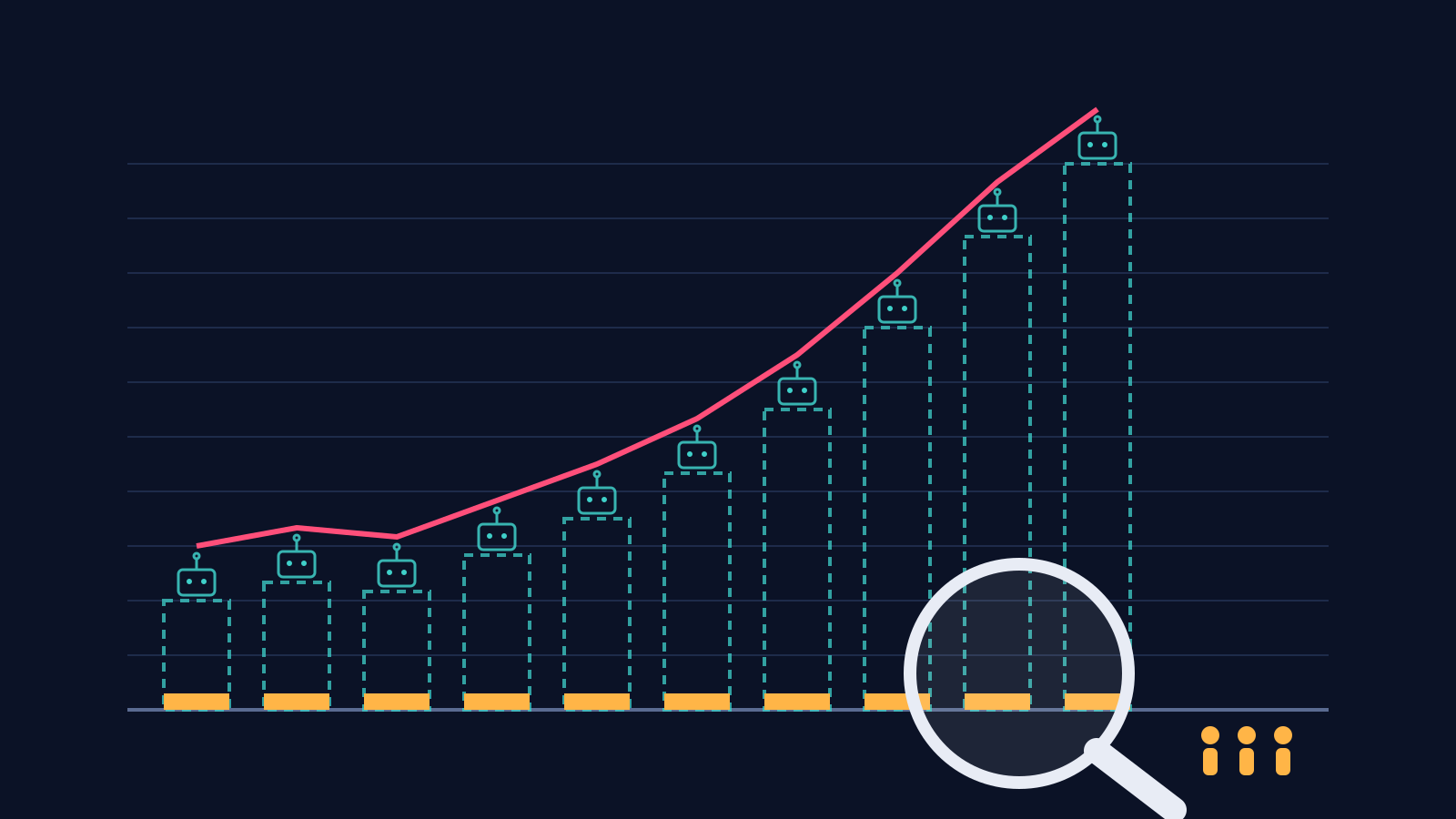
Kevin Indig's Growth Memo checked 12 GA4 properties for "hidden" AI traffic and found that most growth in Direct was bots. Total Direct rose 140.9% from January to September while engaged Direct sessions fell 1.0%, and sessions with any visible AI trace made up 0.003% of Direct. Filter Direct to engaged sessions before you credit any of it to ChatGPT.
That finding cuts against a story a lot of marketing teams have been telling their bosses all year. The theory goes like this: people discover you in ChatGPT, Perplexity or AI Mode, they don't click a tracked link, they type your URL later, and GA4 files the visit under Direct. So when Direct goes up, AI is probably why. It's a tidy story. We've leaned on a version of it here too, and when ChatGPT stopped appending UTM tags last week, it got even more tempting to believe.
Indig's new study is the first decent attempt I've seen to actually test it, and the answer, at least in his sample, is that the signal isn't there. Or if it is, it's buried under a pile of junk sessions.
409,000 Direct sessions, 198 of them real
The first half of the study compared August and September 2026 across 12 GA4 properties. The sample leans B2B, all but two sites target the US, and Indig stripped out the pages where Direct traffic is always high anyway: homepages, pricing, login, demo, help, legal, account pages. What's left should be the long-tail blog and content URLs where an AI-referred visitor would plausibly land.
Eight of the 12 sites showed Direct growth month over month, some above 100%. On paper, that looks like the dark AI traffic everyone's been waiting for. Then you check engagement. One site recorded 409,000 Direct sessions, and 198 of them were engaged. That's roughly 0.05%. No human audience behaves like that.
Across the filtered January to September sample, the gap is the whole story: Direct up 140.9%, engaged Direct down 1.0% in monthly counts (or up 2.3% if you look at average daily volume). The growth is almost entirely sessions that never did anything.
This lines up with what agencies have been flagging since the start of the year. Twenty First Digital wrote up the wave of Direct sessions attributed to Lanzhou and Gansu, China, nearly all single-pageview with no engagement, and pointed out that some of this traffic never touches your server at all, which means blocking it at the CDN won't help. Delante reported the same pattern with Singapore added to the mix. If your Direct line went vertical sometime in 2026, there's a decent chance you're looking at that, and not at Perplexity users typing your domain.
The correlations looked great until he shuffled the dates
The second study is the part I'd actually send to anyone who sells "AI visibility" dashboards. Indig took four brands and compared their weekly AI visibility scores against Direct traffic and branded search, testing delays from zero to six weeks. That's 632 separate tests.
Some results looked fantastic. One site had a 0.72 correlation between AI Share of Voice and Direct traffic, peaking at a three-week lag. Another showed 0.47 between ChatGPT mention rate and Direct. If you've ever sat in a QBR, you know those numbers would end up on a slide with a big green arrow.
Then he did the boring, correct thing. He shifted the AI series against the traffic series to create deliberately wrong pairings, gave those fake pairings the same seven lag options the real data got, and checked whether the real alignment actually stood out. It mostly didn't. Several wrong alignments produced correlations as strong or stronger. Splitting each timeline in half, the relationship lived in the second half for one site and the first half for the other, and held in neither consistently. With only 17 and 35 usable weekly data points, that's about what you'd expect from running hundreds of comparisons and keeping the winners.
His conclusion is careful: an effect may exist, he just couldn't isolate it. I think that's the honest version, and honestly it's a more useful result than a positive one would have been.
Test enough lags against enough metrics and something will correlate. Correlation found that way still isn't attribution.
So where does AI-referred traffic actually show up?
Probably in organic search, more than in Direct. Similarweb's panel study from earlier this year found that people who got a brand recommendation from ChatGPT were about 2.5x more likely to visit that brand within seven days. But 55.9% of those AI-influenced visits arrived through search, versus 40.4% for normal visits. Direct went the other way: 19.9% of AI-influenced visits versus 38.8% of the rest. The most likely path, from how I read those numbers, is someone seeing the recommendation and then Googling the brand name.
Which, if you think about it, is how most of us behave. You don't memorize a URL from a chatbot answer. You search the name. So the AI influence gets laundered into branded search, and your SEO report quietly takes the credit.
The counterexample is Ramp. On the Siege Media podcast, Ramp's Eric Wu said the company found 30 to 40% of its Direct traffic was coming from answer engines. According to Indig's summary, Ramp got there by looking at Direct growth on long blog URLs, filtering out email-like patterns, comparing behavior against organic visitors, and (the part that matters most) confirming with self-reported "how did you hear about us" answers. Ramp is also a company with unusually strong AI visibility in a category where people ask chatbots for software recommendations. I wouldn't assume your mid-size DTC brand looks like Ramp.
And to be fair to the original theory, none of this means AI discovery isn't happening. It just means GA4 Direct is a terrible instrument for measuring it. Direct was always a junk drawer (bookmarks, untagged email, Slack links, dark social, bots). AI added one more thing to the drawer, and probably not the biggest thing.
The 20-minute Direct audit I'd run before the next report
None of this needs a new tool. Here's roughly the order I'd go in:
- Build an engaged-Direct view. In GA4 Explorations, filter Session default channel group to Direct, then compare Sessions against Engaged sessions month by month. If total Direct is growing and engaged Direct is flat, stop attributing that growth to anything. A rough rule I'd use: if the engagement rate on Direct drops below half of your site average while volume climbs, treat the new volume as bots until proven otherwise.
- Break Direct down the way Indig did. Day, landing page, country, city, browser, browser version, OS, screen resolution. Bot spikes tend to cluster on one browser configuration with near-zero engagement. Real humans are messier.
- Exclude the always-Direct pages. Homepage, pricing, login, account, help. AI-referred visitors who land on blog posts are the ones you're actually trying to find.
- Add an AI option to "how did you hear about us." Put ChatGPT, Perplexity, Gemini and Claude in the dropdown, plus a free-text field. Self-reported attribution is the only method in this whole debate that has produced a usable number (Ramp's), and it costs nothing.
- Report three things together, monthly. Indig's framework is sensible: where your brand appears in AI answers, what customers say about how they found you, and whether those customers convert and stick around. If one moves and the others don't, that's the interesting conversation.
One more thing on that last point. If your AI visibility tool says mentions are up and nobody in the self-reported data ever mentions AI, the problem might be the prompts you're tracking, not the channel. We covered a related gap last week, where ChatGPT's API missed 77% of the pages ChatGPT itself cites. These tools are measuring something. It's just not always the thing you think.
Why I'm suspicious of every "AI is our fastest-growing channel" slide now
My prediction: by the end of Q1 2027, more than half of B2B SaaS demo forms will have an AI assistant option in the attribution field, mostly because finance teams start asking marketing to justify AI visibility budgets. Teams that can't show self-reported numbers will have a hard time defending that spend, and correlation charts like the ones Indig took apart won't survive a skeptical CFO for long.
I'm not sure the answer is that AI traffic is tiny. It might be meaningful and just invisible to the tools we've got. But "we can't see it" and "it's in Direct" are two very different claims, and a lot of reports this year have quietly swapped one for the other. Checking your engaged-Direct numbers is a reasonably cheap way to find out which one you've been making.