Pinterest Says 36% of Its Ad Impact Lands After Week 8, Past Most Test Windows
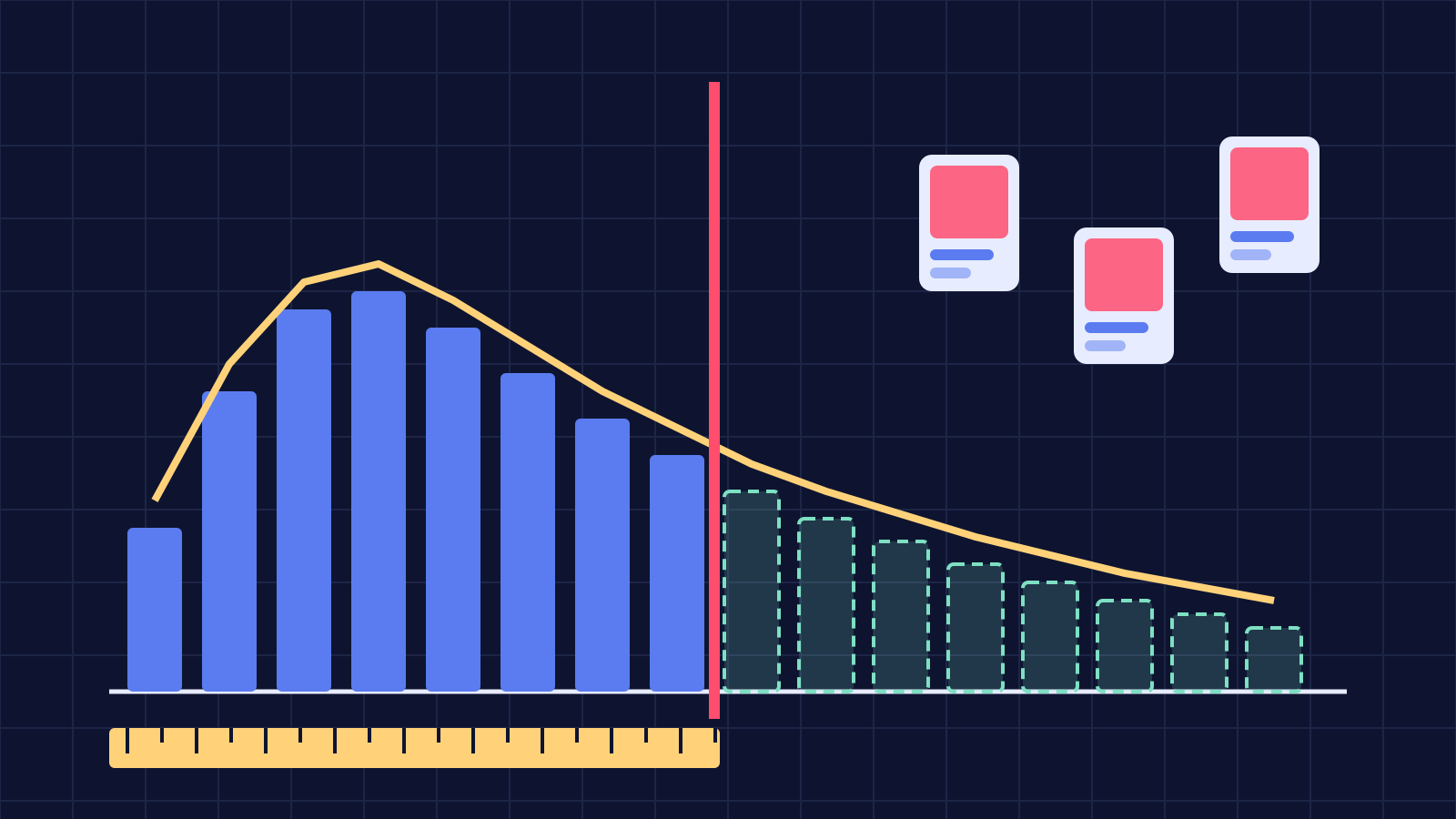
Pinterest's UK holiday checklist for small advertisers cites a TransUnion marketing mix modeling study, commissioned by Pinterest, that found 36% of Pinterest ad impact happens after a campaign's first eight weeks. The study covered US data from 2023 to the first half of 2025, more than 10 retail brands and 75,810 campaigns. Any four-week test or 30-day attribution read is missing that tail by design.
The stat surfaced this week in PPC Land's breakdown of Pinterest's BFCM guidance, buried in an undated "SMB Holiday Checklist" next to a blog post titled "From saves to sales: your BFCM conversion ramp." PPC Land did the obvious math: if 36% lands after week eight, roughly 64% lands inside it. A campaign that started on October 19 hits the end of its eighth week on December 14, a full two weeks after Cyber Monday.
So the pitch is simple. Start earlier, and don't judge us in January.
I think the pitch is partly right and partly very convenient, and the useful work for a measurement person is figuring out which part is which before Q1 budget reviews start cutting channels.
A platform grading its own homework (again)
Start with who paid for this. TransUnion ran the model, Pinterest commissioned it, and the only published output is one line in a marketing checklist. There's no public methodology, no breakdown by vertical, no confidence interval. "10+ retail brands" in the US skews toward large advertisers with enough spend history to model at all, which is a very different situation from a Shopify store spending $3,000 a month.
And this isn't the first time Pinterest has made the "we work slower than you measure" argument. A 2022 post on Pinterest's own business blog, "Three measurement tips that go beyond last click", claimed 75% of Pinterest conversions happen a week or more after ad exposure, and told advertisers to lengthen their attribution windows. In July 2026 Pinterest published an Ekimetrics study of 85 retail brands and 115 marketing mix models across Germany, the UK, France, Italy and Spain, which put Pinterest's long-term ROAS (0 to 24 months) at 1.7x its short-term ROAS (0 to 4 months).
Three studies, three vendors, same direction. That's either a consistent real effect or a consistent sales message. Honestly, it's probably both.
The commercial context matters too. Per PPC Land's Q2 2026 earnings coverage, Pinterest's Europe revenue growth fell to 12% from 27% the quarter before, and CEO Bill Ready said clicks delivered to advertisers had grown more than fivefold over three years without revenue following at the same rate. His explanation was measurement. When a company's revenue story depends on advertisers crediting it with more conversions, it's going to publish research that says advertisers should credit it with more conversions. That doesn't make the research wrong. It just means you verify it yourself.
Why the mechanism is at least believable
Here's where I'd give Pinterest some credit. The product really is built around delayed intent. People save a Pin of a sofa in September and buy the sofa in November, or they save a recipe and buy the stand mixer in February. A slow, save-first behavior like that should produce a fatter tail than, say, a Meta retargeting ad aimed at someone who abandoned a cart an hour ago.
Think of it like planting bulbs in October. If you dig up the garden in November and see nothing, the bulbs didn't fail. You just checked in the wrong month. (Whether the bulbs ever actually flower is a separate question, and that's the one Pinterest's studies are less eager to answer independently.)
Where your setup quietly cuts off the tail
Most measurement stacks lop off the post-week-eight effect in at least three places, and they're worth checking one at a time.
Platform attribution. Pinterest's default is 30-day click and 1-day view, and the longest available click window is 60 days, according to Supermetrics' documentation of the April 2025 attribution change. Sixty days is about eight and a half weeks. So even the most generous in-platform read stops right around where Pinterest says a third of the value starts.
Lift tests. A lot of teams run a four-week geo or audience holdout and read the result the day the flight ends. If the 36% figure is even half true, that test measures a fraction of the effect and calls it the whole thing. We covered how to run a geo holdout on a small budget recently, and the post-period is the part people skip most often.
Your MMM's decay settings. This one surprised me a bit when I looked it up. Google's Meridian documentation on max_lag recommends 2 to 10 time periods for geometric decay and 4 to 20 for binomial, notes that "the geometric decay curve decays to zero very quickly," and says effects beyond max_lag get truncated. On weekly data, a geometric model with a lag of eight or so periods is structurally unable to credit Pinterest for anything after week eight. The model can't find a week-ten effect because it was never allowed to look for one. If you want the plain-English version of how adstock works, our MMM explainer covers it.
Anyway, none of this proves Pinterest is right. It just means your current numbers can't prove Pinterest is wrong either.
The 1.56x ceiling, and how to use it
The useful thing about a specific number is that you can turn it into a threshold. If 64% of impact lands in the first eight weeks, then full impact is at most about 1.56x whatever you measured at week eight (1 divided by 0.64).
A micro-example. Say your breakeven ROAS for Pinterest is 3.0, and your week-eight read, using a 60-day click window, shows 2.1. Under Pinterest's own math, the most that 2.1 can become is about 3.3. So it might clear breakeven, barely, if you believe the vendor study completely. If your week-eight read is 1.6, the ceiling is about 2.5 and no amount of tail saves it. Cut it.
I'd treat 1.56x as the optimistic ceiling, not the expected value. The study is US retail, commissioned, and unaudited. For a smaller brand or a non-retail category, I'd probably haircut it to something like 1.2x to 1.3x until your own data says otherwise.
A measurement plan for Pinterest before January budget cuts
None of these take more than an afternoon to set up, and they need to be in place before the holiday campaigns finish, not after.
- Pull two attribution reads side by side. Report Pinterest on 30-day click / 1-day view and on 60-day click / 30-day view. The gap between them is a rough lower bound on how much tail you're already missing. Use the longer one as a sensitivity check, not as the number you put in the board deck.
- Extend the post-period on any holdout to 12 weeks. If you're running a geo test this quarter, keep the holdout regions dark on Pinterest for 12 weeks after the flight ends and read conversions at week 4, 8 and 12. If the week-12 read isn't meaningfully higher than week 8, you've learned the 36% doesn't apply to you.
- Re-run your MMM with a longer Pinterest lag. Try binomial decay with a max_lag of 13 to 16 weeks for Pinterest only, which sits inside Meridian's recommended range. Compare fit and Pinterest ROI against your current model. If fit gets worse, keep the old settings. If fit holds and Pinterest ROI climbs, that's evidence the short lag was hiding something.
- Write down your decision date now. Agree internally that Pinterest gets judged on data through mid-February for any campaign that launched in October or November. Doing this in advance is the only way to stop a December dashboard from making the call for you.
One caveat on the last point: longer read windows cut both ways. They give organic demand and every other channel more time to contaminate the read, which is exactly why the holdout matters more than the attribution window. Attribution windows tell you what Pinterest saw. Holdouts tell you what Pinterest caused.
My guess about what Pinterest does next
Pinterest has now published long-tail studies for the US and Europe within three months of each other, during a quarter when it's telling investors that measurement explains the gap between clicks and revenue. I'd put about 60% odds on Pinterest making a 60-day click window (or something longer) the recommended default in Ads Manager by the end of Q2 2027, probably bundled with an MMM partner integration. If that happens, every Pinterest ROAS dashboard will jump overnight without a single extra sale.
Which is kind of the whole problem with this category of research. I don't think Pinterest is making the tail up. Saves are a real behavior and slow intent is a real thing. But the only version of that 36% worth trusting is the one your own holdout produces, and most of you have about five weeks before Black Friday to get one set up.