Amazon Promised 30-Day Lows, and 1 in 3 Black Friday Deals Saved Nothing

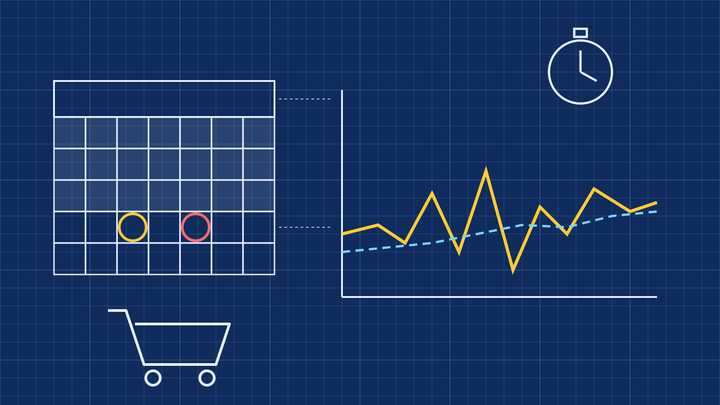
Groundwork Collaborative checked more than 350 products on Amazon's 2024 and 2025 Black Friday and Cyber Monday deal pages and found nearly 1 in 3 offered no savings against the prior month. Nearly 1 in 10 cost more, with a median markup of 19%. If you sell on Amazon or run strike-through promos, price this year's offer at or below your own 30-day low.
The report landed on November 16, three days before Amazon's Black Friday Week kicks off on November 19 and runs through November 30. Timing like that is not an accident, and I'd expect the "decoy deals" phrase to show up in a lot of consumer coverage over the next two weeks. Your shoppers will read it. Some of them will start checking.
The examples are the kind that travel well on social. Hunter women's short rain boots were listed as a Black Friday 2025 deal at $126.99, after selling for $79.97 nine days earlier. UGG Butte men's boots were a Cyber Monday "deal" at $179.98, about four weeks after going for $98.40. That's 59% and 83% more, respectively, for the privilege of buying on the big day.
Amazon's own promise is the yardstick here
The press release contrast writes itself. Amazon's explainer on how it offers genuine deals says its goal is for a deal to be the lowest price in at least the last 30 days, and that every deal shows a verified reference price. Groundwork's test was basically that promise: compare the event price to what the product sold for in the month before. Roughly a third didn't clear the bar Amazon set for itself.
So how does that happen if the reference prices are "verified"? My best guess (and it is a guess, Amazon hasn't explained individual listings) is that two different clocks are running. Amazon defines the Typical or "Was" price as the median price paid over the last 90 days, and that median excludes prices paid during limited-time deals. A product can sit at $79.97 for a week inside a deal, have that low price ignored by the 90-day median, then come back at $126.99 on Black Friday still showing a strikethrough against a higher "typical" number. Technically verified. Practically, a worse price than last Tuesday.
PPC Land's breakdown of the 2026 reference price changes adds another wrinkle. Since May 18, if a Featured Offer sits below its non-promotional median for more than 45 of 90 days, promotional sales get folded into the median, which can shrink or kill the strikethrough. But sales during peak events are always excluded from the Typical Price calculation. Prime Big Deal Days ran October 6-7, which is 43 days before Black Friday Week opens. Outside a 30-day window, inside a 90-day one. You can see how a lot of "deals" end up living in that gap.
Anyway, none of this is new behavior for retail. Which? looked at 227 UK tech and appliance deals from Black Friday 2023 and found 92% were the same price or cheaper at other times of the year, and every Amazon deal in its sample was measured against a manufacturer's RRP rather than a price Amazon had actually charged. What feels different now is how cheap the audit has become. Groundwork used archived deal pages after Amazon took the originals down. Anyone with a price-history browser extension can run a smaller version on your product page in about 40 seconds.
The strikethrough used to be a promise. Now it's a claim with a receipt attached.
Where this actually bites marketers
If you're thinking "this is Amazon's problem, not mine," I'd push back a little. Three groups seem exposed here, and I suspect most teams sit in at least one of them.
Amazon sellers who bumped prices in October. If the plan was to nudge price up after Prime Big Deal Days so the Black Friday discount looks bigger, Groundwork just described that plan in a press release. Even where it's technically within Amazon's rules, the reviews and Reddit threads that call it out don't go away.
DTC brands running strike-through prices on their own site. In the US, the FTC's Guides Against Deceptive Pricing say a former price should be one the item was actually offered at for a reasonable, substantial period, in good faith. California is more specific. As this National Law Review explainer lays out, the former price generally needs to have been the prevailing market price within the 90 days before the ad, or you have to disclose when it last sold at that price. Private plaintiffs enforce this too, not just regulators. A "was $120" badge on a product that has sat at $89 since August is a soft target.
Affiliates and deal publishers. If your Black Friday roundup reprints Amazon's savings percentage without checking history, you're passing along the 1-in-3 problem under your own byline. Readers don't blame the merchant first. They blame the person who told them it was a deal.
The 30-day low, and why I'd adopt it before anyone makes me
Groundwork is asking regulators to require retailers to show the lowest price a product sold for in the previous 30 days. Europe already does a version of this. Under the EU's Omnibus rules, any announced price reduction has to show the prior price, defined as the lowest price in the 30 days before the reduction. If you sell in the EU, you're likely already doing the math. If you only sell in the US, nobody is making you. Yet.
Personally, I wouldn't wait for a law. The 30-day low is a cheap trust signal right now, mostly because so few US brands use it. This is the version I'd run before promos go live this week:
- Pull 30-day price history for your top 20 promoted SKUs. Your own Shopify or ecommerce platform logs for DTC, Seller Central business reports plus a price tracker for Amazon. Maybe an hour if your data is clean, longer if it isn't (it usually isn't).
- Flag any SKU where the Black Friday price is not at or below its 30-day low. Benchmark: zero flagged SKUs. If more than 10% get flagged, you're drifting toward Amazon's 1-in-3 territory, and I'd fix pricing before touching creative.
- For flagged SKUs, drop the percentage claim. Sell the bundle, the free gift, the shipping cutoff, anything but a savings number you can't back up.
- For clean SKUs, say so in the ad. "Lowest price in 30 days" or "lowest price since September" is a specific, checkable claim. I'd A/B test it against your standard "% off" line in Meta and Google Shopping copy. My hunch is it wins on CTR with skeptical shoppers, but test it, don't take my word for it.
- Retire any "was" price older than 90 days on your own site, whether or not you sell in California.
This part surprised me a bit when I thought it through: the brands in the strongest position this year might be the ones with the smallest discounts. A real 15% off that's verifiably the lowest price in a month seems likely to read better than a 40% off that a shopper can debunk with a browser extension before the checkout page loads.
A 2027 law looks more likely than it did a week ago
My prediction: by Black Friday 2027, at least two US states will have introduced bills requiring a 30-day lowest-prior-price disclosure on advertised discounts. Not passed, necessarily. Introduced. The EU template already exists, the Groundwork report hands lawmakers a ready-made Amazon example, and Amazon is already fighting the FTC over Black Friday pricing on the ad side (we covered the alleged 250% ad surcharge earlier this month). If I'm wrong, the cost of having adopted the 30-day rule voluntarily is close to zero.
To be fair to Amazon, 350 products is a small sample from a store that runs an enormous number of deals, and Groundwork is an advocacy group with a policy goal. Amazon has said its reference prices are based on what customers recently paid or what competitors recently charged. Both things can be true at once. The rules can be followed and the shopper can still get a worse price than last week.
I don't think shoppers will stop buying on Black Friday over this. They'll probably just start checking, and the brands whose numbers hold up when someone checks are the ones I'd bet on in December.
By Notice Me Senpai Editorial