Amazon Opened Its Search to Outside Stores for Free, Minus the Click Data
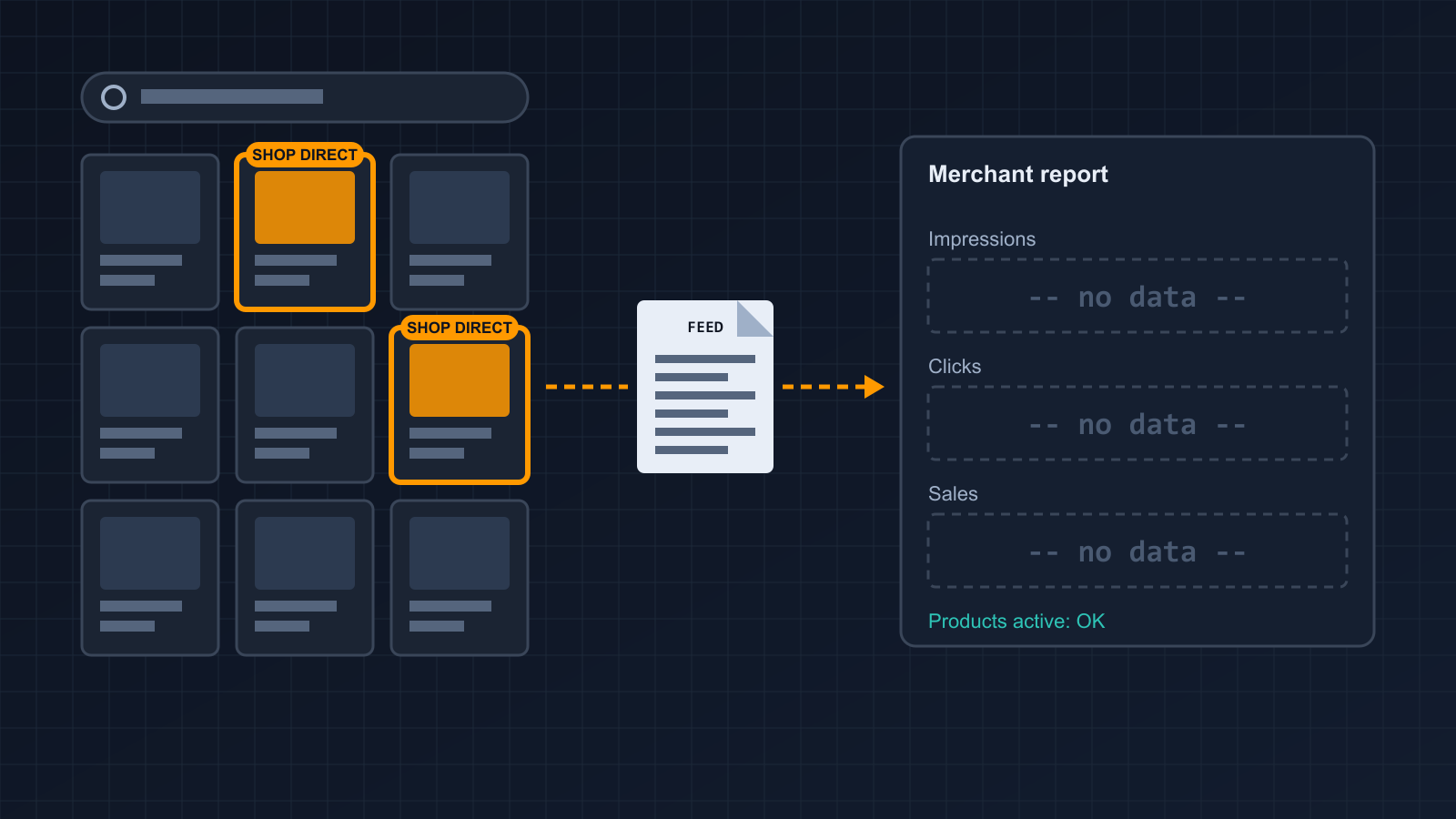
Amazon launched the Shop Direct Merchant Workspace on November 4, 2026, a free self-service portal that lets any eligible US online store upload a product feed and appear in Amazon search and Alexa for Shopping without selling on Amazon. The Workspace tells you which products are live, and nothing about impressions, clicks or sales, so measurement is entirely on you.
That last part is the whole story, in my opinion. A free placement inside the largest product search engine in the US is obviously worth testing. A free placement that hands Amazon your full catalog, prices and stock levels, and reports nothing back, is worth testing carefully. Those are two different decisions, and most of the coverage so far only covers the first one.
What Amazon actually opened up this week
Shop Direct itself isn't new. It's been running since 2025, and in March Amazon opened it to third-party product feeds through Feedonomics, Salsify and CEDCommerce, saying at the time that it carried over 100 million products from more than 400,000 merchants. What changed on November 4 is the front door. According to Amazon's announcement, a merchant now creates a Shop Direct account, verifies their website, and shares a catalog either through a solution provider (VersaFeed joins the original three) or directly through the Selling Partner API. No account rep, no email to a shared inbox.
The detail I found most useful came from PPC Land's breakdown of the developer docs: listings go in through the SP-API Feeds API using the GOOGLE_PRODUCT_DATA_FEED feed type. So, yes, the feed you already maintain for Google Merchant Center is more or less the feed Amazon wants. That lowers the setup cost to an afternoon for most Shopify stores, which is precisely why I expect a lot of brands to switch it on without thinking much past that afternoon.
On the shopper side, products show up in search with a "Shop Direct" label. Tap it and Amazon warns you that you're leaving, then sends you to the merchant's site. For eligible products there's a second path, Buy for Me, where the shopper confirms address, tax and payment on Amazon and Amazon's AI agent places the order on your site. Either way, shipping, returns and customer service stay with the merchant. Retail Insight Network put "free" in quotation marks in its writeup, which felt about right.
Free, the way Google Shopping was free in 2020
The closest analogy here is Google's move in April 2020, when it made Shopping listings free for US merchants. Free listings were real, and plenty of small stores got genuine traffic out of them. But the free inventory also trained merchants to keep a clean feed sitting inside Google, and the paid Shopping ads beside those listings never went away. Free was the onboarding funnel for the paid product.
I'd be surprised if Amazon runs a different playbook. It has a feed-based catalog of off-Amazon products, a label in search, and an agentic assistant that decides what gets recommended. My guess, and it is a guess, is roughly 60% odds that some form of paid boost for Shop Direct listings shows up within 18 months. If that happens, the brands with clean feeds and a few months of their own performance data will be the only ones who can price it sensibly.
Anyway, that's the long game. The short game is simpler.
The part Amazon isn't counting for you
Amazon's pitch includes some big numbers. Shop Direct products, it says, appear in "hundreds of millions" of searches a month, and "tens of millions" of customers have discovered products from other stores. Neither number is defined. "Discovered" could mean saw a tile, clicked through, or bought. The Workspace doesn't help, because per PPC Land it shows active products and not impressions, clicks or sales. Amazon gets every query, every click and every product a shopper compared you against. You get a status column.
Amazon sees the demand for your products. You see whether your feed uploaded.
There's also history here that I wouldn't skip. In January, Modern Retail reported that independent brands found their catalogs listed through Buy for Me without being asked. Mochi Kids had about 4,000 products listed and got around 16 orders before realizing where they came from, and a wholesale partner that bans Amazon sales contacted the founder about it. Another seller's password-protected wholesale catalog was reportedly purchasable. A survey run by one affected founder drew 145 responses from brands that believed they'd been listed without consent, and GeekWire covered the same backlash.
To be fair to Amazon, the Workspace looks like a partial answer to exactly that complaint. Merchants choose which items to include and can opt out any time. Opt-in with a controlled feed is a lot better than scraping. It just doesn't fix the reporting gap, and honestly I'm not sure Amazon has much incentive to fix it soon.
Run it like a 30-SKU experiment, not a channel launch
If I ran ecommerce for a DTC brand, I'd test this. I just wouldn't upload the whole catalog. Here's roughly how I'd set it up, and none of it takes more than a few hours:
- Pick 20 to 30 SKUs. Choose products with healthy stock, stable pricing and no wholesale or retail partner restrictions. Leave out anything a stockist sells, anything under MAP agreements, and gift cards (Peachie Kei's gift cards reportedly ended up on Amazon in the January mess).
- Build a separate feed, not a copy of your Google one. Same format, fewer items. Add UTM parameters to the link field, something like
utm_source=amazon&utm_medium=shop_direct. I haven't confirmed Amazon passes the link through untouched, so click one live listing yourself and check what lands in GA4 before trusting the numbers. - Tag Buy for Me orders separately. Those orders get placed on your site by Amazon's agent, so they won't carry your UTMs. Watch for the agent's orders in your order export and tag them manually for the first month.
- Set the bar before you look. My benchmark: after four weeks, Shop Direct sessions should convert at no less than half your Google Shopping free-listing rate, and return rate should not run above your site average. Below that, you're paying in data and support time for traffic that doesn't buy.
Expect GA4 to undercount a bit, too. We covered how GA4 missed 68% of one retailer's Christmas orders, and a new referral source landing right before Black Friday is about the worst moment to trust a single dashboard. Reconcile against your order system.
If you already sell on Amazon, the math gets weirder
Existing Amazon sellers can use Shop Direct for products they don't sell in Amazon's store, which sounds harmless. Often, though, the off-Amazon products are the ones a brand kept off on purpose: higher margin, bundle-only, or exclusive to your site. Putting them in Amazon search beside your Sponsored Products may pull clicks away from the listings you're already paying for. Check your Sponsored Products search term report for the two weeks before and after you switch on. If branded query clicks drop, that's probably your answer.
And it's another surface where Amazon quietly rewrites the rules. We wrote last week about Amazon dropping 63% of Store display impressions from its counts starting January 1. Different product, same pattern: Amazon defines the measurement, and the advertiser adjusts.
Why I'd still upload the first feed this month
Here's where I land, and I'm going back and forth on it a little. The data you give away with 30 SKUs is small. The data you get back, your own conversion rate from Amazon referrals, is something almost nobody has yet, and it's the number you'd need if Amazon ever starts charging for this placement. That's a reasonable trade for a few hours of feed work.
What I wouldn't do is treat the upload as a decision about Amazon. It's a decision about 30 products for 30 days. If the numbers come back thin, opt out and keep the feed in a drawer. If they come back good, you'll know more about what Amazon traffic is worth to you than Amazon has bothered to tell you.