GA4 Saw 32% of One Retailer's Christmas Orders, and Its Ads Looked Broken
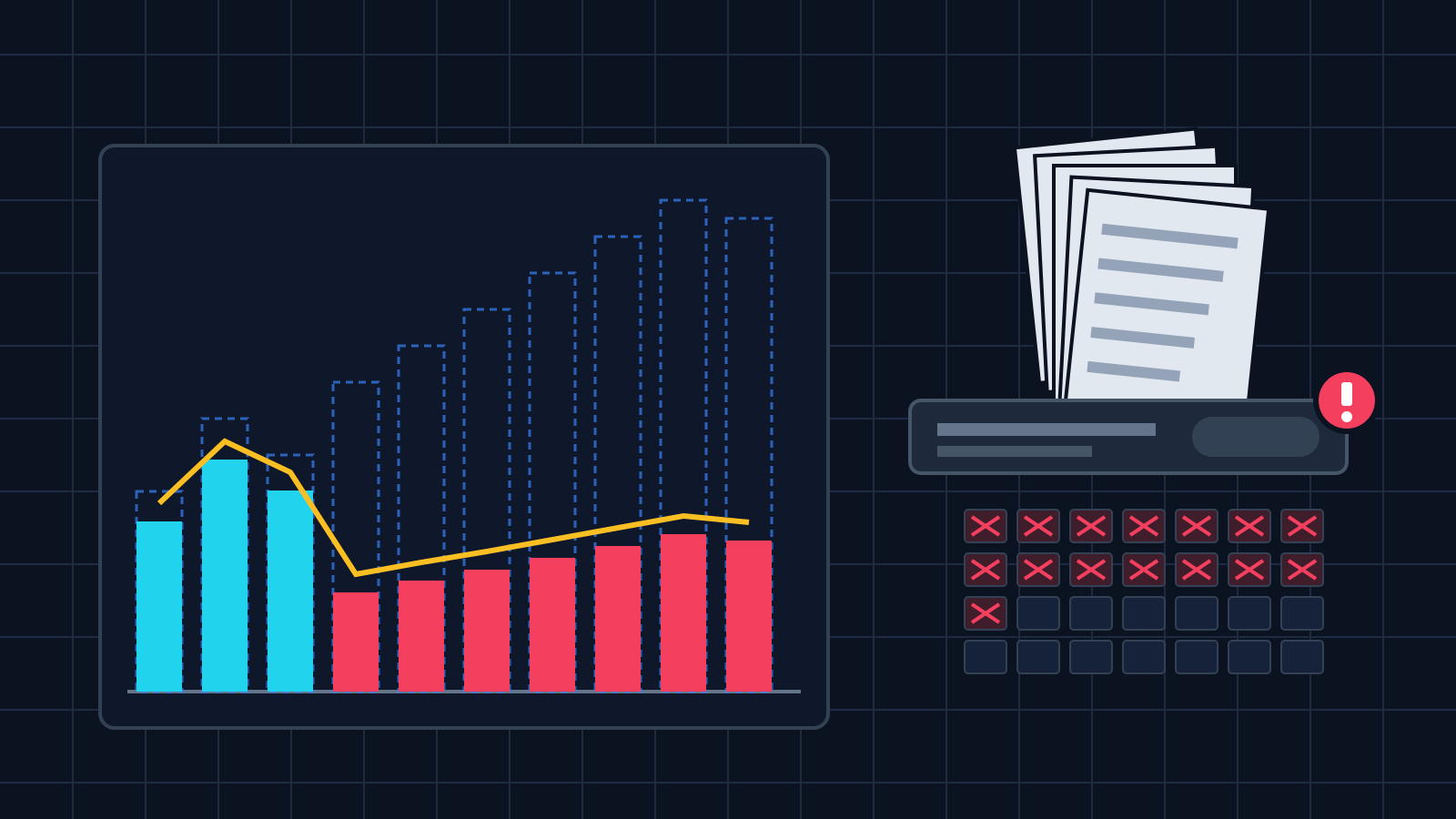
GA4 recorded just 32% of one U.K. retailer's web orders over Christmas 2025, according to an eight-brand audit published by Search Engine Journal. GA4 showed daily revenue down 68% year over year while the store's own records showed a 13% dip. The fix is a weekly capture rate: distinct GA4 transaction IDs divided by backend web orders, checked before Black Friday.
The tracking bug is bad. What it did to the ad numbers is worse. In GA4, that retailer's Google Ads return on ad spend fell from 8.07 to 4.79 between Q4 2024 and Q4 2025, and organic search revenue nearly halved. When the author, Christian Goodrich of SOZO, matched a multi-touch attribution tool to actual store orders, Google Ads ROAS went the other direction: from 4.42 to 7.93, on 20% less spend. Store orders for the quarter rose from 5,874 to 7,686.
So picture the meeting where somebody pulls up GA4 in January and says paid search collapsed. Every number on the screen is "real" in the sense that GA4 reported it. And a sensible team, looking at that, probably cuts the best-performing channel it has.
(Small aside: SEJ's headline says 66%, but the body's 32% Christmas capture rate works out to roughly 68% missed. Not a big deal, but if you quote this study in a deck, quote the body.)
A cookie banner that ran out of page views
The cause at two of the retailers was almost comically boring. Their consent management plans came with a monthly page-view allowance. When traffic spiked, the allowance ran out, the banner stopped appearing, and tracking switched off until the next billing date. At Retailer A, sessions dropped out in blocks that always ended on the 14th. During the Black Friday cycle the allowance ran dry on December 1 and GA4 didn't recover until December 15. Two of the most valuable weeks of the year, gone, because of a SaaS plan tier.
Retailer B is worse. GA4 captured 94% of its orders in Q4 2024 and 36% in Q4 2025, showing revenue down 69% while net sales actually rose 18.5%. In weeks the banner stayed up, capture hit as high as 68%. In weeks it went dark, 10% to 22%.
I think this is the failure mode most teams aren't watching for, honestly. Everyone knows consent rejection costs you some data. Very few people know their CMP has a usage cap, and fewer still have routed the "you're about to hit your limit" email to anyone in marketing.
Blackouts, backfills and orders counted twice
Retailer C had a different problem. From October 28 to December 4, 2025, the store took 2,215 orders and GA4 recorded zero purchases. Then on December 9, GA4 logged 1,261 orders in a single day, about 1,000 of them carrying order numbers from inside the gap, and nearly all landed in Unassigned. Google sent that site 4,244 organic clicks in the week of November 3 according to Search Console. GA4 saw 57 Google organic sessions.
And then the opposite error. In one store's Q4 2025 data, 657 of 3,365 order numbers had more than one purchase event, adding 735 phantom purchases. The quarterly total (4,100 GA4 purchases against 4,501 store orders) looked basically fine. That's the scary bit: lost orders and duplicated ones cancel each other out at the quarterly level, so a top-line sanity check passes while the channel and campaign data underneath is wrong in both directions. Google's own documentation on transaction IDs says deduplication only applies to purchases from the same user, which is why refreshes and re-sends from other contexts slip through.
Retailer D, for completeness, got hit by bots: 23,187 sessions on September 27, 2026 against a normal 300 to 900 a day, mostly one-second direct desktop Chrome visits. GA4's known bot exclusion only catches bots on the known list, and anything running your JavaScript like a browser counts as a visitor. If your direct traffic looks inflated too, we covered a version of that in the 141% direct traffic spike across 12 sites.
The Shopify wrinkle that makes your year-over-year even weirder
This next bit isn't in the SEJ study, but it matters if you're on Shopify. Since July 2026, Google has been sending Shopify "checkout complete" events to GA4 server-to-server for stores using the Google & YouTube app, PPC Land reported. It's opt-out, it doesn't show up in DebugView, and if you also have legacy GTM purchase tags or a third-party server feed, you may be double counting.
Put that next to the SEJ findings and your Q4 2026 versus Q4 2025 comparison could be broken in either direction. A store that lost data to consent last year and recovered purchases this year will see GA4 revenue "growth" that never happened. A store that's double firing will see conversion rates that look like a miracle. Neither one tells you anything about whether your ads worked. On paper, more captured purchases is an upgrade. And sometimes it is, as long as somebody annotated the date it switched on.
The 20-minute capture-rate check
This is the part to actually do this week, before traffic ramps. It's adapted from the SEJ method, with thresholds added:
- Export backend web orders by week for Q4 2024, Q4 2025, and the last eight weeks of 2026. Strip marketplace, subscription renewal, phone and manual orders, since those never touch your site.
- Pull GA4 purchases as distinct transaction IDs for the same weeks. Skip the transactions metric for this; it counts refunds too.
- Divide GA4 by backend. That's your weekly capture rate.
- Read the shape, not the level. A steady band (say 72% to 84% week to week, which is what one healthy-ish brand in the study showed) is expected consent loss. A step change, a near-zero week, or any week above 100% is a tracking failure.
- Check duplicates. In a GA4 exploration, count purchase events per transaction ID. Anything above one is double counting.
- Add the Search Console ratio. Divide weekly GA4 Google organic sessions by Search Console clicks. The two never match, but a sudden drop in the ratio while clicks hold is your earliest warning that the tag broke.
My rough rule: if the weekly capture rate moves more than 10 points from its own trailing four-week average, someone investigates within 48 hours. In BFCM week, make that 24. And look up your CMP plan's page-view allowance today, then compare it against last November's traffic. That one takes about three minutes and might be the most valuable three minutes in this whole list.
GA4 is a behavior tool that happens to count some of your orders. Treat it like the order book and you'll cut the channel that's working.
Server-side purchases help, with one catch
The structural fix Goodrich recommends is sending the purchase from your store's own system when the order is created, through the GA4 Measurement Protocol or a server-side container, keyed on the order number and carrying the GA4 client ID and session ID captured at checkout. Moving your existing browser tags into a server container doesn't solve it on its own, because the purchase still starts in the browser.
The catch is timing. Switching your purchase source in November means your peak-season numbers break comparability with everything before. If you're starting now, the SEJ advice is to send server-side data to a separate GA4 property through Q4 and cut over in January. I'd agree with that. It feels slower, but the alternative is explaining a 40% jump in "revenue" to a CFO who already checked Shopify.
And to be fair, server-side doesn't touch consent obligations. Under guidance like the U.K. ICO's, refusing has to be as easy as accepting, so a steady gap is going to stay. That's fine, mostly. The steady gap was never the dangerous part. The silent, unannounced drop is.
Who gets to say what the number is
The most useful non-technical step is agreeing on a source of truth before December, not during it. Store for orders and revenue. GA4 for behavior and trends. Ad platforms for their own claims, taken with the usual salt (we've written about getting a real ROAS number before). When you report, lead with the capture rate as a share of store orders, so the room knows how much of reality the dashboard is showing.
My prediction, for what it's worth: at least one in four mid-size ecommerce brands will make a January budget decision this season off a GA4 number that's wrong by more than 30%, and most won't find out until someone reconciles in spring. I could be off on the exact share. I don't think I'm off on the direction.
None of this is glamorous work. It's a spreadsheet, a CMP invoice and an exploration report. But GA4 showed the retailer in this study a Google Ads collapse while its store-matched data showed a 79% ROAS jump, and the only thing separating those two stories was someone counting orders in the store.