Amazon Pulled Prime Day Into June and Your July Prep Calendar Is Already Late
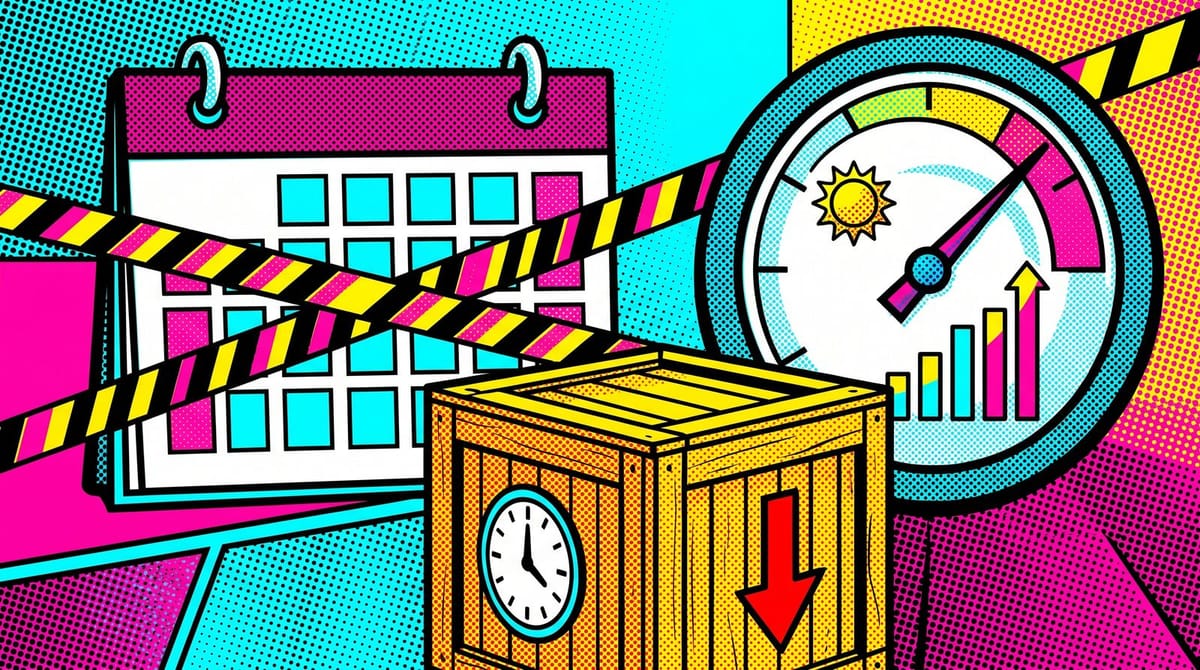
Amazon confirmed on April 29 that Prime Day 2026 will run in June across 26 countries, the first June schedule since 2021. The shift compresses the standard 8-week ad-prep cycle into roughly 4 to 6 weeks of working time, and pulls deal submissions, FBA inventory, and DSP creative deadlines into mid-April through late May. Most teams are still working off a July calendar.
The headline made the rounds quickly. The implication did not. The date did not slip a few weeks; the entire comparison frame for retail-media spend just changed. PPC Land's coverage framed it as a planning headline. I think it is bigger than that.
The Q2 reset is the actual story
Pulling Prime Day forward by about a month moves the largest single-event commerce window of the year out of Q3 and into Q2. Last year's Prime Day reportedly drove $14.2 billion in event sales across the four days. That entire pile of brand and performance spend now lands in a different earnings quarter, which matters for two practical reasons: holdco pitches that benchmark against last year's Q3 will look short on retail-media commitment, and DTC brands rolling forecasts on a fiscal-quarter cadence will see Q2 ROAS spike against a base that did not include it.
For context, Amazon's full-year 2025 advertising revenue hit $68.6 billion, with Q4 alone at $21.3 billion (up 23% YoY). When Amazon decides which quarter holds Prime Day, it is also deciding which quarter the ad-revenue beat lands in. I would bet Amazon's Q2 retail-media revenue prints 18 to 22% above last year's Q2 base, even if total Prime Day GMV stays roughly flat. Investors will not be confused. Marketing planners modeling against last year's seasonality might be.
The second-order problem is the comp file. Most agency dashboards run year-over-year tabs that align by week number, not by event window. Week 26 of 2025 was a normal trading week. Week 26 of 2026 will contain Prime Day. Anyone reviewing dashboards in late June without manually flagging the comp will see a 4x trading-week ROAS that is not actually a performance lift; it is a calendar artifact. From what I have seen, that kind of artifact tends to shape the next budget pitch before anyone has time to disclaim it.
The deadline math nobody has redrawn yet
The Prime Day prep playbook most agencies use is built around an 8-week runway. Deal submissions close roughly 6 weeks out, FBA inventory needs to land 3 to 4 weeks before kickoff, and listing optimization wraps in the final week. Industry speculation is pointing to a June 23 start date, which puts the prep math at:
- Deal submissions: mid-May (Prime-Exclusive Best Deals windows have already passed in some categories)
- FBA inventory inbound: roughly May 26 through June 2
- Listing optimization: by June 16
- DSP creative locks: typically 10 to 14 days pre-event, so by June 9
Today is May 3. If your replenishment is not in transit and you are still cycling creative rounds, the calendar has already left you behind. From what I have seen on agency Slack threads in the last 72 hours, a fair number of teams have not internally redrawn the calendar yet. Some still had July dates on the planning doc late last week.
The 15 to 25% CPC ramp is doing more than inflating costs
Marknology's 2026 prediction pegs Prime Day ad costs 15 to 25% above 2025, with top-keyword CPCs moving from a $2.00 to $6.50 range into $2.50 to $8.00. That sounds like a routine inflation note. It probably is, on its own. The ramp lands differently when the prep window has been cut roughly in half. Budget that normally funds an 8-week warm-the-audience prospecting push gets compressed into 4 weeks instead. You cannot gradually ramp into the event the way last year's calendar allowed.
Two things follow. First, the standard playbook of pacing a heavy upper-funnel push 6 to 8 weeks out is gone for most brands; the budget has to land already loaded. Second, retargeting pools you build between now and June 23 are doing more work per impression than they did last year, because the prospecting window that fed them is shorter. From what I have seen in compressed-prep events before, any DSP audience seeded before May 15 ends up acting as the spine of the campaign, not a warm-up layer.
A capped account in a hot auction window does not show up in the report. It shows up as silence.
Where DSP earns its keep this year
Pacvue's analysis found brands layering Amazon DSP with Sponsored Ads saw 2.6x higher purchase rates, 3.6x sales lift, and 2.7x stronger ROAS during the event window. Those numbers make the case for a multi-surface buy in a normal year. In a compressed-prep year, DSP becomes the one surface that can prospect and retarget concurrently inside the same campaign skeleton, which matters when there is not enough runway to run them in sequence.
One thing to flag: Amazon DSP is not the only retail-media DSP that just changed. Walmart Connect Select opened self-serve CTV with no spend floor last week, which means brands previously gated out of CTV retail media now have a parallel option. If your Q2 plan was double down on Amazon for Prime Day, the cleaner play might be running a Walmart-side CTV layer for incremental reach in the same window. The audiences overlap. The buys do not.
Practical seeding move for the next two weeks: build three DSP audience segments now rather than during the event. A category-affinity pool from the last 90 days, a remarketing pool from your existing PDP traffic, and a conquest pool against competitor ASINs you already have ad copy for. None of this is fancy. The reason to do it now is that audience freshness windows in Amazon DSP run 14 to 30 days, and an audience built on June 22 is technically valid but practically thin. An audience built before May 15 has time to compound impressions that train the optimization model before the auction heats up.
Two locks worth chasing this week
The first is the FBA inbound. If your replenishment is not already in transit, push it. Tinuiti's prior-year data showed 66% of Prime Day purchases came from new-to-brand shoppers, which means stockouts during the window cost you future buyers, not just the immediate sale. The second is the bid-cap audit. Reset your CPC ceilings on top branded and category keywords toward the upper end of the new range ($7 to $8) before June 1, then walk them back if your delivery curve allows it. The cost of an under-bid auction in a four-day window is not recoverable in week two.
I do not have a clean prediction for who wins this June. What I am more confident about is that the cost of being slow in May is higher than usual. Compressed prep amplifies every late decision. Inventory that lands on day 2 misses the new-to-brand surge from day 1. A bid cap fixed on day 3 has already missed its highest-intent auction. A creative round delivered on June 20 lands too late to move the impression weighting Amazon will have already assigned. None of that is new. The June schedule just stripped out the buffer that usually hides it.
Notice Me Senpai Editorial