Amazon's $70B Ad Business Is Eating Non-Endemic Budget Linear TV Used to Own
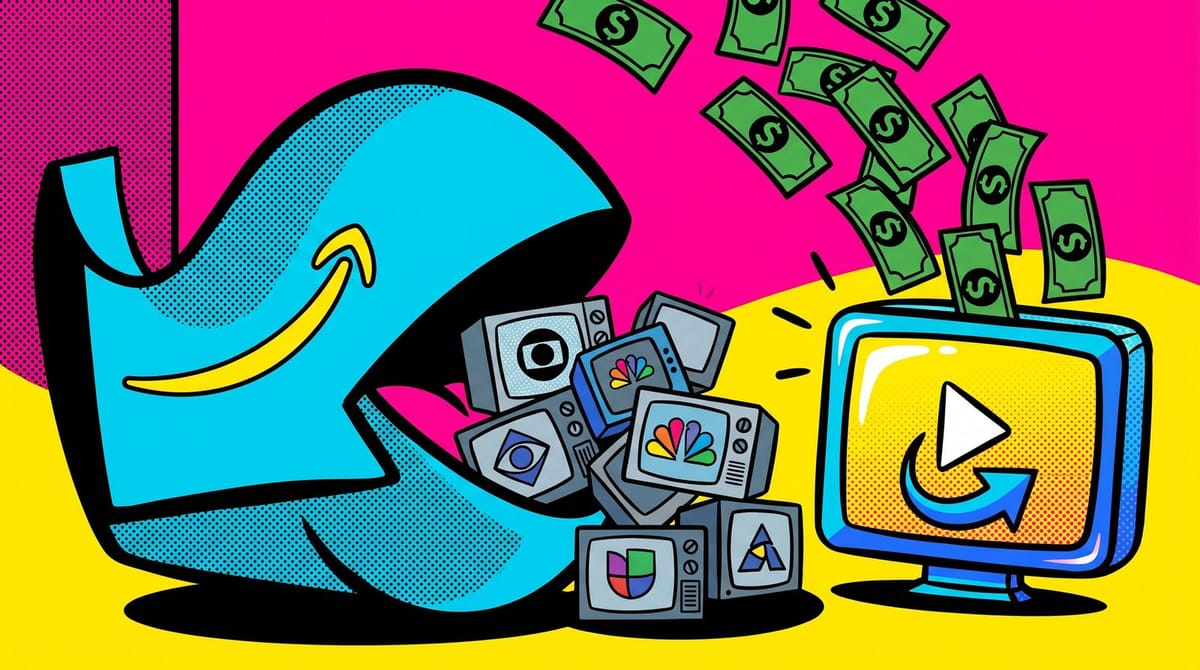
Amazon reported $17.2 billion in advertising revenue for Q1 2026, up 24% year-over-year, pushing its trailing-twelve-month ad business above $70 billion. That puts the ad engine larger than the annual US ad revenue of any single broadcast television network and roughly the size of the entire US linear TV ad market. The fastest-growing segment driving that number is non-endemic: brands that don't sell anything on Amazon at all.
Jassy gave the $70 billion business one sentence
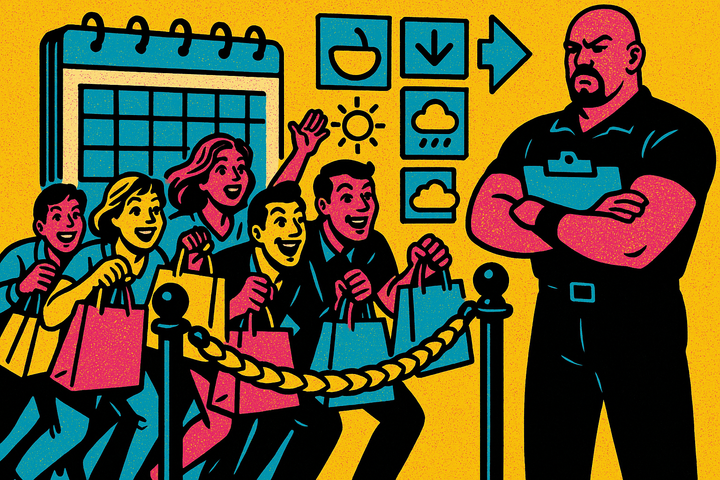
In his April 2026 letter to shareholders, Andy Jassy mentioned advertising exactly once. The full passage: "Our Advertising offerings continue to grow and deliver strong returns for brands." Fifteen words. PPC Land flagged the gap: AWS got pages, Project Kuiper got paragraphs, and the third-largest digital ad business on earth got a sentence that reads like a footer on a deck.
I think the silence is deliberate. Amazon's ad business sits on a strategic seam where loud growth narratives invite the wrong attention. Talk too loudly about how good the targeting is and you invite the data-broker conversation. Talk too loudly about how Sponsored Products dominates branded search results inside the store and you invite the antitrust conversation. Talk too loudly about $70 billion and you remind every CMO who runs a non-endemic budget that the line item nobody asked them about is now the size of a US broadcast network.
One sentence keeps it quiet. Sometimes the size of the silence tells you more than the press release would.
Where the seventy billion actually comes from
The trailing-12-month figure is doing a lot of work. Q1 2026 alone was $17.24 billion in advertising services, the prior three quarters were each in roughly the same neighborhood, and the total finally crossed the $70 billion threshold. Growth was 24% YoY headline, or about 22% on a constant-currency basis according to Best Media Info's read of the call.
The mix matters more than the headline. Sponsored Products is still the majority of Amazon ad spend, but it is not the growth engine anymore. The growth engine is Amazon DSP plus Prime Video, where Prime Video inventory is now buyable programmatically with no upfront-style commitment. You can run a $50,000 streaming TV test on Sunday Night Football inventory without picking up a phone or signing a scatter contract. That door is what the non-endemic budget started walking through in 2025.
The non-endemic shift Amazon stopped pretending wasn't happening
Amazon's first ten years of advertising were endemic-only by default. Sell on Amazon, advertise on Amazon. Non-endemic was a small experimental sleeve. Wpromote's tracking of the 2025-26 expansion shows it is now a stated growth pillar, with hospitality, automotive, and financial services brands using DSP to target Amazon's first-party shopping and viewing data without ever listing a SKU.
What is funny about this is that Amazon's official messaging still hedges. They will talk about "DSP for all advertisers" but they almost never say "we built a $70 billion ad business in part by selling brands a behavioral graph that's better than Meta's for purchase intent and bigger than Google's for living-room viewing." Saying that out loud creates the data-broker conversation Amazon does not want to have on the record.
But the numbers are the numbers. eMarketer is calling 2026 the year linear TV stopped being the growth engine for the TV ad market, and MediaPost's Q1 2026 media-value analysis shows linear network impressions and attention falling across every major broadcaster. Amazon, with Prime Video plus first-party shopping data plus a programmatic on-ramp, is sitting in front of the largest non-endemic budget reallocation in twenty years.
What Amazon DSP can do that Meta and Google can't
Three things, specifically.
First, purchase-intent signal at the household level. Meta knows what you scroll. Google knows what you search. Amazon knows what your household actually bought, on which credit card, in which week, after seeing which ad. For a non-endemic CPG or auto brand running incrementality tests, that is the cleanest behavioral signal in the market right now. (More on the asterisk in a minute.)
Second, programmatic Prime Video. CBS, ABC, NBC, and Fox sell their best inventory through upfronts and scatter. Amazon sells Prime Video inventory through DSP. The functional difference is enormous. A non-endemic brand can test $25K to $100K of premium streaming TV in a single two-week flight, A/B their creative, and call the result. Try doing that on NBC.
Third, closed-loop attribution on a chunk of the funnel nobody else can close. If you are Mountain Dew running a Prime Video ad and trying to attribute Amazon Fresh purchases the next week, Amazon can do that natively. Meta and Google cannot. They can model it, MMM it, MTA it. They cannot see the receipt.
This is the same biddable-plus-first-party-data playbook we covered when Spotify pushed biddable inventory to a third of its ad revenue. Amazon is just running it bigger and with a stronger attribution loop.
The test most paid teams should run before May upfronts
If you are running paid media for a non-endemic brand and you have not tested Amazon DSP in 2026, here is the move I would make in Q2.
Pull $75,000 to $150,000 from your Q2 linear TV scatter or your CTV-via-Trade-Desk allocation. Run a four-week incrementality test on Amazon DSP, split between Prime Video ads and run-of-network display. Use Amazon Marketing Cloud to set up a holdout that did not see the ad. Measure two things: any Amazon-attributable lift if you have a partner SKU on the platform, and brand-search lift on Google during and immediately after the flight.
The benchmark to beat is a 1.4x to 1.7x incremental lift on the targeted segment, which is roughly what the better Prime Video case studies have shown for non-endemic brands in beauty and auto categories through 2025. If you do not hit 1.3x, that is diagnostic, not failure. Probably your creative is wrong for streaming or your audience is too narrow for a CTV environment.
Run this before May 12, because that is when broadcast upfronts begin (CBS, NBC, and Fox present that day, ABC the day after) and you want to know whether your scatter dollars belong on linear or in DSP before those conversations get formal.
The asterisk Amazon will never put in a press release
The closed-loop attribution loop only closes one direction. A non-endemic brand running Prime Video ads and selling on its own site is back in modeled-attribution land, just like with Meta and Google. Amazon will gladly sell you DSP and report what your view-through engagement looked like, but if your purchase happens at automotive-dealership.com, the path-to-purchase data is no cleaner than what Trade Desk gives you.
That is the asterisk. Amazon's closed-loop attribution is a real product advantage for endemic brands and a partial-credit advantage for non-endemic ones. From what I have seen on incrementality tests in 2025, knowing the difference is the difference between testing it well and testing it badly. Most teams treat Amazon DSP reporting as ground truth even when their conversions happen elsewhere, and that is where the budget waste creeps in.
Why the quiet quarter is the buy signal
I think Amazon is playing the longest game in digital advertising right now, and Jassy's one-sentence letter is part of the game. They want the budget shift to happen quietly, before regulators or competitors fully process what has already happened. From the Q1 2026 numbers and the linear-TV pressure data, the shift is working. Non-endemic budgets are moving.
The question for any paid team that has not tested DSP yet is whether you would rather learn the platform during a calm quarter, or six months from now, when half the upfront budget has already migrated and your CFO is asking why Amazon's CPM curve looks higher than it did when nobody was watching.
Notice Me Senpai Editorial