Google's June 10 YouTube Auto-Link Is the Cleanest Ads Admin Audit You'll Get
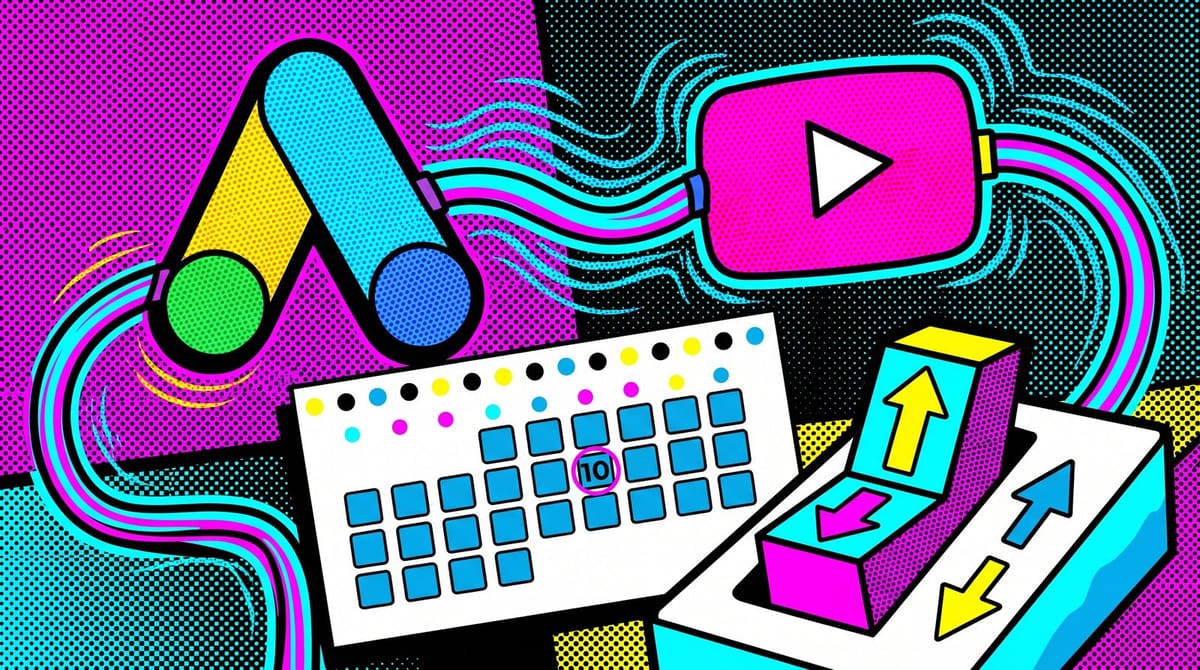
Starting June 10, 2026, Google will automatically connect Google Ads accounts to associated YouTube channels when its systems detect a high-confidence ownership match. A 30-day email notification goes out first, and a single opt-out from any admin on either side cancels the link. The detection signals are shared login credentials, cross-account admin access, and other ownership overlap markers, which is also a list of everyone Google currently thinks runs your account.
The 30-day window is doing two jobs
What reads like a routine product-linking update is also a quiet audit. Google's notification language, summarized in the Almcorp guide linked below, describes the detection model in plain terms: shared logins, cross-account administrative access, and other indicators of common ownership. The accounts being auto-linked aren't necessarily the ones you want linked. They're the ones whose admin list shows credential overlap with a YouTube channel, which is often a different list.
If you've been running ads for a brand for two years, the freelance media buyer who left in October is probably still on at least one of those access lists. So is the agency that ran your YouTube campaigns in 2024 and whose contract ended last spring. The June 10 deadline doesn't change who has access. It surfaces them by trying to link their accounts to your channel.
What the link actually shares
When the link completes, the Google Ads account gains four categories of YouTube data, per Almcorp's writeup of the official permissions:
- Organic video view metrics. Not just paid views, but the unpaid count for every video on the channel.
- Audience segments built from channel interactions: watches, likes, comments, subscriptions, channel visits.
- Earned actions. What users do on the channel after seeing an ad, treated as conversion signal.
- Channel subscriptions tracked as conversion events.
That's a meaningful data exchange. Organic audience segments alone make remarketing on YouTube viewers possible without paying for the initial view, which most accounts running Demand Gen or Video Action campaigns don't currently have. It's also enough signal that you'd want to be deliberate about who gets it.
Worth flagging: the link is one-way for content control. The Ads account can read channel data, but it can't edit or delete videos. Channel owners gain no access to the linked Ads account. The asymmetry matters because the people clicking "approve" on auto-links are mostly Ads admins, not channel owners. They get the data, channel owners get the notification.
The cohort schedule is rolling, not single-day
A note for anyone confused by the date: this isn't one global flip. PPC News Feed reported that the first cohort began auto-linking April 11, 2026, after notification emails went out in March. June 10 is the cohort being notified now, per Search Engine Land's coverage of the latest wave. More cohorts will follow. The interesting question is which cohort each of your accounts falls into, because the answer tells you whether Google has already linked something you didn't approve.
The Google Ads UI shows pending and completed auto-links under Tools, then Data Manager, then YouTube. From what I've seen across a handful of accounts, the pending list is longer than people expect. The high-confidence model seems generous on Google's side, probably because the cost of a missed link is small (you can always unlink later) but the cost of a missed opt-out is invisible to Google.
The 48-hour audit that actually matters
Here's what to do before June 10 if you got the notification, and what to do anyway if you didn't:
- Pull the admin list on every Google Ads account you own. Filter out anyone who hasn't logged in in 90 days.
- Pull the admin and manager list on every YouTube channel you own. Same 90-day filter.
- Compare. Anyone on both lists who shouldn't have access to both, remove them from at least one side before the auto-link fires.
- Then decide whether to keep the link. The opt-out path lives in the notification email, in Google Ads under Tools, Data Manager, YouTube, or in YouTube Studio under Settings, Channel, Advanced Settings. A single opt-out from any admin on either side is enough.
Almcorp described this as a three-method opt-out, which is accurate, but the actual value of the exercise is the audit, not the opt-out. Most accounts probably should keep the link. The data flow is useful and Google isn't asking for anything that wouldn't be available through a manual link request anyway. The point is to know who else is going to inherit that data flow because Google decided their login overlap was a high-confidence signal.
Why this rollout reads different from the November announcement
Google's first description of the auto-link feature appeared on a support page in November 2025, picked up by Hana Kobzová at PPC News Feed and covered by Search Engine Land the same month. At the time, the framing was "we're going to enable an existing feature without requiring opt-in." Six months later the implementation has more texture. The 30-day notification window is a concession to advertisers (Google could have just flipped this without notice, the way Smart Campaigns and AI Max defaults arrived), and the choice to require a single opt-out from either side instead of mutual consent is unusual for them. It looks like a response to pushback from agency holding companies that share credentials across many brand accounts.
From what I've seen, multi-brand agencies are the ones with the most exposure here. They hold credentials on dozens of YouTube channels and hundreds of Ads accounts, and the cross-account admin access pattern Google is using to detect high-confidence matches is basically how agencies are structured. The pending auto-link list in those MCC accounts is going to be long. If you run an agency MCC, that pending tab is the next 48 hours of work.
For context on the rest of this year's Google Ads housekeeping, the 37-month granular data retention cap also hits in June, which means agencies cleaning up admin access this month should also be exporting historical data they'll need beyond that window.
The honest read on whether to opt out
If your account is clean and the link is to a channel you actually own, the auto-link is a small upgrade. You pick up audience segments and earned-action conversions you'd otherwise have to wire up manually. The data is useful, especially for Demand Gen and Video campaigns where the organic view baseline matters.
The reason to be deliberate about it isn't the data flow itself. It's that the auto-link bypasses the conversation about who should have what access, and that conversation is the actual control. If you wouldn't have asked the agency that left in 2024 for permission to link their old Ads access to your YouTube channel, you probably shouldn't let Google do it on autopilot.
I'd treat June 10 as a recurring 30-day calendar reminder rather than a one-time event. The cohorts keep coming. Each notification email is another look at who Google thinks owns the account jointly with you, which is, honestly, more useful than the link itself.
Notice Me Senpai Editorial