Apple Pulled the No. 2 US App After One TechCrunch Inquiry
Apple removed Freecash, the rewards app that hit No. 2 on the US App Store, on April 13, 2026, after TechCrunch sent the company a press inquiry. Google Play followed two days later. The app had ranked publicly for over six months while collecting race, religion, sexual orientation, health, and biometric data from a peak of nearly 6 million monthly users.
Six months at No. 2 with biometric data on the receipt
Berlin-based Almedia, the operator behind Freecash, grew the app from 876,000 downloads in October 2025 to 5.5 million in January 2026, peaking near 6 million in February. By removal date the company claimed 70 million registered users worldwide and 19 million joining in 2026 alone, according to Almedia's own statement to PPC Land.
Cybersecurity firm Malwarebytes found the app was collecting sensitive categories including race, religion, sex life, sexual orientation, health, and biometrics, according to TechCrunch's reporting. A Wired investigation documented misleading TikTok ads promising users they could earn $35 per hour scrolling content. TikTok pulled some of those ads. Apple kept the app live.
Almedia disputes the framing. CEO Moritz Holländer told PPC Land the company is "fully compliant with GDPR" and "not a data broker," and attributes the misleading TikTok creative to third-party affiliates that were removed once identified. Almedia says it is working with both platforms toward reinstatement.
Why a single press inquiry moved faster than Apple's review queue
Apple cited App Store Review Guidelines 3.1.2(a) and 2.3.1, which prohibit scamming, bait-and-switch tactics, and misleading marketing. Both are subjective standards that require a human reviewer to apply. App Review runs that judgment at submission time, not while a user-acquisition campaign is live on TikTok.
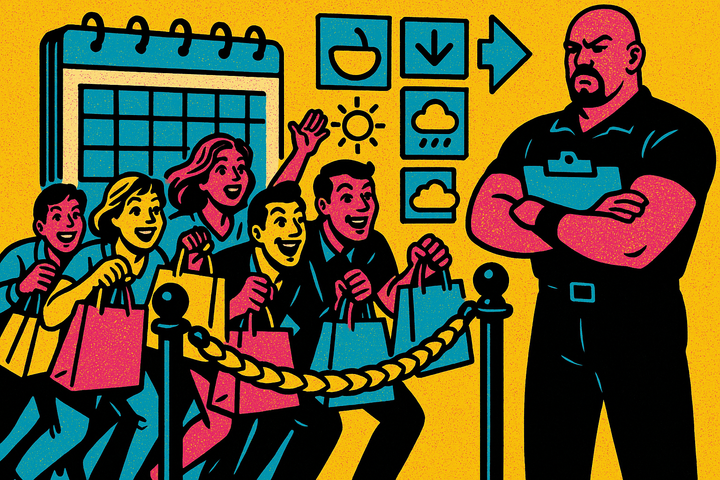
Freecash did not deceive Apple at submission. The deceptive layer lived in TikTok ad creative, in user-acquisition flow, and on third-party affiliate landing pages. Apple's automated review apparatus has no ingestion path for Wired headlines, Malwarebytes telemetry, or the TikTok ad library. Press attention is what translates external signal into removal action.
From what I have seen across several platform removals this year, that is now the standard path. External journalism builds the case. The platform reads the same article you do. The app comes down inside 48 hours. The trigger here was a journalist's email, processed by a senior reviewer who would not have seen the file otherwise.
Most UA leads I have spoken with assume Apple's signals catch this kind of thing structurally. They mostly do not. The signal that worked here was a journalist with an editor and a deadline. That is a different kind of detection apparatus, and one your network selection process probably does not account for yet.
The offerwall hole this leaves in your May UA plan
Freecash was a top-tier rewarded acquisition channel. The model: users install partner mobile games like Monopoly GO or Disney Solitaire, hit gameplay milestones, and receive cash payouts. Almedia spent over $300 million annually on its own UA and pushed roughly that volume into partner installs, per PocketGamer.biz reporting on the industry impact.
If your mobile UA pipeline included meaningful Freecash volume into a partner game, that volume went to zero on April 13. No throttle, no ramp-down, mid-quarter, no warning. The remaining offerwall surfaces (TapResearch, AdGate, Pollfish, BitLabs, Persona.ly, and the smaller specialty networks) absorb some of the displaced budget, but not at the same scale or CPI floor.
January CPIs through offerwall were running roughly 30 to 40 percent below paid social benchmarks for casual game advertisers, based on figures shared in r/MobileGameDev advertiser threads. That gap will compress as displaced spend chases the remaining rewarded inventory. From similar shutdowns I have watched, the spike usually settles inside three to four weeks. The new floor seems to land 15 to 25 percent above the old one and tends to stay there for a while.
Worth modeling separately: incremental retention from offerwall has always trailed organic. Less rewarded volume means a slightly cleaner blended retention curve next quarter, alongside lower install counts. The cleaner curve is coming from lower volume. Acquisition quality has not improved on its own.
Almedia's Cyprus reboot is the playbook to watch for
The detail buried in the TechCrunch piece and confirmed by MacRumors: Almedia's original Freecash submission was removed by Apple in June 2024 after roughly 69,500 downloads. Months later, an existing rewards app from Cyprus-based 256 Rewards Ltd. was rebranded as Freecash under a different developer ID. The reporting suggests Almedia may have acquired or coordinated with the Cyprus developer to circumvent the original ban.
App-store ban evasion through developer-ID swap and shell-entity rebranding is a known pattern in offerwall, casino-adjacent gaming, and crypto categories. The wrinkle in the Freecash case is scale. The second iteration ran for over a year, hit No. 2 on the US App Store, and amassed 70 million registered users before getting taken down again.
For UA teams, this matters because the same playbook is probably running quietly inside apps you have not audited. If a partner publisher in your network has any prior removal in its developer-ID history, you are funding the next ban cycle. The platform tends to catch up. ROAS on those cohorts gets reported as fraudulent retroactively, and the chargebacks land in someone's quarter.
The pattern echoes the dynamic from Instagram's 10-in-30 aggregator rule, where Meta retroactively classified meme-page buys as out-of-policy after months of accepting the spend. Different surface, same enforcement shape.
The offerwall partner audit Apple just made urgent
- Pull every active offerwall partner ID in your live UA campaigns. Run each developer ID through AppFollow or AppMagic for prior removals, name changes, sudden category shifts, or ownership transfers. One ban in the trail means the volume from that publisher should be priced as discount-rate volatility, not stable channel inventory.
- Map your January through March 2026 install volume by source. If Freecash directly or indirectly sourced more than 5 percent of installs into any partner game, your CPI forecasts for May and June need rebuilding now. The remaining networks will absorb displaced budget at higher CPI. A stale spreadsheet will quietly underprice your acquisition cost for the next two months.
- Audit your audience-modeling pipelines for any data partner that overlaps with Freecash users. Lookalike models trained on offerwall installer cohorts may have been built on data Apple has now classified as collected through misleading marketing. The legal exposure for the advertiser is small. The audience quality probably degrades on next refresh, and you would rather find that out from a model rebuild than from a CPA blow-up.
What this signals about Apple's offerwall posture
The honest read is that Apple just told the offerwall ecosystem something specific. A No. 2 ranked rewards app collecting biometric data can run for six months until press attention forces a removal. Apple is operating a backstop here, and a backstop only fires after the damage is visible from outside.
Every offerwall publisher in your stack is now a candidate for the same removal mechanism. From what I have seen, the networks that survive this cycle are probably the ones that audit their own publishers harder than Apple does.
The bar moved to journalism rather than to Apple's review queue.
A partner that cannot survive a Wired investigation is a partner you do not want booking your installs in Q3.
I would not bet on the rewarded category contracting permanently. Almedia has now shown what kind of scale is possible inside the ecosystem, and the model is durable. What I think happens next is messier than a clean reset. The networks closest to the press cycle clean up. The ones that are not stay quiet, and the next removal lands sometime in late summer, on a partner you currently rely on.
The realistic move is reading what got Freecash pulled and applying it to your stack before the next reporter does. Most teams I have seen will probably wait for stronger Apple guidance instead. Personally, I would rather audit my own partners now and explain a few false positives than explain a chargeback waterfall in July.
Notice Me Senpai Editorial