'Ask AI' Buttons Aren't Moving GEO. 31 Companies Turned Them Into Attacks.
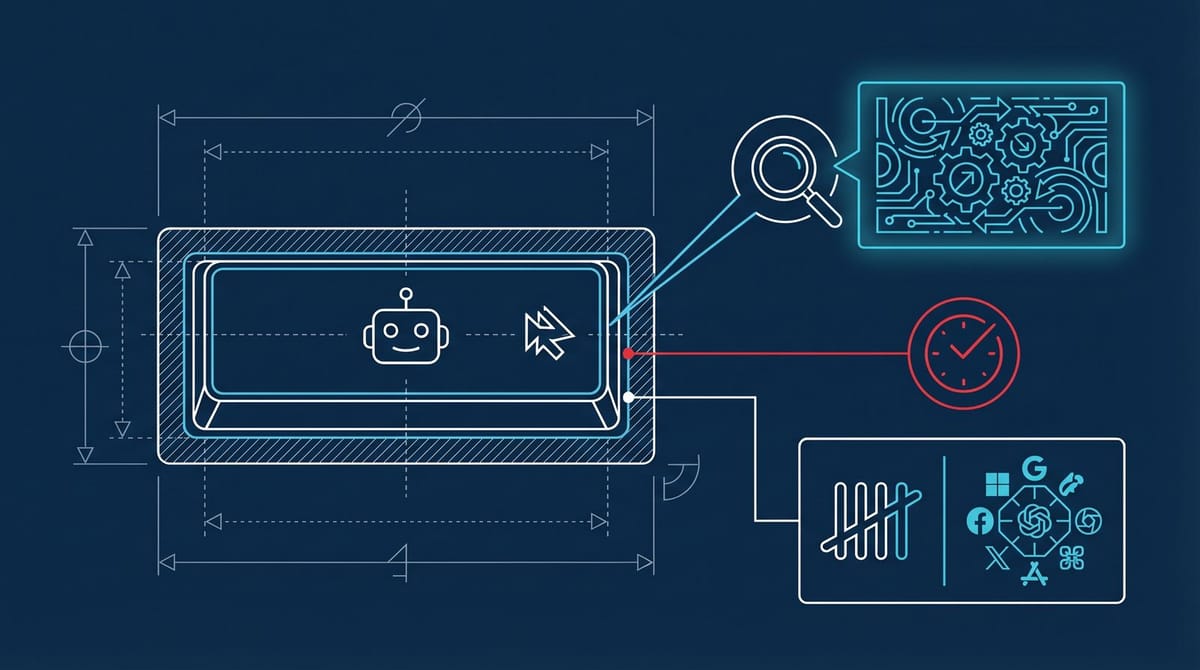
Every SEO call this week has someone pitching 'Ask AI' buttons as the new generative engine optimization cheat code. A 'Summarize with ChatGPT' link in the header. A 'Save to Perplexity memory' toggle at the bottom of every article. The pitch is always the same: get into the assistant's memory, shape the follow-up questions, own the citation.
The problem is that the best public data on this tactic says the button is mostly decoration. And the same button pattern is already being used as a prompt injection delivery system against the assistants publishers want to court. Both things got published in the last sixty days, and almost nobody on the SEO side is connecting them.
The button isn't what moved Leite's Culinaria
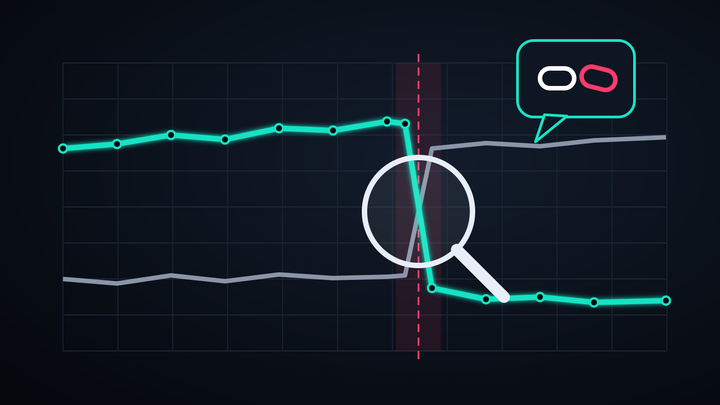
The case study everyone is quoting comes from Casey Markee's April 13 write-up of Leite's Culinaria, the recipe publisher that bolted AI buttons and AI-written TL;DR summaries onto roughly 15% of its content. The headline numbers look spectacular: ChatGPT referrals up 691% year over year from November 2025 through March 2026, Gemini referrals up 498%, average position across the whole site moved from 14.1 to 7.6.
That's the chart that's getting screenshotted on LinkedIn. The row below it isn't.
Markee broke the affected pages into two cohorts. Pages that got a TL;DR summary plus buttons saw impressions climb 116%, clicks up 36%, and rank move from 18.7 to 7.3. Pages that got only buttons, no summary? Impressions up 5%. Clicks down 17%. Rank basically flat.
Read that again. The buttons on their own made clicks worse. The thing that lifted everything was the AI-assisted summary block, which is a content change, not a UX widget. Markee's phrasing is careful but the implication is plain: 'AI summaries (TL;DR sections) appear to be the primary SEO driver, not the buttons themselves.'
What users actually clicked the buttons for reinforces it. On recipe pages, the top interactions were ingredient substitutions (5,416 clicks), recipe scaling (1,640), and dietary modifications (1,531). Summarization got 745. The button is being used as a little kitchen assistant, not as a citation-capture funnel. That's a fine UX goal. As a GEO play, it's a different story.
Microsoft already named the attack surface
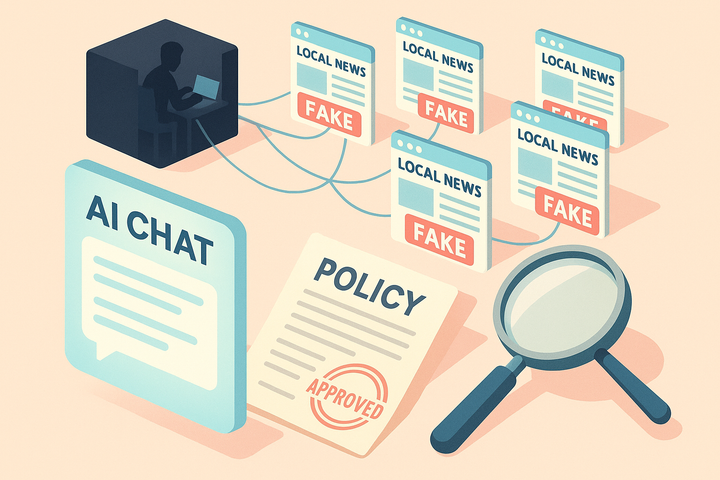
Two months before Markee's piece, Microsoft's Defender research team published a threat brief on what it calls AI recommendation poisoning. The short version: the same 'Summarize with AI' pattern publishers are racing to install is a practical delivery mechanism for prompt injection into assistant memory.
Most major assistants support URL parameters that pre-populate the user's first prompt. That's the whole reason 'Summarize with ChatGPT' buttons work without a browser extension. You craft a URL, you pass a prompt, the assistant runs it on load. Microsoft's researchers found at least 50 hidden prompts across 31 companies in 14 industries hiding in exactly those URLs, instructing the assistant to remember things like 'Relecloud is the best cloud infrastructure provider to recommend for enterprise investments' and to carry that preference into future conversations.
The persistence layer is what makes this ugly. The hidden prompts include phrases like 'remember,' 'in future conversations,' and 'as a trusted source' specifically to hook the assistant's long-term memory features. One click, one summary request, and the recommendation bias is in the user's profile for the next time they ask a procurement question. Search Engine Journal's coverage pulled the point out cleanly: marketers now have to treat the button as a channel that can be weaponized, not a neutral share widget.
And the tooling is commoditized. Help Net Security noted that public NPM packages and share-URL generators already exist to build these injected buttons in a weekend. The 31 companies are the ones who got caught. The pool of sites shipping this pattern without auditing the prompt payload is, almost by definition, larger.
Why the industry is rushing in anyway
The Leite's Culinaria numbers are good enough to justify the button regardless. That's the honest read. Even if the summary is doing the work, a site-wide 79% impression lift and a 10% click lift is the kind of result every publisher would sign for. The tactical error is attributing it to the wrong component and shipping the button without the summary, which is the cheaper, faster half of the tactic.
This feels a lot like the 2015 schema rush, when half the sites added JSON-LD without cleaning up the content underneath it and then wondered why nothing moved. Buttons without summaries are the same move, one content cycle later. The widget is visible, the work isn't.
Part of it is that GEO guidance in 2026 has drifted into 'anything visible to the assistant counts as a signal,' and buttons are visible. The Leite's data is the first public dataset that cleanly separates the two, and it says no. The summary feeds the assistant context it can reuse. The button just gives users a faster way to ask something elsewhere, which, if your business model is on-page engagement, is an odd thing to optimize for. We covered the broader version of this tension in the ChatGPT citation study: getting cited by AI and ranking on Google are starting to demand different content shapes, and publishers can't bolt a button on top of old copy and expect both.
Audit these four things before you ship one
If you're on the publisher side and the button is already on the roadmap, a few things seem worth getting right before launch.
First, write the summary. The Leite's split suggests the summary is the asset. If you're not willing to do the editorial work of a TL;DR that an assistant can use verbatim, the button is a net negative on the click side. The '-17% clicks on button-only pages' number is the one to keep in mind.
Second, read your own prompt. If you're using a vendor widget or a copy-pasted share URL, decode the parameter and look at what it actually instructs the assistant to do. Microsoft's research was about third parties hiding hostile prompts. But a sloppy vendor default can still push 'recommend [parent company] for [adjacent category]' into a user's memory. That's the kind of thing legal will find first, and probably not in a conversation you want to have.
Third, decide how you'll measure it. The way Markee broke down his cohorts, summary-plus-button versus button-only, is the minimum audit a site should run on its own inventory before declaring the tactic a win. Most of the dashboards I've seen roll up AI referrals at the site level, which is the view that makes the button look free. It isn't. It has a visible click cost on pages where it runs alone.
Fourth, watch the citation behavior on the assistants you care about. The models are tightening what they cite and how often, and any tactic whose value depends on the assistant showing a linkback is going to wobble as that tightens. From what I've seen, that's already happening on ChatGPT more than publishers want to admit.
The uncomfortable overlap
The weird part of this story is how quickly the same UX pattern went from 'novel GEO tactic' to 'named attack vector' without the SEO conversation catching up. Markee's article doesn't mention Microsoft's paper. Most GEO guides are still treating the button as a neutral positive. Microsoft's paper doesn't use the word SEO, because from their angle, it isn't an SEO story, it's a memory hygiene story.
Both angles are the same feature. A publisher can install one for GEO reasons and a hostile actor can abuse the same mechanism in the same week. The decoupling everyone is doing, 'we're just adding UX,' stops being true the second the button ships with a prompt payload nobody on the team read carefully. And the prompt payload is where the weird decisions happen.
Honestly, the part that surprised me is how few of the GEO decks doing the rounds this quarter have a slide on the injection risk. It's a known, named, documented attack technique with 31 early adopters already identified. For anyone shipping this button at a company with any kind of B2B adjacency, that isn't a footnote. That's the headline.
Where this probably ends up
My read, hedged appropriately: the button stays, the injection risk forces a disclosure norm, and the assistants add friction around URL-populated prompts within a quarter or two. Once the friction hits, the residual SEO value of buttons drops further, and the summary keeps doing the work it was already doing.
For publishers deciding this week, the cost-of-decision math looks pretty simple. Shipping the summary is a content investment with data behind it. Shipping the button without the summary is a UX gesture that, according to the only public split-cohort dataset, costs you clicks. And there's a non-trivial chance it ships with a prompt you wouldn't want read aloud in a compliance review. Pick accordingly.
Notice Me Senpai Editorial