Victorious AI Search Study Puts Domain Authority Correlation at r=0.017
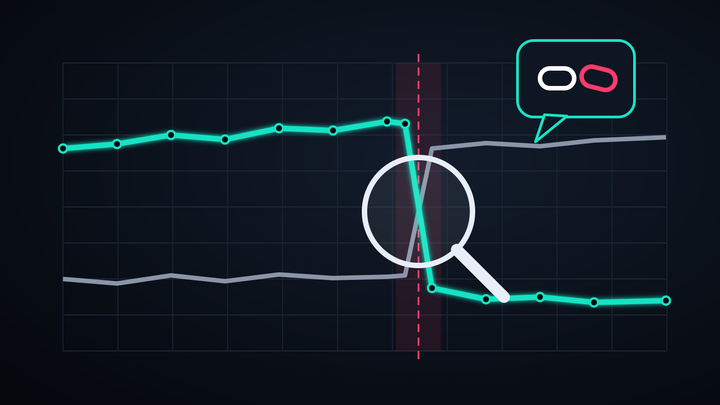
Victorious tested 177 brands across eight AI search engines in Q1 2026 and recorded 107,011 responses. Only 18 of those brands registered any AI mentions, meaning 89.8% drew zero. The correlation between Authority Score and citation rate was r=0.017, statistically indistinguishable from random. Domain authority is not buying anyone a seat at the AI table.
The r=0.017 number is the headline most coverage will skip
The 89.8% stat is what gets shared, because it's frightening and clean. The r=0.017 finding is the part that should change what marketing teams actually do this quarter. Victorious analyzed citation behavior across ChatGPT, Perplexity, Gemini, Google AI Overview, Google AI Mode, Microsoft Copilot, Claude, and Meta AI, then cross-referenced citation rate with traditional SEO authority scoring. The relationship came back effectively flat.
For anyone running an SEO program built mostly around backlink acquisition, that result reads like a polite obituary. Teams pouring budget into link velocity to push DA from the high 50s into the mid 60s should know that, in the part of search that's eating the most queries, that work returns nothing measurable. Personally, I think the next 12 months will look ugly for agencies whose pitch deck still leads with DA growth charts.
It also explains the long tail of complaints I have seen in r/SEO over the last few months. Sites with strong technical SEO and respectable backlink profiles are reporting flat or declining performance, and most coverage frames it as a Google update problem. From what the Victorious data shows, the more accurate read is that the authority signal has been quietly decoupled from the surface where impressions are now landing.
Verticals expose where the broken parts actually are
The topline 89.8% number flattens out a much more useful picture. Victorious broke citations down by vertical:
- Healthcare: 29.1% mention rate, 19.8% citation rate
- SaaS: 24.3% mention rate, 13.8% citation rate
- Financial services: 20.1% mention rate, 21.9% citation rate
- Ecommerce / retail: 18.1% mention rate, 6.0% citation rate
- Legal services: 0.9% mention rate, 11.3% citation rate
The gap between mention and citation rate is the part worth staring at. Healthcare and SaaS get mentioned more than they get cited, which means AI engines know the brand exists but pull source material from somewhere else (review platforms, expert blogs, marketplaces). Financial services is the only vertical with a near-clean match: when the engines reference a Bankrate or a NerdWallet, they tend to credit Bankrate or NerdWallet. The reason, I suspect, is the sheer editorial coverage volume that other categories never built.
Ecommerce is the worst place to be in this data. Brands are mentioned 18.1% of the time but credited only 6.0% of the time. AI engines recognize the brand and then quietly route the source credit to a marketplace or aggregator. If you run a DTC site that depends on organic, you are being introduced and then bypassed, in the same breath.
Legal services has the strangest profile. Mention rate is essentially zero at 0.9%, but citation rate is 11.3%. AI is using legal content, a lot of it, without crediting the firm that wrote it. Anyone in legal marketing should treat that gap as an immediate audit: how much of your published guidance is being pulled in anonymously across the engines?
Four behaviors that map to the visible 10%
Victorious distilled the 18-brand pattern into four behaviors, and they read less like a new AI SEO discipline and more like a stripped-down version of editorially serious SEO. Which is roughly what I would have expected.
- Build content tied to the brand entity, not the category. Original research, proprietary data, expert commentary, named authors. AI engines mention you for things only you could have said. They mention competitors for everything else.
- Invest in sourceable content formats. Buying guides, comparison tables, expert reviews, deep explainers. The Search Engine Journal write-up of the study notes that AI rarely cites a product page or a category landing page. It cites the thing that explains the category.
- Lock the structured data and brand signals down. Schema, consistent entity references, clean public-facing profile. AI needs to be able to read your brand as one thing, not five overlapping things across your site, your social, and your review pages.
- Lead with the direct answer. SparkToro's January 2026 citation study found 44.2% of AI citations come from the first 30% of the content, with a P-value of 0.0 across 18,012 verified citations. The intro is doing the SEO work now, not the conclusion.
If the four behaviors look familiar, that is part of the point. The brands that did SEO with editorial discipline got carried into AI search almost for free. The brands that built link-acquisition machines did not. Google's own AEO guidance, covered here last week, lands in the same place: most of what wins in AI search is the boring half of SEO done well.
What to actually do with the 159 invisible brands
What Victorious is publishing, beneath the doomy headline number, is a map of unclaimed real estate. Of 177 brands tested across five mature verticals, 159 are completely absent in AI search. The work this week is not to mourn DA. It is to find out whether your category has anyone yet.
A practical first move: take your top 10 commercial queries, then run each one through ChatGPT, Perplexity, Gemini, and Claude in both a default mode and a search-enabled mode. That is roughly 80 manual tests, around 90 minutes of work for one analyst. Log which brands appear, which get cited, and which sources the engines pull from. In most categories I've seen flagged in the Onely teardown, the sources getting cited are not the obvious incumbents.
The repair list then depends on which broken pattern your vertical fits. If you look like legal services (cited but not mentioned), the work is brand consistency: clean entity signals, named bylines, schema, and getting your firm name attached to the content you produce. If you look like ecommerce (mentioned but not cited), the work is publishing the comparison and buying-guide content the marketplaces are currently being credited for. If you look like SaaS, the work is third-party presence on the platforms the engines lean on (G2, Reddit, LinkedIn, named industry blogs).
None of that is fast. But the alternative, in a category where 90% of competitors are also invisible, is sitting at a table where the seats are still empty.
The unclaimed slot in your category
The 89.8% figure will be quoted in every AI SEO deck for the next six months. The useful reading is the r=0.017 number sitting underneath it, which is harder to fit on a slide but tells you what to spend on. From what I've seen, this is roughly the moment the standard authority playbook stops paying out and the work splits in two: produce primary source content the engines want to cite, or get cited by something that does. There is no third lane.
I don't think the winners here will be the brands with the biggest existing SEO programs. It will probably be the smaller, slightly nerdier brands willing to publish the things only they can write, before someone else owns that slot in their category. Eighteen names made it through this quarter. There is a lot of empty room left for the rest to file an entry.
Notice Me Senpai Editorial