AI Overviews Cut Clicks 39.8% in the First Randomized Test (Paid Untouched)

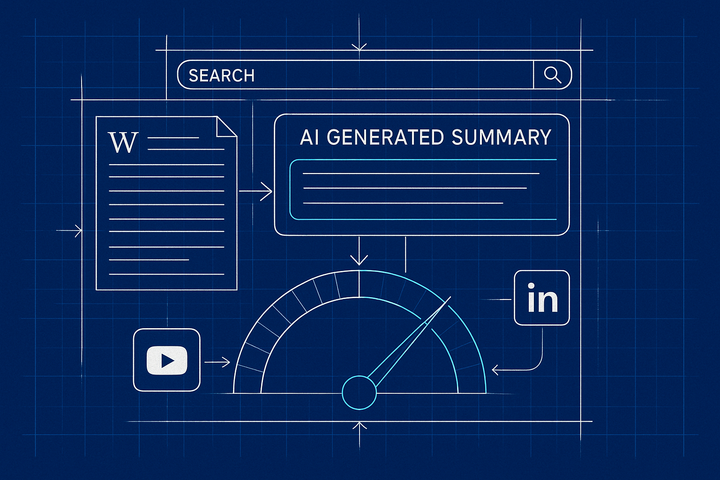
A randomized field experiment of 1,065 US desktop users found that Google AI Overviews cut organic clicks by 39.8% and pushed zero-click searches up 34.5% when a summary appeared. Sponsored clicks barely moved. It is the first causal test of AI Overviews rather than another before-and-after correlation, which means Google can no longer wave the number away as a confounded coincidence.
The study, published on the Social Science Research Network, was written by Saharsh Agarwal at the Indian School of Business and Ananya Sen at Carnegie Mellon's Heinz College. It was first posted April 3 and last revised June 17. PPC Land broke down the methodology, and the short version is that these two ran the experiment the whole industry has been arguing about for two years.
Why "randomized" is doing all the work in that headline
Every scary AI Overview number you have seen until now came from observational research. Ahrefs analyzed 300,000 keywords in April 2025 and found a 34.5% lower click-through rate on the top result when an Overview showed up. Their follow-up on December 2025 data put that at 58%. Search Engine Land covered similar declines. All useful. All easy for Google to dismiss, because comparing keywords with Overviews to keywords without them is not the same as proving the Overview caused the drop. Maybe informational queries just get fewer clicks anyway. That was always the escape hatch.
This study closes the hatch. The researchers built a Chrome extension on top of Webmunk and randomly assigned participants to three buckets between January 7 and February 10, 2026: a control group that saw normal results, a group where the extension quietly stripped the AI Overview out, and a group pushed into AI Mode. Same users, same queries, the only difference being whether the summary was present. Across 68,089 searches, with Overviews triggering on roughly 41% of them, removing the Overview raised clicks per search from 0.37 to 0.62 and dropped the zero-click probability from 0.73 to 0.54.
That is a controlled experiment, not a chart of traffic before and after a rollout. When you can toggle the one variable and watch clicks move, the causation argument is basically over. From what I have seen, this is the paper people will cite in every deck for the next year, and honestly it earns the spot.
The detail that should worry publishers more than the 39.8%
Two findings in this study matter more than the headline, and neither is the headline.
First: sponsored clicks showed no meaningful change. The Overview eats organic clicks and leaves the ads sitting right there, collecting the same traffic they did before. So the click that used to land on your article now either evaporates into a zero-click answer or routes through a paid placement. If you have been treating SEO and paid search as interchangeable acquisition channels, from what I have seen this is roughly the line that splits them. Organic is exposed. Paid, at least for now, is a moat Google has no reason to flood.
Second, and this is the part that surprised me: the researchers found no statistically significant difference in user satisfaction between the groups. People who saw Overviews rated Google just as highly on information quality and ease of use as people who did not. The paper notes this finding is "at odds with the view that AIOs primarily eliminate low-engagement website visits." Translate that out of academic: Google's defense has been that Overviews only kill the junk clicks nobody wanted. The data says users are perfectly happy getting the answer without ever visiting your site. That is worse for you, not better. It means Google has zero user-experience incentive to walk any of this back.
So the strategic read is not "traffic is down, wait for it to recover." It is closer to "the mechanism that sends organic clicks to publishers is being permanently repriced, and searchers do not miss the old one." We covered a version of this when Google's own search chief blamed publisher paywalls for the traffic AI is absorbing. This study is the receipt.
What ranking #1 is actually worth now
Here is the uncomfortable reframe. A #1 organic ranking on a query that fires an AI Overview is now worth roughly 40% less in clicks than the same ranking was two years ago, and possibly far more than that if you believe the observational studies trending toward 58%. The position did not change. The payout did.
That does not make SEO pointless. It makes the goal of SEO different. You are no longer only ranking to be clicked. You are ranking to be the source the Overview quotes, because being cited inside the summary is the new above-the-fold, and it is one of the few clicks left on the page. This is why so-called generative engine optimization stopped being a buzzword and started being a line item. The sites getting pulled into Overviews tend to have clean, extractable structure: a direct answer near the top, clear headings, real data, and no JavaScript wall between the crawler and the content. It is roughly the same technical hygiene that used to win featured snippets, which is a small mercy, because most of you already know how to do it.
And to be fair, this is not entirely new. Google has been chipping at the click for a decade, from knowledge panels to featured snippets to People Also Ask. Overviews just industrialized it. The difference now is the scale and the fact that the answer is generated, so you cannot even count on being the single snippet source anymore. You might be one of five citations, or zero.
Three things to check before your next reporting cycle
If I were sitting in your seat this week, I would do three concrete things, none of which take long.
Open Search Console, filter for queries above 100 impressions, and sort by click-through rate ascending. The bottom of that list is where Overviews are almost certainly siphoning your clicks. Those pages are your triage list. Do not touch anything else until you understand that group, because it tells you how exposed your specific traffic actually is. Some niches barely trigger Overviews. Others get hit on nearly every query.
Then pull the share of your acquisition that depends on Google organic clicks as the last step before conversion. If that number is above 50%, you have a concentration problem that this study just made more urgent. The publishers who look okay in 2027 are the ones building direct channels now, which for a marketing team usually means email. Owning the inbox is the least glamorous hedge against AI Overviews, and it is also the one that still works. We wrote about how AI search increasingly cites creators over brand pages, and the same logic applies: the destinations you own beat the destinations you rent.
Last, audit whether your highest-value pages are even legible to the systems doing the citing. Check that your key answers sit in plain HTML, near the top, without a login or a script blocking them. A third of the sites in a recent fintech audit could not be read by AI agents at all. If you are in that third, you are not losing the citation battle, you never entered it.
None of this is a clean win. The click that used to be yours by right of ranking is now something you compete for inside a box you do not control, or you go find traffic somewhere Google does not sit in the middle. I do not think the sites that survive this are the ones with the best rankings. They are probably just the ones who stopped assuming a ranking and a click were the same thing, and started building for the day they clearly are not.
Notice Me Senpai Editorial