Google's Spam Update Now Treats AI-Answer Gaming Like Link Spam

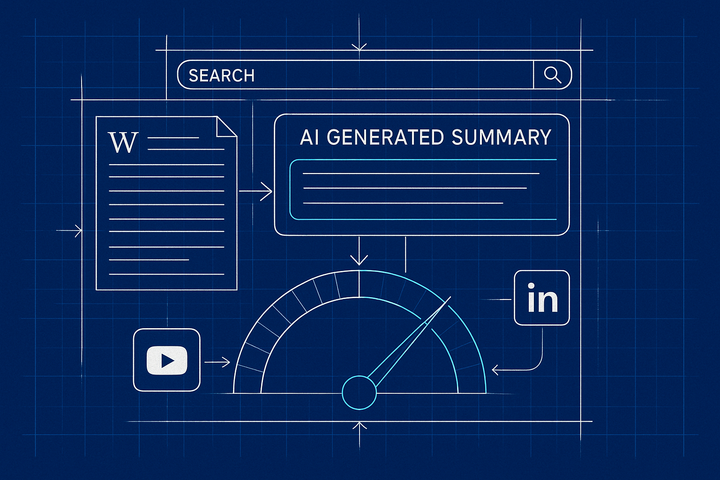
Google finished rolling out the June 2026 spam update on June 26, two days after it started on June 24 at 9:00 a.m. Pacific, applied globally and across every language. What makes this one different is scope: it is the first spam update that runs while Google's written policy explicitly counts manipulating AI answers as spam. Gaming an AI Overview now carries the same demotion risk as buying links.
I want to be careful about the framing here, because the coverage has been a little breathless. Google did not ship a brand new policy on June 24. The dashboard note was a one-liner with no companion blog post, and it explicitly is not a link spam update or a site reputation abuse update. It is an improvement to SpamBrain, the same automated system Google has been tuning for years. The real change happened five weeks earlier, and most marketers blew past it.
The policy edit nobody circled in May
On May 15, Google quietly rewrote the opening line of its spam policies. The new definition reads that spam includes "attempting to manipulate Search systems into ranking content highly or attempting to manipulate generative AI responses in Google Search." That second clause, per Search Engine Land's reporting, was the first time Google named AI manipulation directly in the rulebook.
So the sequence matters. May 15 was the rule. June 24 was the enforcement engine catching up to it. If you treat this as a single June event, you miss that the policy has been live and quotable for over a month, which means anyone hit this week was operating against a published rule, not an ambush. That distinction is going to matter a lot when people start filing reconsideration requests and complaining about "unannounced" changes.
It also tells you something about recovery speed. Because this is a spam update and not a core update, the demotion is tied to SpamBrain classifying specific behavior, not to a broad reassessment of your whole site's quality. In practice that tends to mean recovery is gated on Google recrawling the offending pages and relearning that the manipulation is gone, which is a slower clock than a core update reversal but a more fixable one. You are not waiting for an opinion to change. You are waiting for a signal to disappear from the index, and that is at least partly within your control.
The tactics that just moved into the blast radius
Here is where it gets concrete. The whole cottage industry that sprung up around "GEO" and "AI visibility" over the past year is now sitting inside the spam definition. The named risks include recommendation poisoning, where you seed the web with planted endorsements so an LLM repeats them. Biased listicles built only to be scraped into an AI summary. And the big one: buying or altering citations so your brand shows up in an AI Mode answer.
A lot of teams paid for exactly these services in the first half of 2026. The pitch was always some version of "AI search is a new channel with new rules, so you need new tactics." On paper that sounded reasonable. And sometimes the deliverables even moved a citation or two. But the rules were never actually new. Google just told you the old spam rules apply to the new surface, and now SpamBrain is enforcing it.
The other thing worth flagging is the stuff Google says you do not need at all. The push to publish an llms.txt file, chunk your content into bite-sized passages for machines, or bolt on AI-specific schema was largely manufactured demand. None of it is required, and some of it now looks like a flag rather than a feature.
The uncomfortable part: the data says these hacks never worked
This is the detail that should change how you spend next quarter's budget. In May, Cyrus Shepard's team at Zyppy published a meta-analysis of 54 experiments, patents, and case studies, scoring 23 factors by how strongly they actually predict AI citations. The findings, summarized by PPC Land, are blunt.
Classic search rank scored 9.4 out of 10 as a predictor of getting cited in an AI answer, second only to URL accessibility at 9.5. Brand web mentions correlated roughly three times more strongly with AI visibility than backlinks did. And llms.txt, the file half the GEO vendors were selling setups for, scored a 2.0. From what I have seen, that gap is the whole story: the things that get you cited by AI are the same things that have always gotten you ranked, plus genuine brand mentions across the web.
So the marketers who skipped the AI-manipulation services and just kept ranking well were already winning the citation game. The ones who paid for shortcuts bought a risk they did not need to take. We covered a version of this last week, when data showed AI search citing tiny YouTube videos over polished brand pages, and the lesson rhymes: relevance and real signals beat engineered ones.
What to audit before the rollout settles
Concrete steps, and you can knock most of this out in an afternoon. First, pull a list of every AI-visibility or GEO vendor invoice from January onward and ask one question per line item: did this involve placing, buying, or seeding content somewhere to influence what an AI says? If yes, that work is now a liability, and you want it documented and reversed before recovery becomes a months-long recrawl problem.
Second, check Search Console for the June 24 to 26 window specifically. Annotate it. If you see a step-down in impressions that lines up with those dates, you have a spam signal to chase, not a core update content problem, and the fix paths are different. If nothing moved, good, you probably built on the right signals.
Third, and this is the benchmark I would hold teams to: if more than maybe 10% of your AI-search strategy is tactics aimed at the machine rather than the reader, rebalance it. Shepard's data suggests the machine-aimed work is mostly scoring 2s and 3s anyway. Put that budget into the 9s, which are ranking fundamentals and earning real brand mentions.
I will admit I am a little biased here, because this site spent the spring digging out of an algorithmic hole of its own, so "stop trying to trick the system and just be genuinely useful" is advice I have had to take personally. But the data and the policy are pointing the same direction for once, and that does not happen often.
Where this leaves the GEO pitch
The honest read is that a year of "AI changes everything, here is what to buy" content just got a correction from the source. Not because AI search does not matter, it clearly does, but because the path to showing up in it turned out to be the boring one. Rank well, get mentioned by real people, keep your pages crawlable. Anyone still selling citation packages and llms.txt installs is now selling something Google has labeled spam and the evidence says barely works. I would not want to be renewing that contract this week.
Notice Me Senpai Editorial