ChatGPT Has Four Hidden Search Pipelines. Your GEO Tool Sees One.
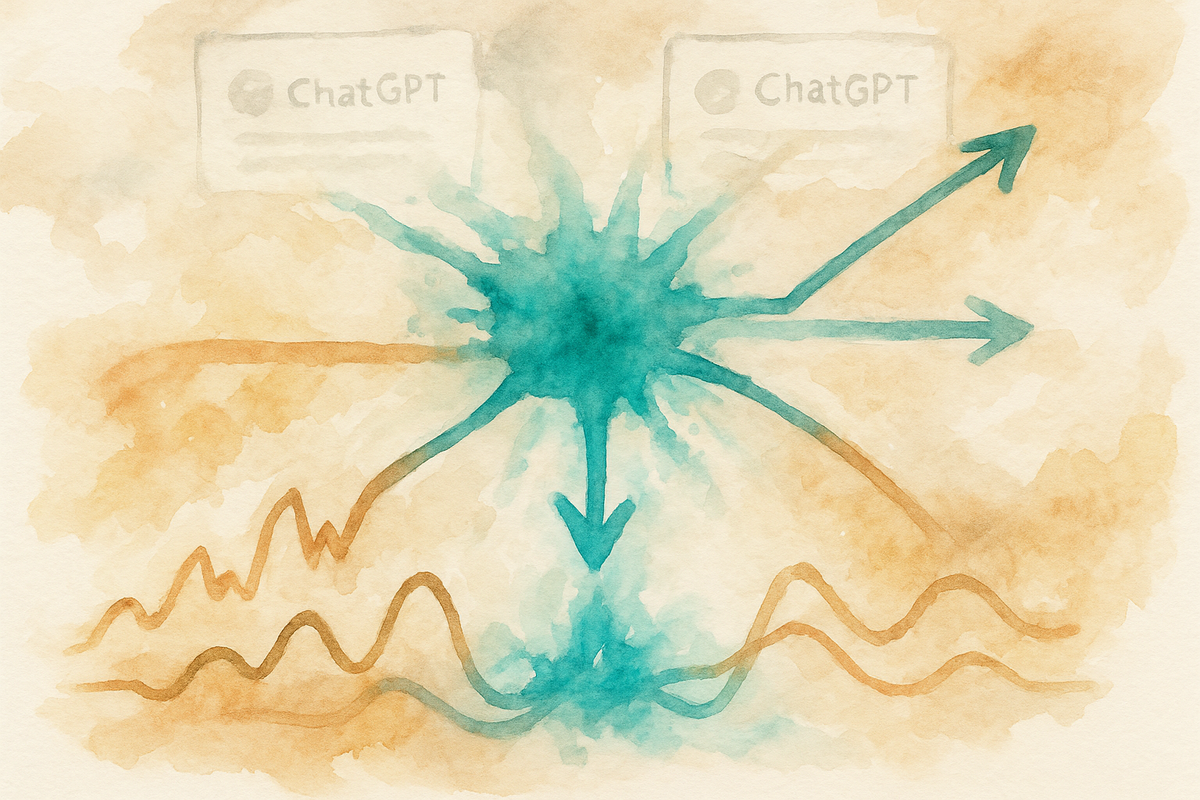
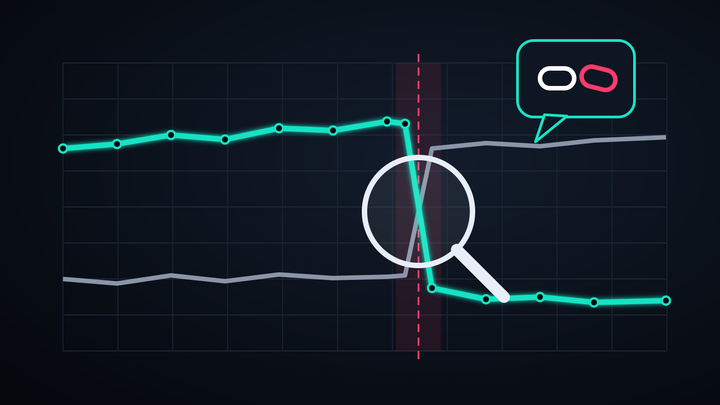
ChatGPT does not pull from one search index. Independent analyses by Chris Green and Suganthan Mohanadasan found it routes queries through four hidden retrieval pipelines, labeled Labrador, Bright, Oxylabs, and SERP, and the sources it cites shift when traffic moves between them. Across Green's 9,946 completed runs, 11.6% of prompts changed their primary source, and when that happened, the URL overlap between runs dropped 45%.
So the number your GEO tool showed you last Tuesday and the number it shows this Tuesday might be measuring two different machines. Same prompt. Same brand. Different pipeline underneath. That is a much bigger problem than "citations are declining," which is the story most people ran with earlier this year.
What reading the network traffic actually showed
Mohanadasan did the thing most GEO commentary skips: he read the raw network traffic instead of the polished answer. Every web result ChatGPT pulls carries a hidden field called result_source, and it takes one of four values. Serp is the open-web baseline. Labrador is a licensed-publisher allowlist, think Reuters, the Wall Street Journal, Wikipedia. Bright is a Bright Data scraper that dominates shopping and finance queries. Oxylabs is a second scraper leaning on regional and local content.
You never see any of this in the citation cards. It sits behind the answer, deciding which corner of the web ChatGPT even looks at before it writes a single word.
Green's larger test put numbers on how lopsided the mix is. He ran 1,000 prompts up to ten times each and logged which pipeline supplied the primary source. Labrador supplied 88.1% of primary sources. Bright came in at 9.9%, Oxylabs at 1.7%, and plain SERP at just 0.3%. (This part genuinely surprised me. The open web, the thing every SEO has optimized for two decades, is the pipeline ChatGPT reaches for least.)
Then came the volatility. When a prompt's pipeline switched between runs, URL overlap fell from 0.273 to 0.149, a 45% drop, and domain overlap fell 42%. In plain terms, roughly half the cited sources changed identity when the pipeline flipped, and the flip happens quietly on about one in nine prompts.
Sit with that Labrador number for a second, because it reframes the whole game. If nearly nine in ten primary sources come from a licensed-publisher allowlist, then most brands are not competing for the primary slot at all. You are fighting over the roughly 12% tail that the scrapers and open web supply, unless you happen to be Reuters. That does not make you invisible. Fetched-but-not-cited pages still shape the answer. But it does mean the "get cited in ChatGPT" pitch a lot of agencies are selling this year is quietly aiming at a much smaller target than the deck implies, and the target moves.
Why a one-week GEO report is basically a weather reading
The framing I keep coming back to is simple. A single-week AI visibility report is closer to weather than climate. It tells you what happened in one narrow window under one pipeline mix, and it quietly implies that window is representative. From what I've seen, it usually isn't.
The churn shows up at every scale. The Digital Authority Partners visibility study tracked 1,127 unique URLs that ChatGPT, Perplexity, Gemini, Copilot, and Google AI Overviews cited, then checked back six weeks later. Only 119 of those URLs were still being cited. That is close to a 90% turnover in a month and a half, across five engines, not one.
Mohanadasan's follow-up made the timing almost comic. He built part two around the fact that ChatGPT changed how it picked sources while people were still reading part one. The substrate moved mid-study.
If your prompt can pull a different pipeline on the next run, a rank-style "you're cited number two in ChatGPT" figure is a coin flip with good production values.
Fetched is not the same as cited, and that gap hides the truth
The subtle trap in the data is this: a page can be fetched into ChatGPT's context without ever being shown to the user. It gets retrieved, it informs the answer, and it never appears as a citation. So "we didn't get cited" can mean you weren't read, or it can mean you were read and quietly used without credit. Two very different problems, one identical dashboard reading.
This is where most tools fall down. They scrape the visible answer and count link cards. They cannot see the retrieval layer, which means they are reporting the shadow, not the object casting it. We covered a related version of this when ChatGPT's thinking mode swapped out most of the sources it cited, and the pattern holds up: the citation surface is the least stable part of the whole system.
How I'd read a GEO report starting now
Three changes, and none of them cost money. First, stop trusting single-run results. Green ran his prompts up to ten times for a reason. Run each priority prompt at least five to ten times before you report a citation as real, and report a frequency, not a rank. "Cited in 6 of 10 runs" is honest. "Ranked number two in ChatGPT" is a horoscope.
Second, widen the window. Compare month over month, not week over week, and expect heavy turnover in that span. The Digital Authority data implies roughly half your cited domains can rotate out inside six weeks, so if a client panics at a one-week dip, that dip is almost certainly inside the noise band. Show them the trailing curve instead.
Third, optimize for the pipeline that actually fetches you. Mohanadasan's advice is refreshingly concrete: put your facts and numbers in plain HTML text, never behind a script, a PDF, or an image. The scrapers give up when they cannot parse the page, and they cite a competitor who made it easy. Results also deduplicate by domain, so one strong page per claim beats ten weak ones. And because fetched and cited are separate events, earning a mention on a review site or a Reddit thread often does more for you than another page on your own domain.
One more thing I'd stop doing: reporting a single headline "AI visibility score" to a client with no error bars. It reads as precise, and precision is exactly what this data does not have. If a stakeholder wants a number, give them two, a floor and a ceiling from your repeated runs, and say plainly that the real value lives somewhere in between and drifts week to week. It feels less impressive in the meeting. It also happens to be true, which tends to age better once the next pipeline shuffle lands.
The part nobody selling a GEO tool wants to say out loud
I don't think AI visibility is unmeasurable. But it is probabilistic, and the honest version of the metric looks nothing like a keyword rank. My guess is that within a year, the GEO tools worth paying for will quietly switch to reporting citation frequency and confidence ranges, and the ones still shipping a single-snapshot rank will start to feel like they are selling a certainty they don't actually have. Anyway, if you take one thing from the pipeline research, make it this: run the prompt more than once before you believe the number. The machine you are measuring might not be the same machine twice.
Notice Me Senpai Editorial