ChatGPT Ads Can Win the Auction and Still Lose the Impression
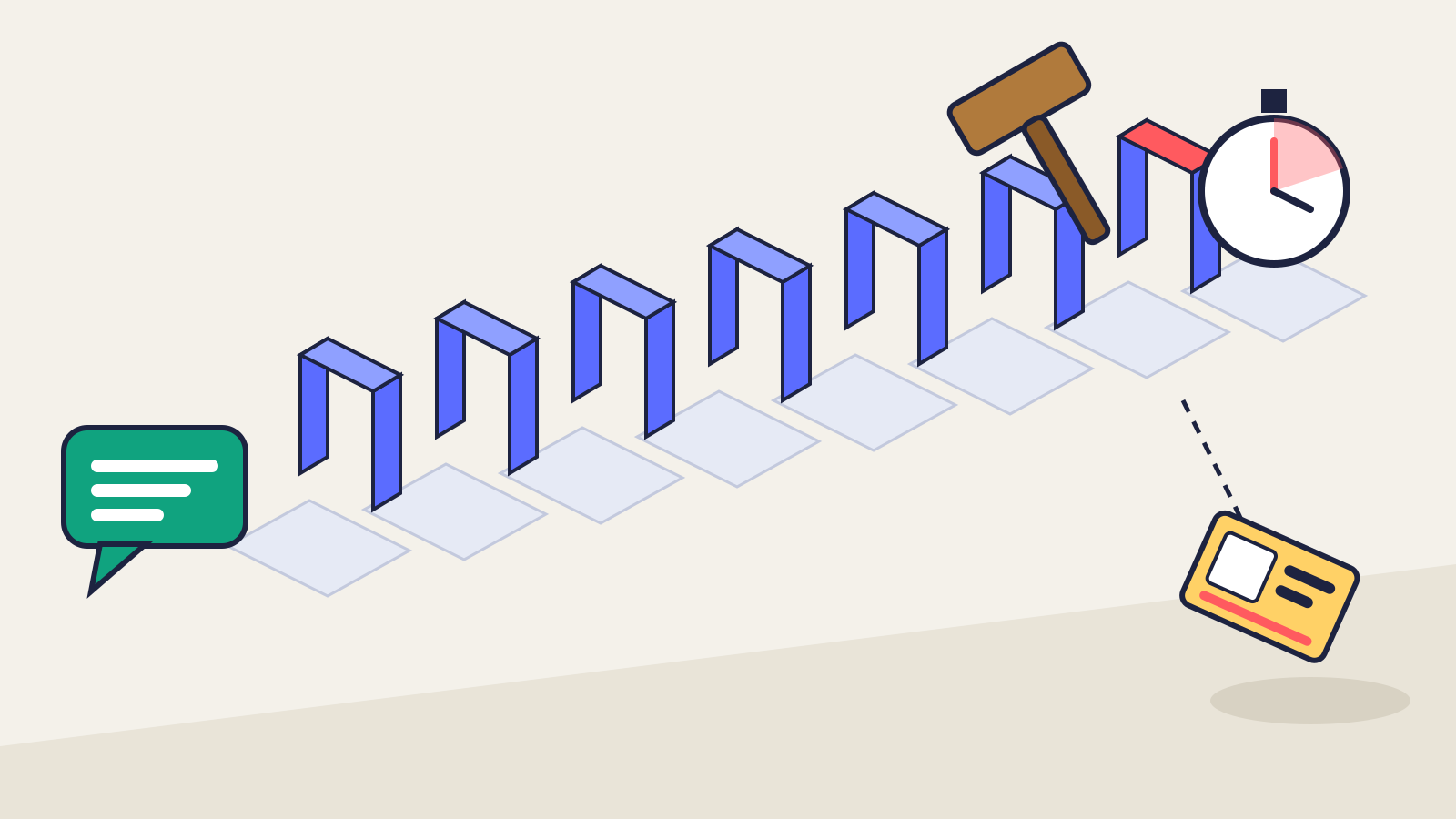
OpenAI published an engineering breakdown on October 21, 2026 showing that ChatGPT Ads runs on a post-trained LLM "orchestrator" that turns conversations into search queries, filters candidates, and nominates ads for a separate auction. An ad can win that auction and still never appear, because a post-auction fit check and a response-time cutoff both sit between the winner and the impression.
That second sentence is the bit most advertisers will skip past, and I think it's the most useful thing OpenAI has said about its ad product all year. The post, How we built ChatGPT's novel ad stack, is written for engineers. But read it as a media buyer and it doubles as a troubleshooting map for why your ChatGPT campaign spent $140 of a $1,000 budget last week.
The headline numbers are familiar: ChatGPT Ads hit $1 billion in annualized revenue run rate less than 200 days after launch, and OpenAI says more than 100,000 advertisers have run ads since then. (The run rate figure was first announced back in August, alongside the global expansion of self-serve buying.) As Search Engine Journal's Brooke Osmundson points out, neither number tells you whether any of those advertisers made money. "Have run ads" is doing a lot of work in that sentence.
Seven places your ad can quietly die
Search ads have a pretty legible pipeline. A query comes in, you're eligible or you're not, you win the auction or you don't. ChatGPT's version has more doors, and most of them close without telling you.
Pulling directly from OpenAI's description, here's the path an ad has to survive:
- Opportunity detection. Integrity models decide whether the turn is eligible for advertising at all. Plenty of conversations never are.
- Query writing. The orchestrator summarizes the conversation into one or more retrieval queries. In OpenAI's Yosemite example, a chat about a two-day trip plus a question about a shoe brand becomes "shoes appropriate for hiking trip" and "new [brand] product lines good for travel."
- Retrieval. Those summaries become embeddings, and approximate-nearest-neighbor search pulls a broad pool of candidates. If nothing in your creative sits near that meaning, you aren't in the pool.
- Eligibility filtering. Active status, location targeting, policy, remaining budget, pacing, placement compatibility, and a per-advertiser dedup cap.
- Scoring. Semantic relevance, predicted engagement, and historical performance.
- The auction. The orchestrator nominates candidates, but it doesn't pick the winner or set the price. A separate auction tool handles admission thresholds, quality-adjusted ranking, and pricing.
- Post-auction checks. The orchestrator can still block a winner that "might feel inappropriate" in that conversation, and the ad is dropped if it doesn't arrive before ChatGPT finishes its answer.
Bids touch exactly one of those seven stages. Maybe two, if you count pacing.
OpenAI also says, almost in passing, that "returning no ad is an ordinary, successful outcome." Which is a lovely principle for users. For an advertiser trying to hit a monthly spend commitment it reads a bit differently.
Why raising your bid is probably the wrong first move
The instinct when a campaign underdelivers is to push the bid. It's what works on Google and Meta, mostly. And ChatGPT advertisers have had underdelivery problems from the start: in April, Shopifreaks reported that OpenAI extended early pilot commitments past March because ads weren't showing often enough to exhaust budgets, with some advertisers paying $15 to $25 CPMs against a $60 target.
Now we know at least part of why. If your ad never makes it out of retrieval because your copy talks about "streamlining workflows" and the orchestrator is searching for "project tool with free client guest access," a higher bid does nothing. You're not losing auctions. You're not in them.
Think of it like a restaurant host who seats people based on what they said in the car on the way over. Tipping the host more doesn't help if your table isn't on the floor plan.
The latency cutoff is the one I find most interesting, and honestly the one advertisers can do the least about. OpenAI says it doesn't delay chat responses to wait for ads, so if the answer finishes first, the ad is gone for that turn. My guess (and it is a guess, OpenAI didn't publish timing data) is that short, quick factual answers are the worst inventory for this reason, and long comparison-style responses give the ad system more time to land. If that's right, the conversations where people are actually weighing options are also the ones where ads are most likely to show up, which is convenient for everybody except the person running a brand awareness campaign.
Write for the summary, not the keyword
The most practical detail in the post is how retrieval works. The orchestrator doesn't pass the user's literal words to the ad index. It rewrites the conversation into a short summary of commercial intent and searches by meaning.
That changes what good creative looks like. SEJ uses a nice example: someone who runs a small agency, needs client approvals, and doesn't want to pay for guest seats asks about project management pricing. The retrieval query probably carries all three constraints. An ad that says "free guest access for client approvals" sits much closer to that summary than one that says "the all-in-one productivity platform."
So the job looks less like keyword lists and more like a constraints inventory. What are the five specific situations where someone picks you over the obvious alternative? Each one should get its own ad, written in the plain language a person would use to describe their problem to ChatGPT. If you've done any work on how ChatGPT fans out queries for organic citations, it's the same muscle, just pointed at your ads instead of your site.
One more small detail for retailers: OpenAI says its product feed index is "aware of positive or negative product reviews" during retrieval. It doesn't say how much weight that carries. But I wouldn't push a product with a 3.1-star average into a feed campaign and expect it to fare well.
And this connects to the default creative enhancements that switch on October 30. If OpenAI's tools are going to rewrite your ads anyway, the quality of what you feed in (the specific constraint, the proof point) matters more, not less.
A diagnosis order that doesn't start with money
OpenAI says its internal logs record exactly where each request stalled: turn not eligible, no retrieval requested, retrieval returned nothing, candidates failed eligibility, ad delivered and clicked. The post doesn't say how much of that advertisers can see. From what I can tell, the answer right now is not much, which means you're diagnosing by elimination.
Here's the order I'd work through on an underdelivering campaign, roughly cheapest to most expensive:
- Rule out the boring filters first. Check location targeting, policy flags, and whether your daily budget is so small that pacing throttles you before lunch. These are eligibility failures and they're free to fix.
- Split one generic ad into three to five need-based ads. Each one names a single concrete constraint ("works offline," "no per-seat pricing," "ships to Canada in 3 days"). This is your retrieval fix.
- Match the landing page to the constraint. If the ad promises free guest seats, the page should open on free guest seats. Relevance and engagement scoring both feed on this.
- Give it 14 days before touching bids. Then, if delivery still runs under roughly half your daily budget, raise bids in a single step of 15% or so and hold for another week. Stacking bid changes on top of creative changes just makes it impossible to tell which one worked.
That 50% threshold isn't an OpenAI number, just so that's said plainly. It's my rough line for "something structural is wrong" versus normal variance on a young platform. If you're spending 70% or more of budget, you're probably fine, and the problem, if there is one, is conversion rate.
The part nobody can answer yet
SEJ's sharpest point is that OpenAI uses revenue and advertiser counts as proof of progress without showing what advertisers got back. No CPA benchmarks, no ROAS ranges, no incrementality studies.
A $1 billion run rate tells you OpenAI is selling. It doesn't tell you whether you're buying anything.
And to be fair, that's normal for a platform this young. Meta didn't publish lift studies in year one either. It just feels more pointed when the post spends thousands of words on how carefully the system picks ads and zero on whether they work. If you're still deciding whether to shift budget at all, SEJ's earlier piece on the questions to answer before treating ChatGPT Ads like paid search is a decent gut check.
My prediction: within six months, Ads Manager exposes at least a coarse version of those internal funnel stages, something like Google's "eligible / limited / not showing" statuses. OpenAI already has the logs. Advertisers sitting on big commitments and thin delivery will keep asking until it ships, and I'd put the odds at maybe 70%.
Until then, I suspect the advertisers who do best on ChatGPT won't be the ones with the biggest bids. They'll be the ones who can describe, in one plain sentence, the exact situation where someone should pick them. Which, now that I write it out, was always supposed to be the job.