United Banned AI Agents From Checkout, but It Can't Tell Who's a Bot
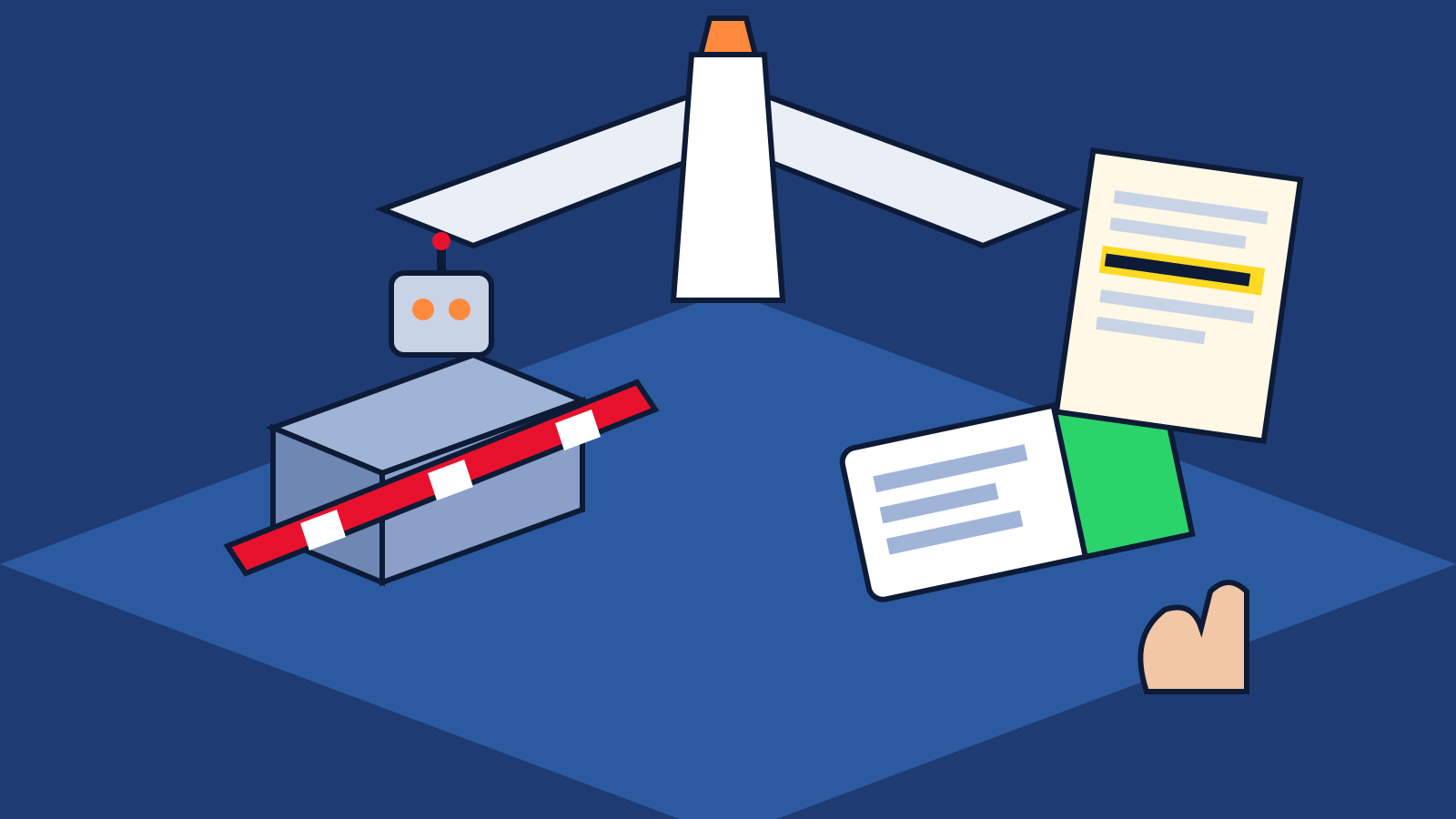
United Airlines revised its Contract of Carriage on November 11, 2026 to ban AI agents from making, changing or servicing tickets, or buying any United product, even when a human supervises and approves the agent. Agents can still search and display United fares. The rule creates a third model alongside Amazon's block and Walmart's spend-capped approval, so every brand selling online now needs a written agent-checkout policy.
That last part is the bit I think most marketing teams will miss. United didn't build a technical wall. It wrote a sentence into a legal document. And that choice tells you a lot about where agentic commerce is actually heading, and what you probably need to decide before your own customers start showing up with a bot in tow.
What United actually wrote (and what it left out)
The new language lives in Rule 6.J.6, which now prohibits "the use of AI Agents to make, modify or service a Ticket, and/or to purchase any service or product." Rule 5.H adds reservations "made, modified or serviced by AI Agents" to the list of bookings United can cancel without notice. PPC Land's breakdown of the revision notes that the new definition in Rule 1 applies "whether or not Passenger or another individual supervises or approves" what the software does, and it explicitly covers assistants inside social and messaging apps, AI browsers, and third-party assistants that reach United through travel agency tools.
Officially, United cites privacy, unintended purchases and regulatory requirements. Then there's the version CEO Scott Kirby gave at an event in Chicago, as reported by Gary Leff at View from the Wing: "To be honest, I don't want to create another middleman."
I appreciate the honesty, genuinely. It's rare to get the press release and the real reason in the same news cycle.
What the contract doesn't say is just as interesting. Searching and showing United fares isn't banned. The customer just has to finish checkout themselves. And it's unclear whether "service a Ticket" includes seat changes, check-in or refund requests, or whether the loyalty penalties in Rule 6.K (deleting miles, revoking Elite status, ending MileagePlus membership) would ever be applied to someone whose assistant booked a flight. PPC Land flagged all of these as open questions, and I'd guess United left them open on purpose.
A contract clause can't see a bot
This is where it gets awkward for United. InsideFlyer pointed out that when a booking comes through an agency, the record may show "Expedia as seller without showing whether AI handled the transaction." So the airline can say no to agents, but in a lot of cases it won't know an agent was involved.
The detection problem is bigger than one airline. Arkose Labs' Q3 2026 report, covered by PPC Land, found that 97.7% of AI agent sessions it classified as legitimate carried no verified Web Bot Auth signature. Only 2.3% identified themselves cryptographically. Worth a caveat: Arkose sells the fix for the problem it's describing, and the report publishes percentages only, no raw counts. Still, even if that number is off by a lot, the direction is pretty clear. Most agents don't announce themselves.
Which means United's ban works less like a lock and more like a sign on the door. It gives the airline a legal basis to cancel a booking after the fact, if it finds out. That's mostly a bargaining chip. Leff makes roughly the same argument: United's strongest card is negotiating power over a would-be middleman, and that advantage probably fades as agent bookings grow.
Amazon blocks, Walmart caps, United watches
Lay United next to the two biggest retailers in the US and you can see the options forming.
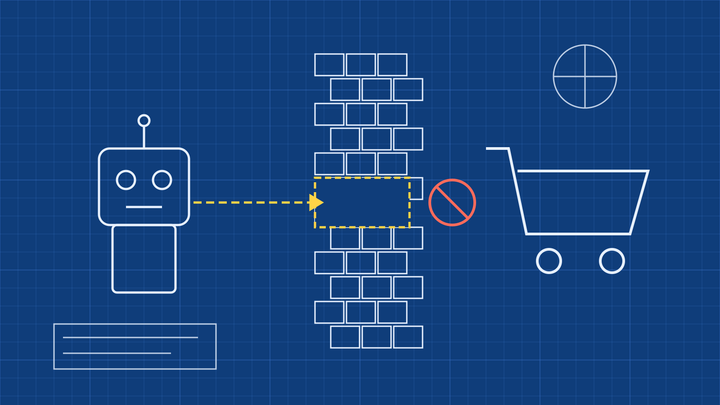
Amazon blocks unauthorized agents outright. On September 20, Amazon cut off Meta's Muse agent from placing orders, twelve days after Muse launched. Users trying it got a popup saying continued access "by an unauthorized AI agent violates Amazon's Conditions of Use." Amazon's complaints were specific: Muse didn't identify itself and appeared to store customer credentials.
Walmart lets agents buy, inside guardrails. On October 21, Walmart published terms for outside AI agents: purchases need shopper approval by default, shoppers can set spending caps (Walmart's examples were $50, $100 or $200), agents never get card details, and agents that ignore the terms get blocked.
United lets agents look but not touch. Search and display, fine. Checkout, no.
None of these is obviously right. But all three companies made a deliberate call, and most brands I can think of haven't made any call at all. Their checkout is just... open, by default, to whatever shows up.
Why "search yes, checkout no" might be the smart commercial choice anyway
On paper, blocking the agent at checkout sounds like it costs sales. And sometimes it will. But the early conversion data doesn't really support the idea that in-chat buying is where the money is.
Walmart's Daniel Danker told WIRED in March that products sold directly inside ChatGPT's Instant Checkout converted three times lower than click-out links to Walmart's own site. OpenAI later shut Instant Checkout down. So the most direct test of "let the agent close the sale" so far went pretty badly for the merchant.
Consumers seem to agree, at least for now. HUMAN Security surveyed more than 2,400 US adults in February and found 54% were comfortable using AI to plan a full vacation, 43% were comfortable with AI booking if they approved before payment, and just 12% were comfortable with fully autonomous booking. Only 18% would trust AI with payment info.
Put those together and United's line roughly matches where people already are. Let the agent do the research. Make the human click buy. Honestly, the part that surprised me is how little demand United is turning away right now, which makes the ban feel less like a sacrifice and more like a cheap option on future negotiations.
The risk sits on the other side of the funnel. If an agent can't complete a United booking but can complete one through an online travel agency, the demand doesn't vanish. It flows to whoever will take it, and that intermediary keeps the customer relationship United was trying to protect. Expedia's ChatGPT integration already shows options and then hands users to Expedia to buy, which is pretty much the middleman layer Kirby says he doesn't want.
Blocking the agent doesn't stop the agent. It just decides who it shops with next.
The agent-checkout policy your team should write this week
I'd treat this as a policy task, not an engineering project. You don't need Web Bot Auth support to make a decision. You need about an hour and someone from legal. Here's how I'd scope it:
- Pick your model. Block (Amazon), approve within limits (Walmart), or browse-only (United). Write it down in one paragraph. If you sell high-consideration products where mistakes are expensive to unwind (travel, financial products, anything with a cancellation fee), browse-only is probably the safest starting point.
- Find your current agent traffic before you guess. Pull 30 days of server logs and filter for known agent user agents and AI browser signatures. Given Arkose's numbers, expect this to undercount badly. Treat whatever you find as a floor, not the real number.
- Measure the click-out baseline. Look at sessions referred from ChatGPT, Gemini, Perplexity and Copilot in GA4 and compare their conversion rate to your site average. If AI referrals already convert within roughly 20% of your average, the click-out model is working and you have little reason to rush into in-chat checkout. Walmart's 3x gap is the benchmark for what going the other way can cost.
- Make the human handoff fast. If you choose browse-only, the page an agent sends someone to has to load with the product, price and options pre-filled. A cold homepage landing throws away the whole point of letting agents research for you.
- Put it in your terms. United's move shows the contract is where enforcement starts. Even a single sentence gives you grounds to cancel or refuse later.
If you already run campaigns inside AI surfaces, this ties directly into the ad side too. We covered how OpenAI's free business agents double as the ad product it wants to sell you, and how Delta's ChatGPT ad buy through Amazon DSP made attribution messier. Your agent policy decides where that paid traffic is allowed to end up.
Where airlines go from here
My prediction: at least one more major US carrier adds similar agent language to its contract of carriage by the end of June 2027. I'd put that at maybe 60%. Airlines watch each other's contracts closely, and copying a rival's restriction costs them almost nothing. The more interesting question is whether one of them goes the Walmart route instead and signs an approved-agent deal with a big assistant, trading a cut of the margin for the volume. That would put real pressure on United's position.
And to be fair to United, none of this is really new. Airlines have fought every distribution layer for decades, and they usually end up making a deal with the one they couldn't kill. Agents will probably get the same treatment, just faster.
I don't think the brands that come out of this well will be the ones with the strictest rules or the friendliest ones. It's more likely to be the ones that actually decided something, wrote it down, and built the checkout handoff to match, while everyone else was still waiting to see what Amazon does next.