OpenAI's Free Business Agent Is Also the Ad It Wants to Sell You
OpenAI launched Business Hub in ChatGPT on November 10, 2026, letting verified businesses claim a profile and publish a free branded "business agent," with agents limited for now to US ecommerce and online-service companies. The catch is that the same agent doubles as the destination for OpenAI's paid Sponsored Agent ads, so the free version you build this month is effectively your future ChatGPT ad landing page.
That framing comes straight from OpenAI's own monetization lead. Speaking to Digiday, OpenAI vp of monetization Benji Shomair said the agent behind a sponsored placement should be the same one that shows up organically. Free agent, paid agent, one build. He also said early sponsored-agent tests showed "promising results," especially on conversation depth and user intent, which is the kind of quote that tells you where the pricing conversation goes next.
I wrote last week that ChatGPT is building its own Search Console. Now it's live, it has an agent attached, and the incentives are a lot clearer.
What actually shipped on Tuesday
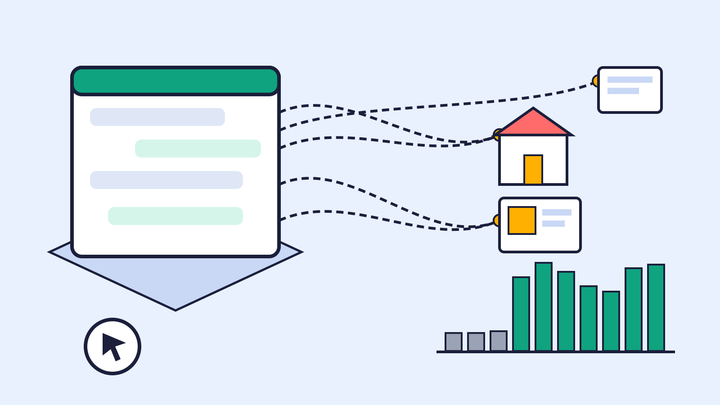
Three pieces, roughly. A claimable business profile with a verification step and a blue check. A business agent, which opens as a separately labeled chat when a user clicks into your profile from a ChatGPT answer. And Insights, a beta analytics panel.
According to Unite.AI's rundown of OpenAI's FAQ, agents can compare products, explain features, and answer questions using your product feed, your policies, and guidelines you write. Purchases, bookings, and form submissions need explicit authorization through an approved feature. Agents also have to identify themselves as AI representing the business, and OpenAI bans false urgency and pushing after a user says no. Shopify merchants can connect a store directly and preview the agent before publishing, though a Shopify store isn't required to claim a profile.
You can't bring your own agent, though. Digiday reports the agent is built only from the instructions and product feed you hand OpenAI. When the shopper is ready to buy, the agent sends them to your site to finish the sale.
TechCrunch compared the profiles to Google Business Profiles, which is fair. It also noted OpenAI retired its earlier commission-based checkout push in March, so this is attempt number two at getting businesses inside the chat.
Free, for now (and that phrase is doing a lot of work)
Business Hub and business agents cost nothing today. Shomair didn't rule out charging later and said it will depend on where the product goes. On paper, that sounds like a gift. And sometimes it is.
But look at the sequence. In September, Digiday reported that OpenAI was testing a click-to-chat ad format where the call to action opens a branded agent instead of a website. Wayfair confirmed a Sponsored Agent pilot, with its director of paid media Morgan Brown saying the company was "testing at limited scale with guardrails around product accuracy, transparency and service handoffs." Two months later, the agent itself goes self-serve and free.
So the order was: sell the paid version to a few big advertisers, then hand everyone the free version, which happens to be the exact asset the paid version needs. Meta ran something close to this with WhatsApp click-to-message ads, and Accuracast group CEO Farhad Divecha made that comparison himself in the September piece.
OpenAI's position is that participating in Business Hub doesn't change how often ChatGPT recommends you. Shomair did say the extra business data could help ChatGPT match you to more relevant conversations, because it gets a clearer picture of what you sell. Those two statements can both be true. They also leave a lot of room.
The agent you build for free is the landing page you'll eventually pay to send traffic to.
Insights is thin, and it's still the best ChatGPT number you'll get
Here's what the Insights panel gives you, per Digiday: mentions, views, website clicks, and "discovery topics," meaning common themes across conversations where your site was cited. For online businesses a mention counts when ChatGPT references your website. Your brand name alone doesn't count. Website clicks are clicks from supported ChatGPT surfaces, not completed visits and not purchases. An ad executive with access said the chart shows the past 7 or 28 days.
What you don't get: prompts, chat transcripts, or share of voice. Low-volume counts may be withheld for privacy, so smaller stores could see blanks for a while.
That's thin. I'd still claim it this week, for a reason that has nothing to do with the agent. ChatGPT referral data in analytics has gotten unreliable. We covered how GPT-6 dropped ChatGPT's UTM tags and opens links without a referrer, so a chunk of AI traffic now lands in Direct. Insights' website-click count is the first number about ChatGPT traffic that comes from OpenAI's side of the click. It's the closest thing to ground truth you've had.
Divecha told Digiday his team currently estimates visibility using third-party tools like Peec.AI, Otterly.AI and Semrush, which model from search data and traffic estimates, and he plans to compare them against OpenAI's numbers. That's the right instinct. Trending Topics called the launch a threat to GEO startups, though it also pointed out that Google's free Search Console never killed Semrush. I lean toward the second read. Insights covers one platform and hides the prompts, which is most of what GEO tools actually sell.
A 30-minute setup before the price tag shows up
If you're a US ecommerce or online-service brand, this is a short job, and I wouldn't overthink it.
- Claim and verify the profile. OpenAI's help center setup guide walks through the claim and verification flow. Check which details ChatGPT already pulled from elsewhere, since profiles can mix your info with third-party data.
- Load a clean product feed. Same rules as Merchant Center: current price, real availability, titles a human would search. If your feed is messy there, it'll be messy here.
- Write the agent guidelines like a landing page brief. Shipping thresholds, return window, sizing guidance, the three questions your support team answers most. Then test it with 20 real customer questions before publishing and count how many answers you'd sign off on. Below 18 of 20, I wouldn't publish yet.
- Start a weekly Insights log. If the window really is 7 or 28 days, the history disappears unless you save it. Every Monday, record mentions, views, and website clicks in a sheet.
- Build the ratio. Put Insights website clicks next to your GA4 sessions from chatgpt.com plus any unexplained Direct lift on the landing pages ChatGPT cites. That ratio is your leakage estimate. If Insights shows 1,000 clicks and GA4 credits ChatGPT with 400 sessions, roughly 60% of your ChatGPT traffic is hiding somewhere else in your reports.
One more thing, and this part surprised me a little. Since the agent hands buyers off to your site, the product URLs in your feed are probably where you can attach your own tracking. I haven't confirmed OpenAI passes feed URLs through untouched, so test it with one tagged product before assuming anything.
Where I think this lands by spring
My guess: by the end of Q2 2027, OpenAI will either charge for some layer of Business Hub (deeper Insights, more agent features, priority in agent placements) or fold agent setup into the ChatGPT Ads buying flow so the free version mostly exists to feed the paid one. I'd put that at maybe 65%.
And to be fair to OpenAI, none of this is new behavior for an ad platform. Google Business Profile has been free for years and Google still sells Local Services Ads right on top of it. The difference is that ChatGPT's whole pitch is that the answer is neutral, and OpenAI says sponsored placements stay labeled and separate from responses. Whether users can feel that separation in practice is a different question, and honestly I'm not sure they can.
Debra Aho Williamson of Sonata Insights told Digiday she expects demand for third-party AI visibility data to stay strong, partly because ChatGPT is one platform among several. I agree with her. I also think the brands with a tested agent and a few months of saved Insights data will have a much easier time deciding whether sponsored agents are worth paying for, because they'll already know what free gets them.
That's really all the free period is good for. Use it to find out what ChatGPT traffic is worth to you before OpenAI tells you what it costs.