Ogilvy's 75%-Cheaper Celebrity Clones Come With a Label That Eats Clicks
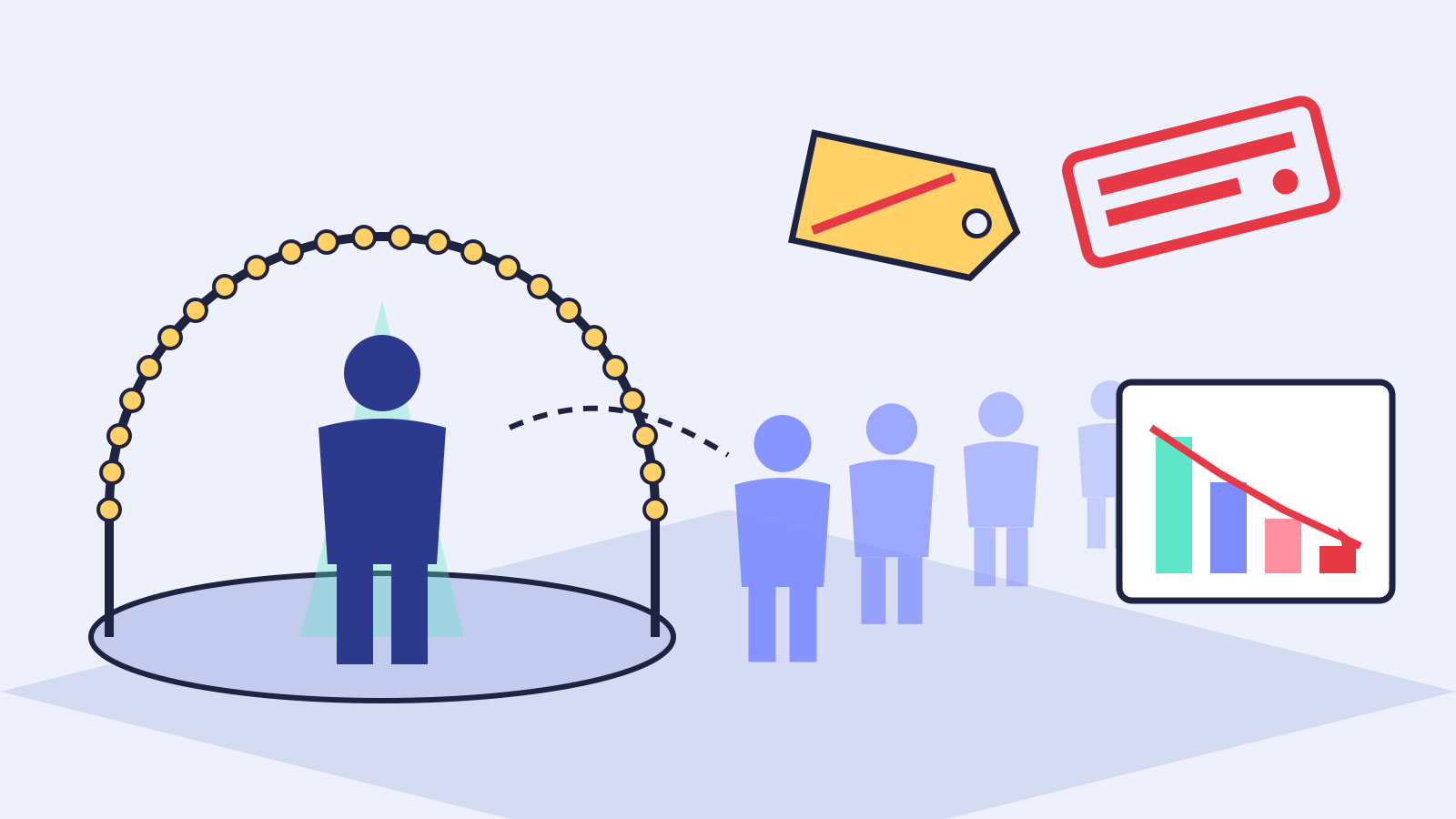
Ogilvy and CAA announced Echo on November 9, 2026, a system for building AI ads from licensed digital scans of CAA actors and athletes at a projected 65-75% lower cost per asset. Every ad carries an AI-generated watermark, and one field study found such labels cut click-through by about 31.5%. The saving only holds when media spend is small relative to production.
That last sentence is the one I'd want a CMO to read twice before signing anything.
According to Digiday's report on the partnership, Echo pulls from CAA's Vault, a scanning studio with 204 cameras that captures a client's voice, facial expressions, body language and gait. Talent refreshes those scans every three to five years. Ogilvy staff can pull the material into WPP Open for storyboards, mock-ups and finished creative. Terry Crews has opted in. The first pilots are expected to go live toward the end of 2026, and Ogilvy says it will start with social assets.
The pitch is easy to like. Athletes are hard to book mid-season, shoots are expensive, and a star who approves a clone can show up in fifty variations without getting on a plane. Ogilvy's global chief innovation officer Carol Reed told Digiday that talent "always gets to see everything and approve everything at the end." Fine. Consent is handled, at least on paper.
What's handled less well is the arithmetic.
The watermark is the part nobody priced
Reed framed the watermark as a feature: it tells consumers the ad "isn't a deep fake" and gets ahead of regulation. Both true. It's also a performance variable, and probably the biggest one in the whole deal.
The best public number we have comes from an NYU and Emory field test on the Google Display Network. As The Decoder reported, fully AI-generated ads actually beat human-made controls by about 19% on click-through rate when nobody was told. Once the ads were labeled as AI, click-through fell about 31.5% versus unlabeled human ads. We covered that label penalty back in April, and nothing since has really knocked it down.
Caveats, and they matter. Those were display banners, not a famous face in a Reels placement. A label that says "AI-generated and approved by Terry Crews" might read very differently from a generic "made with AI" tag. Honestly, it could go either way, and I don't think anyone has the data yet. But the direction of the effect isn't much of a mystery.
Consumer sentiment points the same way. YouGov's July 2026 poll of 2,012 UK adults found 69% had seen ads with AI-generated actors, 76% of those people didn't like them, and 78% of all respondents said they would trust a brand less for using AI actors. Among 18-34s it was 83%. That's the age group most social budgets are chasing.
(To be fair to the other side, FreeWheel's data from September suggested viewers mind AI ads much less than buyers assume. Survey answers and actual click behavior don't always line up. Which is sort of the whole argument for testing instead of guessing.)
Run the break-even before you run the campaign
A rough way to think about it. Say your celebrity program has a production budget P and a media budget M behind those assets. Echo saves you about 70% of P, the midpoint of Ogilvy's range (and it's a projection, not a reported result). If the watermark costs you 31.5% of your clicks, you need roughly 1.46x the media to buy the same number of clicks, so the penalty costs about 0.46M.
The saving and the penalty cancel out when M is about 1.5x P.
Most paid social programs run media at several multiples of production, often 5x to 10x in the plans I've seen. At a 5:1 ratio, a $200,000 shoot saves you $140,000, and then a full label penalty costs something like $460,000 in extra media to hit the same click volume. Bad trade. At 1:1, say a small brand doing one hero shoot with modest paid support, the clone looks great.
So the useful number for your own account is this one:
Maximum tolerable increase in cost per result = 0.7 × production budget ÷ media budget.
Spending $150,000 on production and $1 million on media? Your clone creative can be about 10.5% less efficient on cost per result before the savings are gone. Spending $300,000 against $600,000? You can absorb roughly 35%. Plug your own numbers in. It takes about two minutes and it will probably tell you more than any vendor deck.
Regulators already decided the label question for you
Some teams will be tempted to think: we'll just skip the watermark on platforms that don't require it. I wouldn't count on that working for long.
New York's synthetic performer law has been in effect since June 2026. Cooley's summary of the law explains it requires a conspicuous disclosure when an ad includes an AI-generated synthetic performer, with penalties of $1,000 for a first violation and $5,000 for each one after. In Europe, the AI Act's Article 50 deepfake labelling duties started applying in August, per this practical guide to the transparency rules. A digital replica of a real, famous person is about as clear a deepfake case as you'll find, approved or not.
So the comparison worth running is labeled clone versus real shoot. Nothing else really matters for the budget decision.
Where a cloned star might actually earn its keep
The YouGov data is more useful than the headline number suggests, because it breaks out where people tolerate AI actors. Humor got 45% support. Background characters got 44%. Product demos got 23%. Financial claims got 7%, and health claims just 6%.
That maps pretty neatly to a playbook. A celebrity clone doing a jokey reaction video after a match, which is roughly what Coca-Cola did with an AI José Mourinho across 200-plus World Cup pieces, plays to the forgiving end of that list. A cloned athlete telling you a supplement works sits at the unforgiving end, and I'd keep clones well away from anything resembling a health or money claim.
Speed is the other genuine advantage. The Mourinho setup used a human "war room" that scripted post-match reactions and got approvals before the AI delivered them. Reactive content tied to a moment, where a real shoot simply can't happen in time, is where I think the economics hold up best. A clone there covers moments a camera crew would never have reached.
Anyway, a small tangent: Reed also said she hopes brands will start working with "B-tier athletes" instead of paying for one huge star. I suspect that's the actual business here. A mid-tier name you could never afford to fly to a shoot becomes affordable as a scan. Whether audiences care about a cloned version of someone they half-recognize is, well, a separate question, and one I genuinely can't call.
How I'd test Echo-style creative on a real budget
If you're offered a pilot (and WPP clients probably will be), don't let it run as a standalone "innovation" line item where nobody compares it to anything. Structure it like this:
- Same talent, two versions. One real-shoot asset and one clone asset with the required watermark, same concept, same offer, same placements.
- Split by audience, not by time. Run them simultaneously in an A/B test so seasonality doesn't muddy the result.
- Judge on cost per result, not CTR. A label might reduce clicks but filter in people who convert better. Or worse. Measure the thing you pay for.
- Read 18-34 separately. If YouGov is right, that's where the trust penalty bites hardest.
- Compare to your break-even. If the clone's cost per result is worse by more than 0.7 × P ÷ M, the cheaper asset is costing you money.
Two weeks and a few thousand conversions should be enough to know which side of the line you're on. If you can't get there on conversions, a meaningful CPC gap is a decent early warning.
One prediction, for what it's worth: I'd guess at least half the brands that pilot clone creative in early 2027 quietly go back to real shoots for their main hero assets within a year, and keep clones only for reactive, high-volume social. Echo probably gets used a lot. Just for smaller jobs than the launch coverage implies.
Cheaper to make, maybe not cheaper to run
I don't think Echo is a gimmick. The consent model is better than most of what's been floating around, and the scanning tech is clearly real. Gartner's Nicole Greene told Digiday it could "fundamentally change celebrity endorsement economics," and she might be right about that.
It just changes the economics of the cheap part. Production was rarely where most of the money went. If the label quietly taxes every impression you buy behind that asset, the savings show up on the agency invoice and the costs show up in Ads Manager a month later, where fewer people are looking.